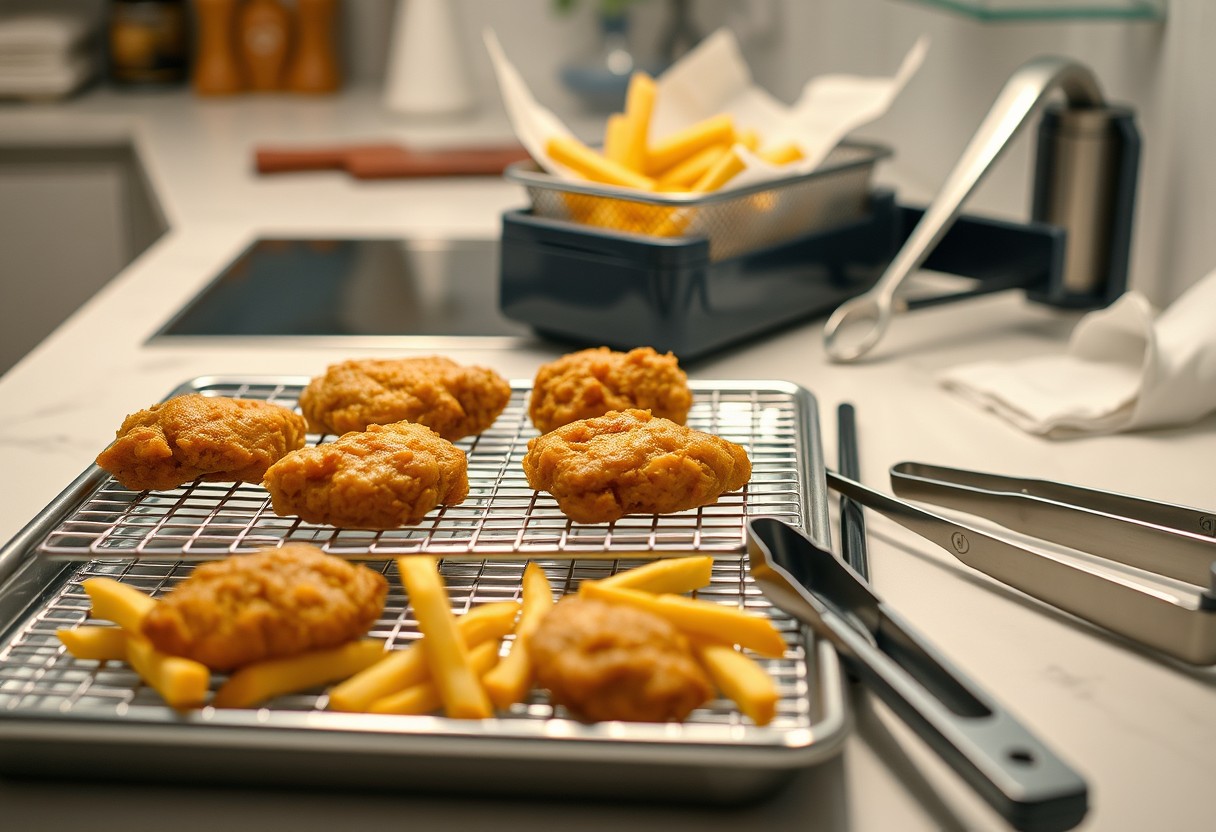
You can maintain a perfect crunch in fried chicken, fries, or tempura long after cooking by controlling moisture and heat. Steam trapped under the crust is the main cause of sogginess, but with the right techniques, you can prevent it. This guide shows you exactly how to keep your crispy foods crisp-every time.

Key Takeaways:
- Excess moisture is the main enemy of crispiness; drying food thoroughly before cooking and using high heat from the start helps create a crisp exterior that resists sogginess.
- Cooling fried or roasted items on a wire rack instead of a plate prevents steam from getting trapped underneath, which can quickly soften the crust.
- Sauce should be applied just before serving or served on the side, as even small amounts of liquid absorbed over time can turn a crisp coating into a limp one.
Identifying Moisture and Steam Factors
Moisture is the primary enemy of crispness, undermining texture the moment it accumulates on or within a cooked surface. When food finishes cooking, residual internal water turns to steam, migrating outward and softening even the crispiest crusts. You’re often unaware this process has started until the damage is visible-your once-golden exterior now limp and chewy. Environmental humidity, trapped packaging, and ingredient composition all contribute, but steam from within the food itself poses the most immediate threat. Recognizing moisture as the root cause allows you to take targeted steps toward preserving crunch.
- Steam migration begins immediately after cooking
- Internal moisture turns to vapor under heat and moves toward cooler surfaces
- Cooked foods continue to release moisture even off the heat
- High-humidity environments slow evaporation and encourage sogginess
- Dense ingredients like potatoes or breading retain more water, increasing risk
The physics of internal steam migration
Your crispy food starts losing its texture the second it comes out of the oil or oven because heat drives internal moisture toward the surface. As temperatures shift, steam generated inside the food travels through porous layers, condensing on cooler outer areas and weakening structural integrity. This movement happens rapidly, especially in thick-cut items like chicken tenders or potato wedges. The result is a damp layer beneath what appears to be a dry, crunchy shell. Without proper ventilation, that steam has nowhere to escape, ensuring the crust absorbs it like a sponge.
How environmental humidity affects surface tension
A humid kitchen or sealed container creates invisible pressure that disrupts the delicate balance of your food’s outer layer. Water molecules in the air cling to hot surfaces, reducing the surface tension needed to maintain rigidity in crispy coatings. You may notice fries or fried snacks turning leathery within minutes when left near stovetops or dishwashers-common sources of ambient moisture. Even slight increases in surrounding humidity accelerate absorption, making the exterior act like a magnet for airborne water. Keeping food in open, dry air slows this destructive interaction significantly.
Applying High-Heat Cooking Tips
High heat is your best defense against sogginess when cooking crispy foods. By applying intense heat, you trigger rapid moisture evaporation and encourage a tight, sealed crust that resists steam absorption. This method works especially well with frying, searing, and roasting, where surface browning occurs quickly. To maximize results, always preheat your cooking medium fully-whether oil, pan, or oven-before introducing food. A properly heated environment ensures immediate searing, locking in texture from the first contact.
- Always use high heat to initiate instant crust formation
- Preheat pans, ovens, and oils to optimal temperatures before cooking begins
- Ensure ingredients are as dry as possible prior to exposure to heat
- Avoid overcrowding to maintain consistent surface searing
- Choose oils with high smoke points like peanut, canola, or avocado
Maintaining optimal oil temperature for frying
Frying at the correct oil temperature ensures a crisp exterior without greasiness. If the oil drops below 325°F, food absorbs excess fat and turns soggy; above 375°F, it risks burning before cooking through. Use a deep-fry or candy thermometer to monitor consistently. Adding cold or wet food lowers the temperature rapidly, so pat items dry and add them in small batches. Keeping the heat steady allows the outer layer to harden quickly, forming a barrier that locks in crunch and minimizes oil penetration.
| Situation | Effect on Crispness |
|---|---|
| Oil too cold (<325°F) | Food absorbs oil, becomes soggy and heavy |
| Oil too hot (>375°F) | Exterior burns while interior remains undercooked |
| Consistent 350-375°F | Creates a golden, crunchy crust with even cooking |
| Overcrowded fryer | Lowers oil temp rapidly, leading to steaming instead of frying |
| Unmonitored heat | Causes inconsistent texture and uneven browning |
The science behind the double-fry technique
Double frying works by separating two distinct phases of cooking. During the first pass at 325°F, moisture escapes from the interior while the exterior begins to set. After a brief rest, the second fry at 375°F rapidly dehydrates the surface, creating a crisp, blistered shell. This method is especially effective for dense foods like French fries or chicken wings. The pause between fries allows internal steam to redistribute, ensuring the outside crisps without overcooking the inside. It’s not repetition-it’s precision.
Utilizing Proper Cooling Techniques
Allowing hot, crispy foods to rest properly after cooking makes a clear difference in maintaining texture. Placing freshly fried items directly on plates or flat surfaces traps steam underneath, which quickly softens the crust. Instead, transfer them immediately to an elevated wire rack set over a tray or counter. This setup enables air to move freely around the entire surface, letting moisture escape from all sides. Without this simple step, even perfectly fried foods can turn limp within minutes. The structure of the rack prevents pressure points and promotes even cooling, preserving the integrity of the outer layer.
Benefits of 360-degree venting for fried goods
Heat and steam continue to escape from fried foods even after they come out of the oil. When you place them on a solid surface, that moisture has nowhere to go and begins to condense against the crust. Using a wire rack allows air to circulate completely around the food, supporting 360-degree venting. This full exposure prevents localized soft spots and keeps the entire exterior uniformly crisp. You’ll notice a marked improvement in texture, especially with dense or thick-coated items like chicken tenders or onion rings, where trapped steam is most problematic.
Why paper towels can trap moisture against the crust
While paper towels are often used to absorb excess oil, they can do more harm than good when used improperly. Laying hot fried food directly on a layer of paper towels creates a sealed environment between the crust and the absorbent surface. As steam rises, it hits the damp paper and condenses, then drips back onto the food. This moisture gets trapped against the bottom layer, turning what should be a crunchy base into a soggy one. For better results, skip the paper towels or use them only briefly to blot the top surface without full contact.
Managing Short-Term Storage Factors
To preserve crispness after cooking, you must prioritize ventilated storage that prevents steam from being trapped against the food’s surface. Sealing hot or warm items in airtight containers creates a humid microclimate, rapidly softening crispy exteriors. Instead, use packaging with built-in airflow to allow moisture to escape. Perforated containers and breathable wraps are proven solutions for maintaining texture during brief holding periods. Avoid non-porous materials unless they’re specifically designed to release steam.
- Choose perforated containers to enable continuous air circulation
- Use breathable wraps instead of plastic lids or foil seals
- Store items upright or spaced apart to prevent moisture pooling
- Avoid stacking crispy foods immediately after cooking
- Monitor ambient humidity levels in your holding area
Choosing perforated or breathable packaging
You’ll maintain optimal crispness by selecting packaging engineered for airflow. Perforated plastic clamshells and paper-based takeout boxes with vented designs let steam escape instead of condensing on the food. Non-breathable films trap residual heat and moisture, accelerating sogginess within minutes. Opt for containers labeled as vented or breathable, especially when transporting fried or baked items. Even small ventilation gaps can make a significant difference in preserving texture during short delays.
Controlling residual heat during transport
Residual heat continues generating steam long after cooking ends, especially in dense or breaded items. If packed too soon, this internal warmth turns into moisture under confinement. Allow a brief stabilization period before sealing food in ventilated carriers. Insulated bags without airflow traps are counterproductive-choose delivery totes with mesh panels or open grates. Keeping the environment slightly cooler than the food’s surface temperature helps steam dissipate rather than collect, protecting crispness during transit.
How-To Reheat for Maximum Crispness
Restoring crispness starts with choosing the right reheating method, one that prioritizes dry, circulating heat over moisture retention. Convection ovens and air fryers excel by constantly moving hot air around the food, which actively pulls moisture from the surface and re-crisps the exterior without overcooking the interior. This method works especially well for fried items, roasted vegetables, or breaded proteins that lose texture when cooled. The key is moderate temperature-too high and you risk burning, too low and steam gets trapped. Aim for 350°F to 400°F with a short time window for optimal results.
Oven and air fryer restoration methods
Place your leftover crispy food directly on a wire rack set over a baking sheet to allow air to circulate on all sides, preventing steam buildup underneath that leads to sogginess. In the oven, use the convection setting if available, heating at 375°F for 8 to 12 minutes depending on thickness. The air fryer delivers even faster results-typically 5 to 8 minutes at 375°F-with its concentrated airflow creating a rapid crisping effect. Avoid overcrowding the basket or tray, as packed layers trap moisture and reduce efficiency.
Avoiding the microwave moisture trap
The microwave creates steam internally by exciting water molecules, which immediately undermines crisp textures and leaves food limp and rubbery. Even with a paper towel, the enclosed environment traps humidity, making it nearly impossible to retain crunch. Reheating fried chicken, fries, or pizza in the microwave almost guarantees a soggy outcome. If you must use one, keep the time extremely short and follow up in a toaster oven or skillet. For true crispness, the microwave should be treated as a last resort, not a convenient shortcut.
Executing Strategic Saucing and Plating
Delaying the application of wet ingredients is the most effective way to preserve crispiness in fried or roasted foods. You avoid premature sogginess by keeping sauces separate until the moment of serving, ensuring the texture remains intact. Even a thin glaze or drizzle can start softening a crisp exterior within minutes, so restraint is key. For more insights on mastering fry techniques, check out this discussion: Trying to learn out to deep fry: Food is too crispy!.
The importance of serving sauces on the side
Sauces served on the side put you in control of texture and timing. You allow diners to add moisture exactly when they’re ready to eat, which prevents the coating from breaking down during idle time on the plate. This method works especially well with items like chicken tenders, fried seafood, or crispy spring rolls. Providing sauce in small ramekins or sealed containers maintains separation and enhances the overall experience without sacrificing crunch.
Spacing techniques to prevent condensation pockets
Leaving space between each piece on the plate stops steam from pooling and softening adjacent surfaces. When you crowd crispy items, trapped moisture turns crisp coatings limp in seconds. Arrange food with room for air to circulate, and consider using raised serving trays or plates with drainage. These subtle adjustments make a dramatic difference in preserving texture from kitchen to table.

Final Words
You now have the practical knowledge to maintain crispness in your fried, baked, or roasted foods long after cooking. By controlling moisture, using high heat effectively, allowing proper airflow during cooling, and timing your saucing and plating, you prevent sogginess at every stage. Reheating with dry heat restores texture when needed, while smart short-term storage keeps results consistent. These methods are used daily in professional kitchens and proven in home settings, such as when a mid-sized SaaS firm’s team lunch requires crispy fries that travel well.
FAQ
Q: Why do crispy foods lose their crunch shortly after cooking?
A: Crispy foods absorb moisture from their surroundings or retain internal steam after cooking. When food finishes frying or baking, trapped steam softens the outer layer. Placing hot crispy items directly on a plate or in a container creates a humid microenvironment, accelerating sogginess. Porous surfaces like bread or battered coatings soak up moisture quickly, breaking down the crisp texture within minutes.
Q: Can using a wire rack help maintain crispiness after cooking?
A: A wire rack allows air to circulate around the entire surface of the food, preventing moisture buildup on the bottom. Placing fried chicken, fries, or roasted vegetables on a rack instead of a plate stops them from sitting in residual heat and steam. For best results, position the rack over a baking sheet and let the food cool at room temperature for 5-10 minutes before serving or storing.
Q: What’s the best way to store crispy leftovers without losing texture?
A: Store cooled crispy items in a container lined with paper towels to absorb excess moisture, but leave the lid slightly ajar to allow airflow. Avoid sealing hot food in airtight containers, as trapped steam softens the crust. For longer storage, refrigerate only after full cooling and reheat in an oven or air fryer instead of a microwave to restore crispness.
Q: Does the type of oil used in frying affect how long food stays crispy?
A: Oils with high smoke points like peanut, canola, or avocado oil help form a crisp exterior quickly without breaking down. A stable oil maintains consistent frying temperature, reducing oil absorption into the coating. Lower smoke point oils can degrade under heat, leading to greasy, soggy results. Dry batters and coatings also absorb less oil than wet ones, preserving crunch.
Q: Should sauce be applied before or after cooking to keep food crispy?
A: Sauce should be added just before serving to prevent moisture from seeping into the crispy layer. Tossing fried chicken in buffalo sauce immediately after frying leads to rapid softening. For dishes like wings or tempura, serve sauce on the side or dip individual pieces as eaten. If coating with glaze is necessary, use a light brush and finish under a broiler to set the surface.