You’re staring at a frozen block of chicken or veggies with dinner plans collapsing by the minute. Improper thawing can lead to bacterial growth or uneven cooking, risking both safety and flavor. But you don’t need to sacrifice quality for speed. Smart, science-backed methods exist to safely and quickly prepare frozen ingredients, letting you cook efficiently without compromising results.
Key Takeaways:
- Frozen ingredients can go straight into boiling water or a hot pan without prior thawing-dense items like dumplings or burger patties cook evenly when dropped directly into the cooking process.
- A microwave’s defrost setting works fastest for partial thawing, but using short 30-second bursts prevents edges from cooking while the center stays frozen.
- Prepping freezer-friendly portions in advance-like pre-chopped vegetables or marinated proteins-cuts active cooking time and simplifies last-minute meals.
The Cold Water Scramble
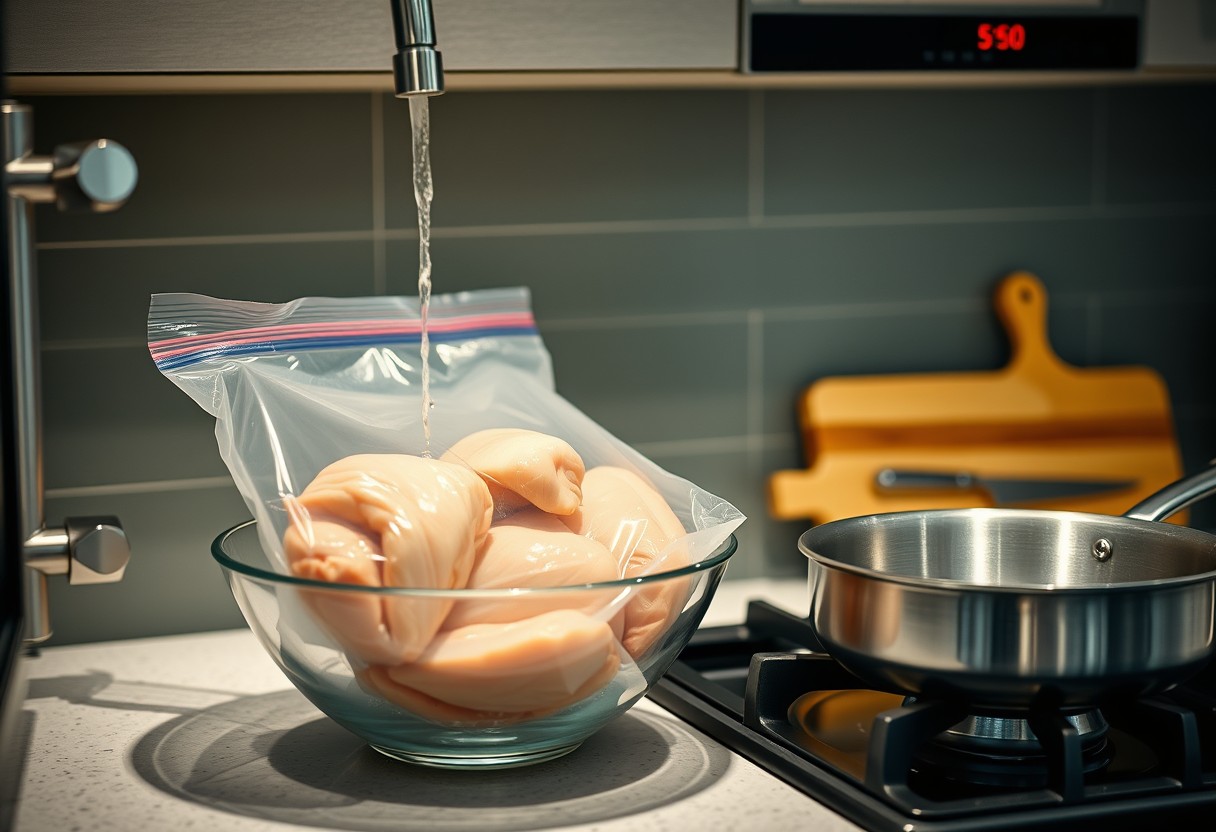
When time collapses and dinner waits for no one, submerging vacuum-sealed proteins in cold running water becomes your fastest path to readiness. Water transfers heat far more efficiently than air, slashing thaw times dramatically compared to countertop waiting. You can safely bring thick steaks or chicken breasts to cook-ready temperatures in under 30 minutes using this method, as long as the packaging remains fully sealed. Never use warm or hot water-it risks partial cooking and danger zone exposure. Keep the stream cool and consistent for even, safe results.
Flowing Tap Velocity
Running tap water accelerates thawing because moving liquid transfers thermal energy more effectively than stagnant water. You need a steady, cool stream-just above dripping-to maintain constant contact with the frozen package. This motion prevents boundary layer buildup, ensuring temperature exchange stays aggressive. Letting the bag float freely improves exposure, while pinning it against the sink base enhances surface contact. Monitor every few minutes to confirm flow hasn’t slowed, as interruptions prolong exposure and compromise safety.
Seal Integrity Checks
Before immersion, inspect the plastic wrap or vacuum seal for any punctures, micro-tears, or compromised edges. Even a tiny breach allows water intrusion, which not only ruins texture but introduces contamination risks. You’re relying on that barrier to keep pathogens out while heat moves in. A compromised seal turns safe thawing into a bacterial hazard. If you spot damage, transfer the protein to a fresh, food-safe bag immediately, double-checking the new enclosure before returning it to the flow.
Fire and Ice Transitions
Skipping the thaw saves precious minutes when dinner waits for no one. You can take frozen vegetables straight from the bag to the pan without sacrificing texture or flavor, as long as heat is high and timing is tight. The key is rapid surface exposure-letting intense heat sear the outer layer before moisture deepens and steaming begins. Cast iron skillets and heavy-duty sheet pans preheated in a hot oven deliver the immediate thermal shock needed to char rather than stew. Just spread the frozen contents in a dry, single layer and resist the urge to stir too soon.
The Cast Iron Char
Drop frozen broccoli, peppers, or green beans into a smoking-hot cast iron skillet and let them sit undisturbed for three minutes. The direct, intense heat creates a crisp, caramelized exterior while the inside catches up in temperature without turning to mush. Shaking the pan too early risks releasing excess moisture and preventing proper browning, so patience pays off in flavor. A light coat of high-smoke-point oil applied before heating ensures even searing and prevents sticking during this rapid-fire transformation.
High-Velocity Roasting
Preheat your oven to 475°F and place a metal rack inside a preheated sheet pan for at least ten minutes before adding ingredients. Toss frozen vegetables lightly in oil and arrange them in a single layer on the hot surface. The combination of radiant heat and elevated air circulation forces rapid moisture evaporation, yielding roasted edges and tender interiors in under 20 minutes. Avoid overcrowding-this traps steam and leads to sogginess instead of the crisp finish you want.
Salvaging the Cellular Walls
Freeze-thaw cycles rupture food’s cellular structure, leading to limp textures and lost moisture. You can counteract this damage by using a balanced combination of salt and acid during preparation. Salt stabilizes proteins and draws out excess water, helping maintain firmness in delicate items like shrimp or soft vegetables. Meanwhile, acid from citrus or vinegar strengthens cell walls, preserving bite and brightness. Applied correctly, this method transforms thawed ingredients from soggy disappointments into responsive, flavorful components ready for fast cooking.
Saline Bath Restoration
Salt does more than season-it actively restructures compromised tissues in frozen produce and proteins. Soaking thawed items in a mild saline solution (about 1% salt by weight) for 10 to 15 minutes encourages osmotic rebalancing, pulling trapped moisture back into cells. This simple step can restore up to 70% of lost firmness, especially in mushrooms, zucchini, or chicken breast. Avoid oversalting, as too much concentration accelerates dehydration. Rinse briefly after soaking to prevent a briny taste, then pat dry before searing or roasting.
Avoiding the Mush Factor
Acid is your best defense against the mushy texture that plagues thawed vegetables and fruits. A splash of lemon juice or a dash of vinegar in the final minutes of cooking tightens pectin networks and lifts flavor. Never add acid too early-it can halt softening entirely, leaving food unevenly textured. For frozen berries or tomatoes, a quick toss in citrus zest and juice just before serving restores vibrancy. This bright finish masks thaw damage while enhancing natural sweetness, making dishes taste fresh despite time constraints.
The Radar Range Gambit
Mastering your microwave’s defrost function can mean the difference between a meal and a mess. Most units apply heat unevenly, risking partial cooking on the edges while the core remains frozen. Instead of relying on preset buttons, manually set power levels to avoid thermal shock. Keep sessions short and monitor texture closely-microwaves vary widely in output, and overconfidence leads to rubbery proteins or mushy vegetables. Your best defense is control: treat the microwave not as a solution but as a high-risk shortcut requiring constant attention.
Low-Wattage Pulsing
Start with 30% power and intervals of 60 seconds to gently coax ingredients into thawing without cooking. This method allows heat to penetrate frozen centers while minimizing damage to outer layers, preserving more of the food’s original structure. After each pulse, check firmness with a fork-overheating even slightly can denature proteins or turn vegetables to sludge. Repeat only as needed, giving time between bursts for internal temperature to equalize. Patience here prevents irreversible texture loss.
Rotating for Survival
Turn and flip your food halfway through every cycle to counteract hot spots inherent in most microwave cavities. Uneven exposure often results in one side turning leathery while another stays icy, especially with dense items like chicken breasts or butter blocks. Lift and reposition corners if using a plate, and rearrange pieces in batches to ensure uniform treatment. This small action dramatically improves outcomes, helping maintain consistency across the entire portion without accidental cooking.
Pre-Emptive Freezer Logistics
Efficient freezer organization begins with how you position your frozen items for fastest access and thawing. Flat storage maximizes surface area exposure, allowing proteins and prepped meals to thaw evenly and rapidly when needed. Arrange bags and containers in single layers, avoiding deep stacks that trap cold and delay defrosting. If you routinely freeze cooked portions, consider vacuum-sealing them flat to cut thaw time in half. For safety insights on this method, see this discussion on Is there any danger in cooking meals and then freezing ….
Flat-Pack Geometry
Shape matters when it comes to frozen ingredients-laying items flat ensures they unfreeze faster and more uniformly than bulky, irregular forms. When you portion soups, sauces, or meats, press them into rectangular or square containers or zipper bags so they conform to shelf dimensions. This geometry improves airflow and contact with warmer surfaces during thawing, reducing the risk of bacterial growth from partial melting. Stackable, space-efficient shapes also prevent freezer burn by minimizing air pockets and maintaining consistent temperature barriers around the food.
Pre-Chopped Readiness
Chopping vegetables or portioning proteins before freezing transforms last-minute cooking into a seamless process. Dice onions, mince garlic, or cut chicken breasts into stir-fry sizes and freeze them in labeled, dated trays or bags. These ready-to-use components go straight from freezer to pan without thawing, preserving texture and saving precious minutes. Avoid clumping by flash-freezing pieces first, then transferring them to shared containers-this keeps each element accessible and prevents waste from having to defrost more than you need.
Summing up
You save valuable minutes when you plan for frozen ingredients instead of reacting to them. Running cold water over sealed packages thaws proteins quickly without cooking them, while microwave defrost settings offer controlled bursts that prevent premature searing. You maintain texture by avoiding room-temperature thawing and never submerging items directly in water. For future meals, portioning and labeling before freezing lets you pull exactly what you need. You keep dinner on track not by improvising under pressure, but by applying consistent, science-backed steps every time.
FAQ
Q: Can I cook frozen ingredients directly without thawing them first?
A: Yes, many frozen ingredients can be cooked straight from the freezer, especially when using high-heat methods like roasting, broiling, or stir-frying. Dense proteins such as chicken breasts or ground meat may require a few extra minutes of cooking time, but they often cook through evenly if the heat is consistent. For vegetables like peas, corn, or green beans, tossing them directly into boiling water or a hot pan works perfectly and preserves texture better than slow thawing.
Q: How can I speed up defrosting safely in under 15 minutes?
A: The fastest safe method is submerging the sealed item in cold water, changing the water every five minutes to maintain a cool temperature and prevent bacterial growth. A one-inch-thick piece of fish or meat typically thaws in about 10 to 12 minutes this way. Avoid warm or hot water-it starts cooking the outer layer while the center remains frozen. This technique works best when the food is vacuum-sealed or in a leak-proof plastic bag.
Q: Is it safe to use the microwave’s defrost setting for last-minute meals?
A: Microwave defrosting is safe if you plan to cook the ingredient immediately afterward. The uneven nature of microwave energy means some areas may begin to cook while others stay frozen, creating potential zones for bacteria if left sitting. A mid-sized SaaS firm running a team lunch might use this method for frozen dumplings or pre-marinated tofu, transferring them straight to a hot pan after the cycle ends to finish cooking.
Q: What types of dishes handle frozen ingredients best with minimal prep?
A: One-pot meals like soups, stews, casseroles, and baked pasta dishes adapt well to frozen components. Frozen shrimp go directly into a simmering tomato sauce. Frozen chopped onions and peppers work in scrambled eggs or grain bowls with no noticeable difference. Sheet pan dinners also tolerate frozen items-toss frozen Brussels sprouts with oil and seasoning, then roast alongside sausages or chicken thighs.
Q: Does cooking from frozen affect flavor or texture negatively?
A: Not always. Some foods, like berries used in baking, actually benefit from staying frozen until added to batter to prevent sinking and color bleed. Lean meats may release more liquid when cooked from frozen, so searing should follow initial steaming or boiling to avoid steaming the entire batch. Flash-frozen vegetables often retain nutrients better than fresh ones stored for days, making them a practical choice when time and quality both matter.