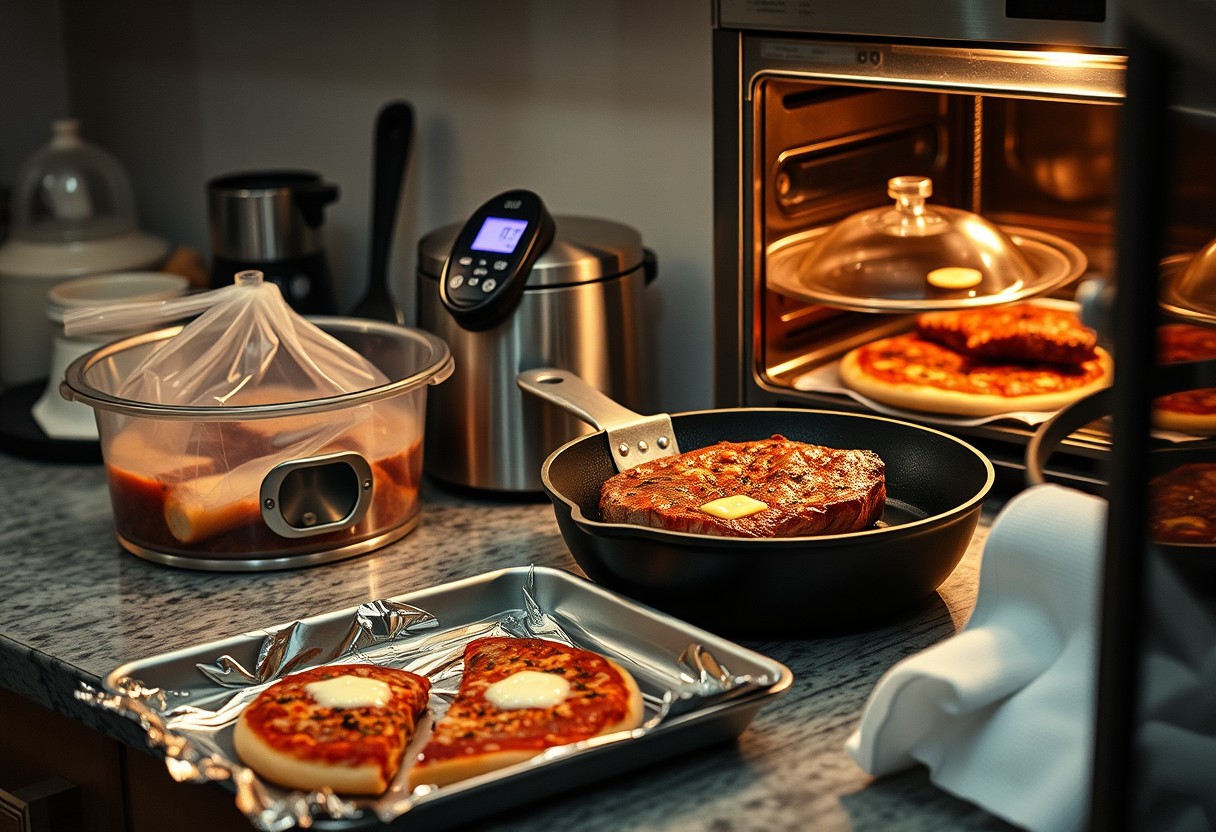
You’ve probably ruined a perfectly good portion of chicken, pasta, or steak just by reheating it the wrong way. The truth is, high heat and dry methods destroy texture fast, turning tender leftovers into rubbery or parched disappointments. But you can prevent this. With the right technique, you preserve moisture, restore texture, and keep flavor intact-without guesswork or frustration.
Key Takeaways:
- Cooked proteins like chicken breast or pork chops reheat best with gentle moisture-using a covered dish in the oven or steaming briefly prevents them from drying out.
- A skillet over low heat works well for foods like roasted vegetables or meats, especially when a splash of broth or water is added to revive texture and prevent scorching.
- The air fryer can quickly refresh crispy-skinned items such as roasted chicken or fish without turning them leathery, provided they’re heated at a lower temperature and monitored closely.
The Oven Altar
Slow, steady heat transforms reheating from a gamble into a reliable ritual. When you use low temperatures-between 200°F and 275°F-you protect delicate proteins and baked goods from seizing up or drying out. High heat forces moisture to flee, but a gentle oven allows warmth to penetrate without shock. This method is especially effective for dense cuts of meat and leftover pizza with crisp crusts. The result? Food that tastes close to fresh, not like a brittle imitation.
The Pizza Resurrection
Baking your cold slice on a preheated tray at 250°F revives its soul without incinerating the base. The low oven slowly warms the cheese and sauce, letting the crust regain its structure instead of turning leathery. Placing it directly on the rack ensures even heat distribution, preventing sogginess underneath. You’ll find the topping melts just enough while the base stays crisp and intact, not shattering like overbaked cardboard.
Reviving the Sunday Roast
Leftover roast beef, lamb, or pork regains dignity when warmed with patience. Wrap the meat loosely in foil and place it in a 225°F oven until it reaches your desired warmth-usually 20 to 30 minutes, depending on thickness. This slow rise in temperature prevents the fibers from tensing and expelling juice. The outcome is tender, moist slices that still honor the original cook, not a rubbery shadow of it.
The Steam Bath
Steam is your most reliable ally when reviving grains and pasta that have dried out overnight. Instead of adding more moisture through direct liquid, which can make dishes soggy, gentle steam penetrates evenly without shocking the food. You’ll preserve texture while restoring tenderness, especially in delicate rice or thin noodles. The gentle heat prevents scorching, and the enclosed environment keeps water molecules active long enough to rehydrate each grain or strand. This method works best with a tight-fitting lid or steamer basket over simmering water.
Rice Salvation
Perfectly reheated rice regains its softness without turning mushy or crunchy. Place cold rice in a heatproof bowl and sprinkle just a few drops of water on top-too much will ruin the balance. Cover it tightly with foil or a lid to trap escaping steam. Set the bowl over a pot of gently boiling water and let it heat for 5-7 minutes. The low, indirect warmth revives starches gradually, restoring a freshly cooked mouthfeel. Fluff it once at the end to release excess moisture and you’re ready to serve.
Pasta Hydration
Pasta loses its silkiness fast when chilled, but steam brings it back without gluing strands together. Transfer leftovers to a shallow dish and mist lightly with water-just enough to generate internal steam. Cover completely and place over simmering water, stirring only once halfway through. The even moisture distribution prevents dry edges and gummy centers. Delicate shapes like fettuccine or orzo respond especially well, emerging supple and warm all the way through, not blistered or broken.
Microwave Damage Control
Electromagnetic waves in your microwave target water molecules, rapidly heating them and often leaving food rubbery or parched. The key to avoiding this is introducing a damp barrier that absorbs and redistributes energy more evenly. Placing a small cup of water inside the microwave alongside your food helps maintain humidity, slowing moisture loss. This simple act can mean the difference between a soggy disaster and a perfectly revived meal, especially for delicate items like sandwiches or leftovers with mixed textures.
The Water Cup Shield
A cup of water in the microwave acts as a buffer against intense energy bursts that strip moisture from your food. When you reheat a sandwich or a slice of casserole, the surrounding air quickly dries out, accelerating toughness. The water absorbs excess microwaves, releasing steam that keeps the environment humid. This method is most effective when the cup is placed next to, not under, your dish. The result is a noticeably softer texture and a meal that retains its original character.
Paper Towel Protection
Covering your food with a slightly damp paper towel creates a localized steam barrier that locks in moisture during reheating. The towel traps escaping vapor, preventing the surface from becoming leathery or burnt. Use a clean, white paper towel-avoid printed or recycled types that may contain chemicals. For best results, moisten the towel so it’s damp but not dripping. This technique works especially well for items like burritos, breaded cutlets, or anything with a risk of turning dry and tough within seconds.
The Skillet Sizzle
A hot skillet breathes new life into fried foods that have lost their crunch, restoring both texture and flavor with precision. When your leftovers turn tough and rubbery when reheated, this method is your best defense. The direct, high heat re-crisps the exterior quickly, while careful timing prevents overcooking the interior. You don’t need oil for everything, but a light coating ensures even browning and guards against dryness, especially for breaded items.
Cast Iron Recovery
Cast iron delivers unmatched heat retention, making it ideal for reviving fried chicken or fish with a crisp, golden finish. You’ll notice the difference immediately-the crust regains its robust snap without absorbing excess oil. Preheat the skillet over medium heat before adding leftovers to avoid steaming. Pressing down lightly with a spatula ensures full contact, accelerating crispness. This method works best when you monitor the process closely, as cast iron can scorch food fast if left unattended.
Oil Management
Using the right amount of oil prevents sticking and enhances texture without greasiness. You only need a thin layer-about a teaspoon-to create a conductive surface for even reheating. Too much oil drowns the crust, turning it soggy or greasy, while too little risks burning. Choose a high-smoke-point oil like canola or grapeseed to maintain stability under heat. Swirl it across the pan before adding food to ensure complete coverage and optimal sizzle from the first contact.
The Air Fryer Shortcut
High-velocity air cuts through moisture buildup, making the air fryer your strongest ally when reviving cooked poultry. Instead of trapping steam that softens skin and warps texture, this method delivers rapid circulation that restores crispness without drying out the interior. You’ll find leftover chicken thighs or wings emerge with a resistance similar to their original fry, avoiding the limp, rubbery fate of microwave reheating. The intense airflow mimics deep-frying conditions, making it especially effective for breaded or roasted pieces that demand texture contrast.
Wings and Thighs
Reheating wings and thighs in the air fryer preserves their juicy core while re-crisping the exterior in under ten minutes. You don’t need oil or foil-just place them in a single layer and let the rapid airflow do the work. The result is skin that crackles on first bite, not a soggy or leathery surface. Dark meat stays tender because the short exposure time prevents overcooking, making this method far superior to prolonged oven reheating that often dries out the edges before the center warms.
Fry Restoration
When fried chicken or fish loses its crunch, the air fryer offers the closest thing to a full reset. You regain that initial bite-through crunch because the circulating heat targets the coating without over-penetrating the delicate meat beneath. For best results, heat at a moderate temperature to avoid burning the breading while ensuring the inside reaches a safe serving warmth. The process delivers a golden, crisp revival that microwaves and ovens simply can’t match, turning yesterday’s takeout into something nearly indistinguishable from fresh.
Pre-Heat Protocols
Temperature control begins long before the oven or microwave turns on. Allowing refrigerated food to sit at room temperature for 20 to 30 minutes before reheating prevents a cold core surrounded by overcooked edges. This small window equalizes the internal temperature, promoting even heat penetration without sacrificing texture. Delicate proteins and dense casseroles benefit most-starting cold risks drying them out before the center ever warms through.
The Room Temp Rule
You can avoid the shock of biting into a still-chilled center by letting your dish rest outside the fridge before reheating. Cold food heats unevenly, forcing you to overcook the outer layers just to warm the middle. Take leftovers out 20-30 minutes ahead, especially if reheating in dry heat like an oven or air fryer. This simple pause ensures gentler, more consistent warming and drastically reduces moisture loss across sensitive ingredients like chicken breast or baked pasta.
Slicing for Speed
Thin pieces reheat faster and more evenly than whole portions, minimizing exposure to drying heat. Before warming, slice thick cuts of meat, lasagna blocks, or dense gratins into smaller sections to accelerate thermal transfer. Increased surface area allows heat to reach the center quickly, so you don’t have to extend cook time unnecessarily. For dishes like roasted pork or stuffed shells, this method preserves juiciness while eliminating the risk of a frozen interior.
Summing up
You now know how to reheat delicate foods without sacrificing texture or moisture. By choosing the right method-gentle steam for dumplings, a skillet for seared proteins, or a damp paper towel in the microwave-you maintain quality where it matters most. Temperature control and moisture retention are your primary tools. You do not need special equipment, just attention to detail and a few smart habits. Apply these techniques consistently, and your leftovers will taste as thoughtfully prepared as the first plate.
FAQ
Q: Why does chicken breast often turn rubbery when reheated?
A: Chicken breast has very little fat and connective tissue, so it loses moisture quickly with repeated heat exposure. High temperatures or prolonged reheating cause the proteins to tighten and expel water, leading to a dry, chewy texture. The best results come from gentle, low-temperature methods that reintroduce moisture, like steaming or covering with a damp paper towel in the microwave.
Q: Can I reheat steak without turning it into a tough piece of meat?
A: Yes, but the method matters. Reheating steak in a skillet over low heat allows you to control the temperature and stop just before it overcooks. Letting the steak come to room temperature first prevents uneven heating. Add a pat of butter and cover the pan to trap steam, which helps maintain tenderness. For rare or medium-rare cuts, aim for an internal temperature of 120-125°F to preserve juiciness.
Q: How do I keep reheated fish from drying out?
A: Fish is delicate and dries out fast. The ideal way is to reheat it in the oven at 275°F, wrapped in foil with a splash of broth or lemon juice. This slow, enclosed method keeps the moisture locked in. Avoid microwaving unless necessary, and if you must, use the lowest power setting and cover the dish with a damp paper towel to simulate steaming.
Q: What’s the best way to reheat pasta without it turning gummy or dry?
A: Reheating plain pasta often leads to a mushy or dry result. Instead of the microwave, drop it into simmering salted water for 30 seconds, then drain and toss with a bit of sauce. The brief hot bath revives the texture without overcooking. For sauced pasta, a covered skillet on low heat works better, stirring gently to distribute warmth evenly.
Q: Is the air fryer safe for reheating fried foods without losing crispiness?
A: The air fryer excels at restoring crispness in fried foods like chicken cutlets or french fries. Set it to 350-375°F and reheat for 3-5 minutes, depending on the item. The rapid air circulation reheats the food quickly without drawing out too much moisture. Spread the pieces in a single layer and avoid overcrowding to maintain even airflow and prevent steaming.