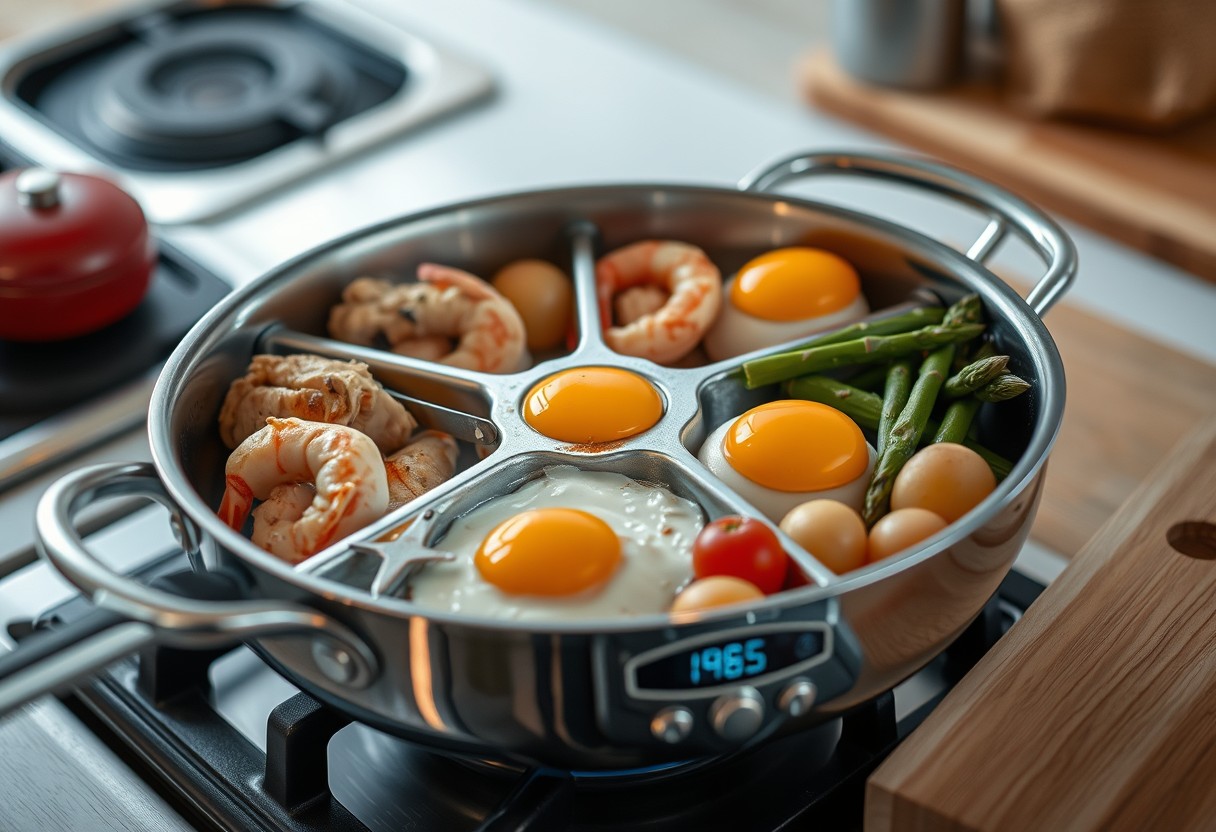
You’ve likely added vegetables and protein to a pan only to find the onions mushy while the potatoes stay hard. Timing and heat distribution are the real keys to cooking mixed ingredients evenly. Overcooking some components while undercooking others is a common but avoidable mistake. With the right techniques, you can achieve consistent doneness across diverse ingredients every time.
Key Takeaways:
- Different ingredients cook at varying rates due to density, moisture, and shape-plan cuts and sizes accordingly to promote even doneness.
- Stagger when ingredients enter the pan, starting with those that take longest, so nothing overcooks or stays underdone.
- Use zones within your cooking surface to manage heat distribution, moving items to cooler areas to rest while others continue cooking.
Analyzing Material Factors of Cooking Speed
Understanding how ingredients respond to heat begins with assessing their inherent physical properties. Density and water content are primary determinants of cooking time, directly influencing how quickly heat penetrates the food. Dense vegetables like carrots require more time than tender zucchini, not due to size alone but because of internal structure. High-moisture items such as tomatoes cook faster and can break down prematurely if exposed to prolonged heat. Recognizing these differences allows you to anticipate behavior in the pan without relying solely on timing.
Density and Fiber Resistance
Dense ingredients with tight cellular structures, such as potatoes or turnips, resist heat penetration more than softer ones. Their fiber composition slows internal temperature rise, demanding longer exposure to achieve tenderness. You’ll notice that these items remain firm even when neighboring components soften, risking uneven results if added simultaneously. Ignoring this resistance leads to undercooked centers or overcooked exteriors. Matching heat duration to structural density ensures each component reaches ideal texture at the same time.
Moisture Content and Sugars
Ingredients with high water levels, like bell peppers or mushrooms, release moisture quickly when heated, accelerating their cooking process. The presence of natural sugars can also speed up browning and breakdown, sometimes causing delicate items to turn mushy or burn. You must account for this volatility-foods rich in both water and sugar react intensely to heat. Managing exposure time prevents premature disintegration while preserving structure and flavor balance in the final dish.
How-to Size Ingredients for Thermal Consistency
Matching the size of each ingredient ensures they cook evenly, preventing some pieces from turning mushy while others remain underdone. When you cut components to similar dimensions, heat penetrates at a comparable rate, which is especially important in fast-cooking methods like stir-frying or sautéing. This precision eliminates guesswork and supports consistent results across dishes, whether you’re working with vegetables, proteins, or starches. Uniformity isn’t about aesthetics-it directly influences texture, flavor development, and doneness.
The Uniform Dice Technique
Dicing ingredients into identical cubes creates predictable cooking behavior across all pieces. If you’re preparing potatoes, carrots, or apples for a skillet dish, using a ruler or guide until muscle memory develops helps maintain consistency. The most dangerous mistake is assuming “close enough” suffices-slight variations can result in half the batch overcooking. A ¼-inch dice cooks markedly faster than a ½-inch one, so precision matters most when heat exposure is brief and intense.
Adjusting Surface Area for High-Density Items
Thick or dense foods like sweet potatoes, beets, or pork shoulder need strategic sizing to match lighter ingredients. You should slice them thinner or cut them smaller to increase surface area exposed to heat, allowing them to finish at the same time as softer items. Without this adjustment, dense pieces lag behind, forcing you to either undercook the rest or burn the more delicate components. The positive outcome is balanced doneness, even when combining disparate textures in one pan.
How-to Implement Staggered Addition Sequences
Start by adding ingredients that take longer to cook, like root vegetables or dense proteins, allowing them enough time to reach ideal doneness without burning. Introduce quicker-cooking items-such as leafy greens or seafood-only when the slower components are nearing completion. This method ensures each ingredient finishes at the right texture and temperature. For complex stews where timing matters, consider tools like slow cookers or sous-vide setups; any device that allows you to stew ingredients together but control their exposure can enhance precision.
The Hard-to-Soft Chronology
Place firm ingredients such as carrots, potatoes, or beans into the pan first, giving them a head start of several minutes before softer ones follow. These dense items need sustained heat to break down properly, while delicate vegetables like zucchini or spinach turn mushy if exposed too soon. By following a hard-to-soft sequence, you maintain distinct textures across components in the same dish. Even within mixed stir-fries, this order prevents undercooked onions alongside overdone bell peppers.
Timing Delicate Aromatics and Finishing Herbs
Add garlic, ginger, or fresh herbs like basil and cilantro near the end to preserve their volatile oils and bright flavor. Exposing these aromatics to prolonged heat dulls their impact and can create bitterness, especially with garlic. Stir in chopped parsley or chives just before serving to deliver a lively, aromatic lift that defines well-balanced dishes. Even a 30-second delay can make the difference between vibrant and flat taste.
Tips for Utilizing Multi-Zone Pan Management
Organizing your pan into distinct thermal zones lets you manage multiple ingredients with different cooking needs simultaneously. You can sear proteins over high heat on one side while gently warming delicate vegetables in a cooler corner. This method prevents overcrowding and reduces the risk of steaming instead of browning. Use the pan’s natural heat distribution-typically hottest at the center-to create gradients, ensuring each ingredient receives the right amount of energy without overcooking or undercooking.
Creating Heat Gradients in a Single Vessel
Position ingredients according to their required intensity by using the center of the pan for high-heat searing and the outer edges for lower-temperature warming. Cast iron and carbon steel pans retain heat well, making them ideal for maintaining stable gradients. You’ll notice tougher cuts like steak thrive in the center, while softer items like mushrooms cook evenly near the rim. This spatial strategy ensures each component reaches its ideal doneness within the same pan.
Utilizing Peripheral Space for Carryover Prevention
Move cooked or sensitive items to the pan’s cooler perimeter to halt excessive cooking once they reach desired doneness. The residual warmth keeps them ready to serve without pushing them past optimal texture. Delicate proteins like scallops or fish fillets benefit most from this technique, as their thin structure makes them prone to becoming tough or dry if left in high-heat zones. Using peripheral space gives you precise control over final outcomes.
Essential Tips for Controlling Liquid Factors
Liquid behavior directly impacts ingredient integrity, especially when combining delicate proteins or vegetables with heartier components. You must regulate the simmer level to maintain a gentle cook, avoiding rapid boiling that can break apart tender foods. Keep the liquid volume just sufficient to partially submerge items, reducing the risk of waterlogging or overcooking. Use a wide pan to allow natural evaporation and better control over consistency. The temperature stability of your cooking liquid determines whether ingredients stay whole or disintegrate under prolonged heat.
- Control the simmer level to prevent violent agitation
- Maintain optimal liquid volume to avoid dilution and sogginess
- Choose pans that support even heat distribution and evaporation
- Monitor temperature shifts when adding cold ingredients
- Use partial submersion to protect delicate textures
Managing Braising Liquid and Steam
Braising combines moist and dry heat, so controlling the amount of liquid and steam is essential for balanced results. You should start with enough liquid to come halfway up the ingredients, as too much will lead to stewing rather than braising. Keep the lid slightly ajar to release excess steam and prevent soggy exteriors. A tight seal traps moisture, which may soften textures beyond desired tenderness. The braising liquid reduces gradually, concentrating flavor while protecting structure through controlled humidity.
The Role of Acidity in Texture Retention
Acidic components like wine, vinegar, or tomatoes influence how ingredients hold up during slow cooking. You need to balance acidity carefully-too much can weaken cell walls in vegetables and proteins, causing them to fall apart prematurely. Introduce acidic liquids later in the process if long simmers are needed, or dilute them with broth to moderate their effect. The pH level of your cooking medium plays a direct role in maintaining firmness, especially in legumes and root vegetables exposed to extended heat.
Conclusion
You now have the practical framework to cook diverse ingredients together without overcooking any one component. By cutting items to match their cooking rates, adding them to the pan at staggered intervals, and using distinct heat zones within your skillet, you maintain control over doneness. Managing liquids and lid use further refines results, preventing steam from turning crisp vegetables into soggy ones. Apply these techniques consistently, and your meals will reflect precise, restaurant-quality balance in every bite.
FAQ
Q: Why do some ingredients overcook when cooked together in the same pan?
A: Different ingredients respond to heat at varying rates due to differences in density, water content, and size. For example, a carrot cube takes longer to soften than a zucchini slice because it is denser and contains less moisture. When placed in the same pan at the same time, the zucchini may turn mushy before the carrot becomes tender. Matching ingredient sizes and adjusting when they enter the pan helps balance cooking times.
Q: How can I cut vegetables so they cook evenly with proteins like chicken or shrimp?
A: Cut dense vegetables like potatoes or carrots into smaller pieces than softer ones like bell peppers or mushrooms. Size them to match the bite-sized portions of the protein. A ½-inch dice works well for root vegetables when paired with diced chicken. For shrimp, which cooks in under five minutes, add sliced tomatoes or spinach halfway through to prevent them from breaking down too early.
Q: Should I pre-cook certain ingredients before adding others?
A: Yes, especially with ingredients that take much longer to cook. Parboiling potatoes before roasting ensures they finish at the same time as quicker-cooking sausages or broccoli. Searing thick-cut beef chunks before adding onions and peppers in a stir-fry gives the meat a head start without drowning the dish in oil or overcooking delicate aromatics.
Q: Can I use different heat zones in a single pan to manage cooking times?
A: Most stovetops allow you to create heat gradients. Push already-searing meats to the outer edges of a skillet while adding quick-cooking vegetables like snow peas or bean sprouts to the hotter center. Cast iron pans retain heat well, making this technique effective. Stir occasionally to rotate ingredients through the hot spots as needed.
Q: How does liquid affect cooking speed when combining ingredients?
A: Liquid introduces steam, which can accelerate softening but also delay browning. Adding broth too early in a vegetable sauté cools the pan and causes veggies to simmer instead of sear. Delay adding liquids like wine, sauce, or stock until after firmer ingredients have had time to develop texture. Start with dry heat, then introduce moisture once timing aligns across components.