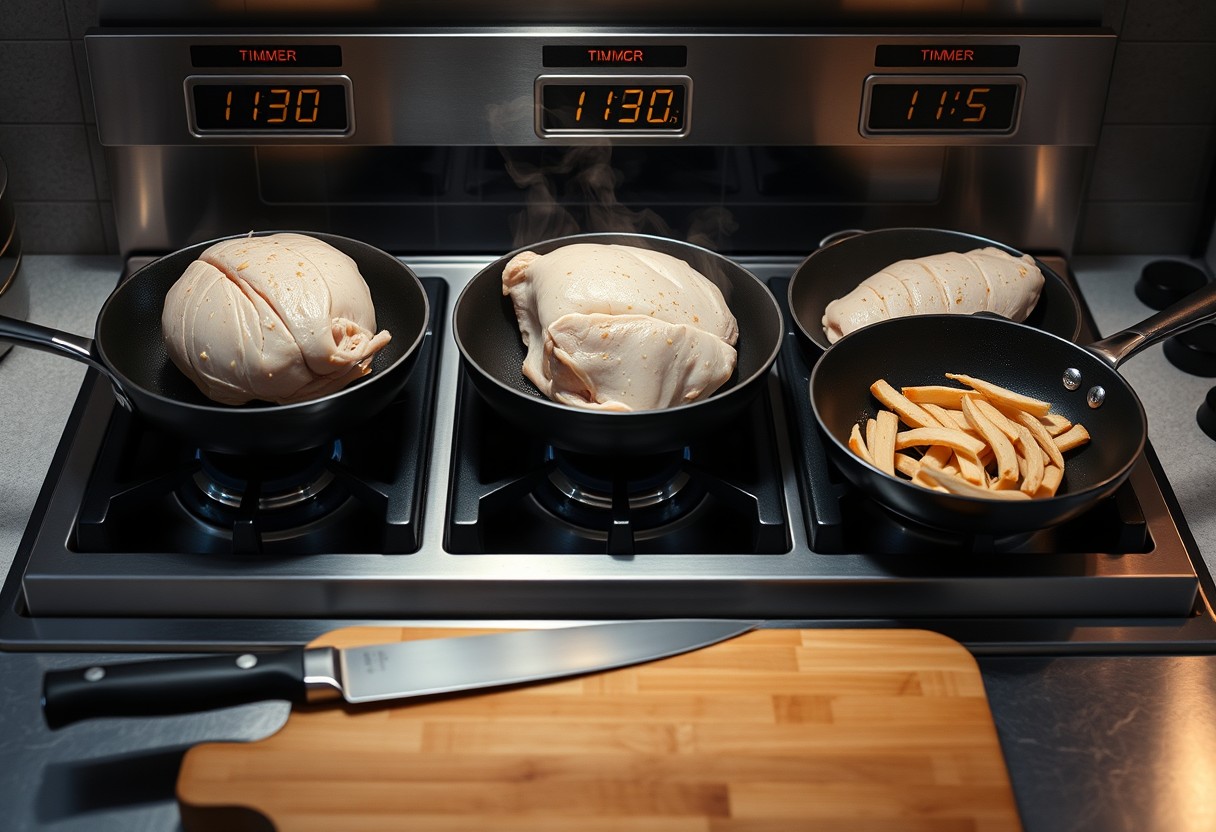
You’ve likely noticed that smaller food pieces brown faster or boil more quickly than larger chunks. That’s no accident. The way you cut your ingredients directly affects how heat moves through them. Improper cuts can lead to uneven cooking or even food safety risks, while precise, consistent shapes promote even results. Understanding this link between cut and cook time puts better, safer meals within your control.
Key Takeaways:
- Cutting food into smaller pieces increases the surface area exposed to heat, allowing thermal energy to enter more quickly and reducing overall cooking time.
- The shape and thickness of a cut determine how evenly heat travels through the food, with uniform sizes preventing some pieces from overcooking while others remain underdone.
- Different cuts disrupt cell structures in distinct ways, influencing how rapidly moisture escapes and flavors develop during cooking.
The Geometry of the Pan-Ready Cube
How you shape your ingredients directly influences how quickly heat reaches their core. When you cut food into smaller, more uniform cubes, you dramatically increase the exposed surface area, allowing heat to transfer more rapidly from pan to food. This means searing happens faster and internal temperatures rise sooner. The difference between a rough chop and a precise brunoise isn’t just aesthetic-smaller pieces cook in half the time due to this expanded contact zone. Underestimating this effect can lead to burnt edges and raw centers if timing isn’t adjusted.
The Surface-to-Volume Ratio Trap
Slicing food too finely might seem efficient, but it creates a hidden risk: excessive browning or even burning before the dish comes together. As pieces get smaller, their surface area grows relative to volume, accelerating heat absorption. You may think you’re speeding up cooking, but this imbalance often results in overcooked exteriors while waiting for interiors to catch up, especially in dense vegetables or meats. Recognizing when this ratio works for or against you keeps texture under control without sacrificing efficiency.
Thermal Entry Points
Every exposed edge acts as a doorway for heat to rush into the food’s interior. When you dice an onion or cube potatoes, you’re not just preparing for even mixing-you’re multiplying the number of entry points where thermal energy floods in. These openings allow rapid conduction, meaning the internal temperature climbs faster than with whole or halved items. Maximizing these points is key when speed matters, like stir-frying or sautéing, but demands constant attention to avoid crossing from golden to scorched in seconds.
The Velocity of Thermal Penetration
Heat travels from the surface of food toward its center at a predictable rate, and cutting ingredients thinner dramatically shortens the distance thermal energy must move. When you reduce the thickness of a vegetable slice or meat piece, the core reaches the desired doneness much faster-sometimes cutting cooking time in half. This principle explains why a julienne carrot cooks almost instantly compared to a whole one. For consistent results, especially in high-heat methods like sautéing or grilling, thinner cuts mean quicker, more reliable heat transfer. Explore how shape influences taste in this insightful post: Slice, Dice, Chop Or Julienne: Does The Cut Change The ….
The Journey to the Thermal Center
Every degree of heat applied begins at the surface and slowly migrates inward, meaning the center is always the last part to respond. You experience this delay most when searing thick steaks or roasting root vegetables. The longer heat takes to reach the core, the greater the risk of overcooking the outer layers. By minimizing the internal distance-such as slicing potatoes into coins instead of chunks-you ensure the entire piece heats evenly and rapidly, preserving texture and moisture where it matters most.
Reducing the Radius of Resistance
Thicker pieces resist even cooking because heat must overcome greater internal mass before the center warms. When you halve the thickness of a food item, you’re not just speeding up cooking-you’re reducing the radius that heat must penetrate by half, which has an exponential effect on efficiency. This is especially critical in stir-fries or flash-roasting, where timing is tight. Thinly sliced mushrooms, for instance, absorb heat almost instantly, achieving ideal browning without prolonged exposure.
The Law of Uniformity
Consistency in size means every piece responds to heat at the same rate, preventing some fragments from turning mushy while others remain underdone. When you cut ingredients with precision, the entire batch reaches doneness simultaneously, maximizing both texture and flavor control. Irregular shapes create unpredictable outcomes, but uniformity removes guesswork. You’re not just shaping food-you’re engineering a reliable thermal journey where evenness guarantees results, especially in fast-cooking methods like sautéing or roasting.
The Chaos of the Uneven Dice
Imagine tossing mismatched vegetable pieces into a skillet-some no bigger than a pea, others nearly an inch across. The smallest ones scorch before the largest begin to soften, creating a disjointed dish. You end up scraping burnt bits while biting into stubborn, raw centers. This inconsistency sabotages timing and texture, making even seasoning and proper browning impossible. Without uniformity, your technique can’t compensate for the randomness introduced by haphazard cutting.
Standardizing the Cube
A perfectly measured cube, say ¼-inch on each side, exposes identical surface area to heat, ensuring parallel cooking across all units. When you take the time to slice with intention, you gain predictable results every single time. Whether it’s onions for a mirepoix or potatoes for a hash, consistent dimensions mean even moisture loss and color development. This discipline transforms routine prep into a foundation for culinary reliability, where precision directly enables excellence without relying on last-minute adjustments.
Cellular Disruption and Evaporation
When you slice into a carrot or tear lettuce for a stir-fry, you’re not just shaping ingredients-you’re triggering a chain reaction inside their cells. Each cut ruptures cell walls, releasing moisture that would otherwise stay trapped. This structural damage creates escape routes for steam and sap during cooking, accelerating dehydration. The more surface area exposed through fine chopping or crushing, the faster internal fluids evaporate, sometimes leading to premature drying if unchecked. Your knife work directly controls how quickly heat drives out water, making precision as important as timing.
Mechanical Cell Wall Failure
Slicing through vegetables applies physical force that fractures rigid plant cell walls, especially in fibrous produce like celery or cabbage. Once broken, these barriers can no longer contain vacuoles filled with water and dissolved compounds. You instantly expose internal tissues to heat and air, dramatically increasing the rate at which moisture escapes. Thin slices or crushed garlic lose juices faster than whole cloves because mechanical damage multiplies leakage points. Even gentle tearing creates irregular breaks that outpace clean cuts in fluid release, altering texture and cooking speed from the first moment of contact with heat.
The Evaporative Cooling Hurdle
As water exits damaged cells, it carries heat away through evaporation, creating a temporary cooling effect on the food’s surface. This process slows the initial rise in temperature, particularly in finely diced items where moisture loss is rapid. You may notice smaller pieces take longer to sizzle upon hitting the pan, not because they resist heat, but because evaporating juices are actively cooling the surface. Overcoming this barrier requires sustained high heat to push past the wet phase into browning. Ignoring this delay can lead to steaming instead of searing, undermining texture and flavor development.
To wrap up
You now understand how the shape and size of your ingredients directly influence cooking speed. Smaller pieces heat faster due to increased surface area exposed to heat, while uniform cuts ensure even cooking across all pieces. Thin slices lose moisture more quickly than thick chunks, and the way you cut affects how heat travels through the food’s structure. Your knife work isn’t just about appearance-it actively shapes the outcome of your dish. Mastering cut consistency gives you precise control over texture, doneness, and timing every time you cook.
FAQ
Q: Why does chopping food into smaller pieces make it cook faster?
A: Smaller pieces have more surface area exposed to heat relative to their volume. When a carrot is sliced thin, for example, more of it touches the hot pan or steam, allowing heat to enter quickly from multiple sides. A whole carrot relies on heat slowly moving from the outside to the center, but cutting it into coins or cubes shortens the distance heat must travel, reducing overall cooking time.
Q: Does the shape of the cut affect cooking speed beyond just size?
A: Yes, shape changes how evenly and rapidly heat spreads. A thick cube of potato takes longer to cook through than a thin slice of the same weight because the slice has a higher surface-to-volume ratio. Julienne carrots cook faster than rounds, and a minced clove of garlic cooks almost instantly compared to a halved clove, due to the difference in exposed edges and internal mass.
Q: Why do some cuts lead to uneven cooking even if pieces are the same size?
A: Irregular shapes create hot spots and cold zones. If one end of a vegetable chunk is thicker, heat takes longer to reach its center. Uniform dicing ensures each piece absorbs heat at a similar rate. A chef’s knife allows precise control, so consistent cuts prevent some pieces from burning while others remain undercooked.
Q: How does cutting affect moisture loss during cooking?
A: More surface area means more moisture escapes. When onions are finely diced, they release water faster in a pan and soften quickly, sometimes caramelizing sooner than large wedges. A whole tomato holds its juices longer when roasted, while chopped tomatoes break down rapidly, forming a sauce-like consistency due to increased exposure to air and heat.
Q: Can the way you cut food change its texture even if cooking time is adjusted?
A: Absolutely. Cutting along or across muscle fibers in meat alters tenderness. Thin slices cut against the grain of a steak require less cooking and are easier to chew. In vegetables, slicing mushrooms thinly lets them cook down into a soft layer, while thick chunks retain bite. The cut influences not just speed but the final mouthfeel and structural integrity of the ingredient.