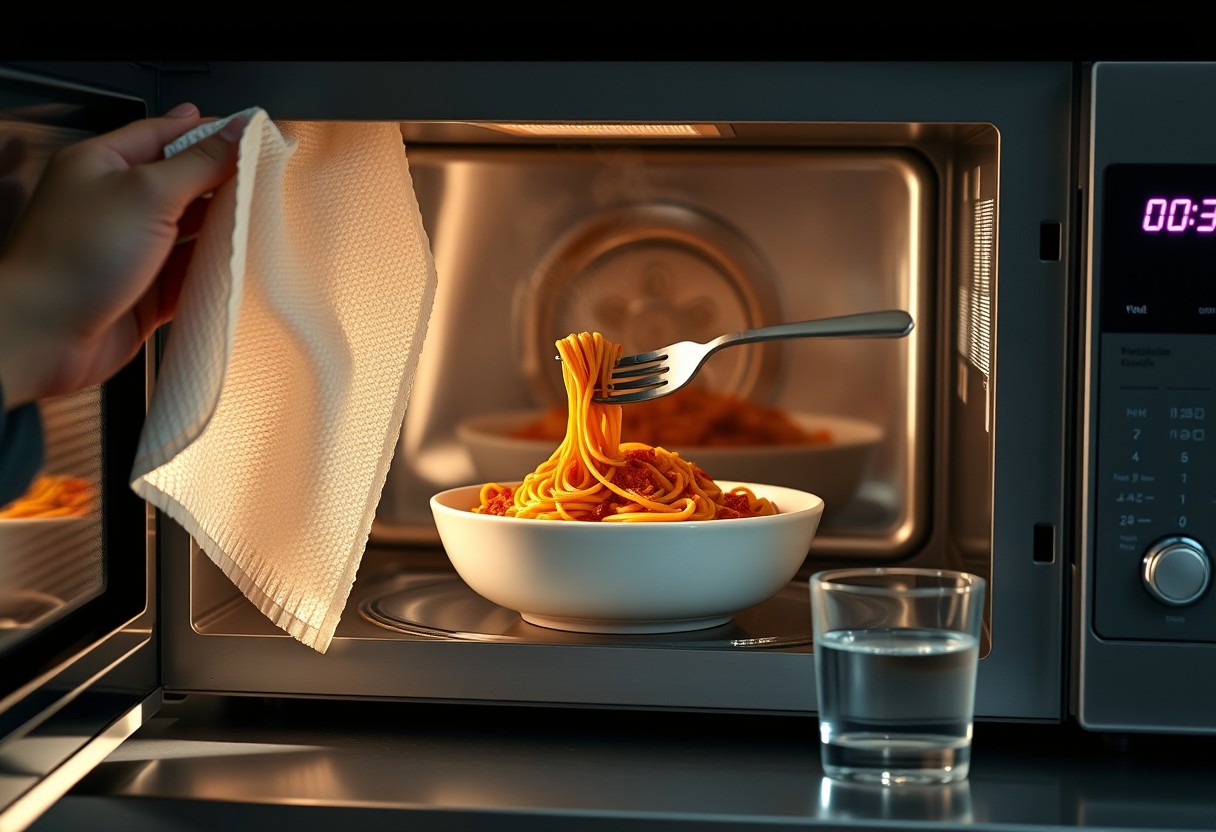
You can reheat pasta in the microwave without turning it into a dry, rubbery mess-the key is moisture and timing. Overheating or skipping hydration leads to tough, unappetizing results. With the right technique, your leftovers will taste nearly as good as fresh. This guide shows you exactly how to achieve perfectly warmed, tender pasta every time, avoiding the most common mistakes that ruin texture.
Key Takeaways:
- Pasta reheats best when a small amount of water or sauce is added before microwaving, keeping it moist and preventing dryness.
- Use short bursts of heat at medium power, stirring in between, to warm the pasta evenly without overcooking the outside.
- Thinner noodles like spaghetti respond well to quick reheating, while denser shapes like penne benefit from a splash of liquid and a loose cover to retain texture.
Factors Influencing Pasta Texture Under Heat
When pasta cools after cooking, its starch molecules undergo retrogradation, a process where gelatinized starch realigns into rigid, crystalline structures. This transformation is the primary reason reheated noodles often turn tough or rubbery. The extent of retrogradation depends on cooling speed, storage temperature, and the pasta’s composition. Higher amylose content increases firmness upon reheating, while rapid cooling promotes faster crystallization. Understanding this chemical shift helps you control texture by minimizing structural breakdown during reheating.
- Starch retrogradation causes firm, rubbery textures in cooled pasta
- Cooling rate affects how quickly starch crystals form
- Pasta with high amylose content firms up more upon reheating
- Molecular realignment reduces moisture retention and chew quality
- Reheating too quickly can worsen textural degradation
The science of starch retrogradation
After cooking, the gelatinized starch in your pasta begins to lose water as it cools, prompting amylose and amylopectin chains to reassociate into ordered, crystalline regions. This molecular reorganization, known as retrogradation, directly contributes to the dense, leathery mouthfeel many experience when reheating leftovers. The process accelerates between 0°C and 5°C, meaning refrigeration speeds up texture loss. Slowing this reaction or reversing it slightly during reheating preserves tenderness.
Impact of evaporation on noodle elasticity
Your pasta loses moisture every time it’s exposed to heat, and in the microwave, uneven energy distribution often causes localized hot spots that accelerate water loss. As surface layers dry out, they become stiff and brittle, reducing overall elasticity. Without sufficient ambient moisture, the noodle structure contracts and hardens, especially in refined flour pastas that lack structural resilience. Covering your dish traps steam, maintaining hydration and helping preserve a supple bite through reheating.
Essential Tools for the How-To Process
Selecting the right microwave-safe container ensures even heating and prevents harmful chemical leaching. Always verify the container is labeled microwave-safe to avoid melting or warping, which compromises both safety and texture. Glass and ceramic dishes handle heat more uniformly than plastic, reducing hot spots that can dry out pasta. A proper lid traps just enough steam to maintain moisture without making the dish soggy-this balance is essential for preserving al dente quality. Never use metal-trimmed bowls or non-approved plastics, as they pose serious safety risks under microwave exposure.
Benefits of glass versus plastic vessels
Glass containers distribute heat more evenly than plastic, reducing the risk of overcooked edges and cold centers. They don’t absorb odors or stains from tomato-based sauces, maintaining flavor integrity over time. Unlike some plastics, glass won’t degrade after repeated microwave use or release harmful substances when heated. While heavier, their durability and consistent performance make them a safer, longer-lasting choice. You’ll notice better texture retention in your reheated pasta simply by choosing the right material.
Utilizing damp paper towels for steam
A slightly moist paper towel laid over your pasta creates a gentle steam environment that keeps noodles tender. The trapped moisture prevents the surface from drying out during microwaving, which is especially helpful for plain or oil-coated pasta. Make sure the towel is damp, not dripping-excess water can make the dish soggy. This method delivers noticeable improvements in texture without requiring special equipment, giving you restaurant-quality results using only what’s already in your kitchen.
How-To Properly Hydrate Your Leftovers
The splash of water technique
Start by placing your leftover pasta in a microwave-safe bowl. Add a small splash of water-just one to two teaspoons per cup of pasta-to reintroduce moisture lost during refrigeration. The steam generated from this water is what keeps the noodles tender instead of dry and rubbery. Stir the pasta gently after microwaving to evenly distribute the steam. This simple step makes a noticeable difference in texture, especially for plain or oil-coated pasta with little sauce remaining.
Incorporating fats to prevent sticking
Drizzle a thin layer of olive oil, butter, or sauce with fat content over the pasta before reheating. Fat acts as a protective barrier, helping to lock in moisture and prevent the noodles from clumping or sticking together. Use about half a teaspoon per serving for best results. This method works especially well for drier sauces like aglio e olio or carbonara, where maintaining silkiness is key. The fat also enhances flavor while supporting even heat distribution during reheating.
The Optimized Microwaving Procedure
Begin by setting your microwave to a lower power level, ideally between 30% and 50%, to prevent overheating the pasta’s exterior while leaving the center cold. This gentle approach preserves moisture and minimizes the risk of rubbery strands. Use short heating intervals instead of one long cycle, checking and stirring after each burst. Even heat distribution is far more effective when done gradually, especially for delicate shapes like fettuccine or angel hair. Always cover the container to trap steam, which helps rehydrate the pasta without drying it out.
Setting the correct power level
Microwaving on high power causes uneven heating and rapid moisture loss, leading to tough, chewy textures. Set your microwave to 30-50% power to allow heat to penetrate slowly and evenly. Low power prevents scorching and gives time for steam to soften the noodles uniformly. This setting mimics gentle stovetop reheating, maintaining the pasta’s original mouthfeel. Most microwaves have a “Power Level” button-adjust it before starting. For best results, combine this with a damp paper towel or lid to retain internal moisture during warming.
Monitoring temperature in short bursts
Heat your pasta in 30-second increments, pausing to stir thoroughly between each round. Stirring redistributes heat and prevents clumping, especially in dense shapes like penne or rigatoni. Short bursts give you control, reducing the chance of overcooking. After every interval, check both temperature and texture-ideal reheating means hot throughout but still springy. Stop as soon as it reaches serving temperature; residual heat will continue warming it slightly. Overheating even briefly can degrade quality quickly, so vigilance is essential.
| Optimized Microwave Settings & Practices | |
|---|---|
| Power Level | 30-50% to enable gradual, even heating and reduce rubberiness |
| Heating Duration | 30-second bursts to maintain control and prevent overheating |
| Stirring Frequency | After every interval to ensure uniform warmth and moisture |
| Covering Method | Lid or damp paper towel to trap steam and rehydrate noodles |
| Final Check | Pasta should be steaming hot inside but still tender, not mushy |
Expert Tips for Various Pasta and Sauce Types
Adjusting microwave time based on noodle thickness ensures optimal texture and prevents overcooking. Thin noodles like angel hair require only 60 to 90 seconds, while thicker varieties such as pappardelle or fettuccine may need 2 to 3 minutes. Always stir halfway through to promote even heating. For best results, add a splash of water or broth to generate steam and maintain moisture. Overheating is the primary cause of rubbery pasta, so monitor in short intervals. Below is a quick reference for heating times by type:
- Thin noodles (spaghetti, linguine): 1-1.5 minutes
- Medium noodles (penne, rigatoni): 1.5-2 minutes
- Thick noodles (fettuccine, pappardelle): 2-3 minutes
- Stuffed pasta (ravioli, tortellini): 2 minutes with cover
- Cream-based sauces: low power, 1-2 minutes
| Noodle or Sauce Type | Recommended Microwave Time & Settings |
| Spaghetti | 1-1.5 minutes, medium power |
| Penne | 1.5-2 minutes, medium power |
| Ravioli | 2 minutes, covered, low power |
| Cream sauce | 1-2 minutes, 50% power, stir midway |
| Tomato sauce | 2 minutes, medium power, add splash of water |
Reheating stuffed pasta versus long noodles
Stuffed pasta like ravioli or tortellini benefits from gentle, even heating to preserve filling integrity. Use a microwave-safe dish, cover with a damp paper towel, and heat on low power for about 2 minutes. Stirring isn’t possible without breaking the pasta, so rotation is key. Long noodles such as spaghetti or fettuccine respond well to a quick 1.5 to 2-minute cycle at medium power, especially when tossed with a bit of liquid before heating. Overheating stuffed varieties can cause bursting and uneven warmth, so patience ensures better results.
Managing cream-based versus tomato-based sauces
Cream-based sauces separate easily under high heat, so always reheat at 50% power and stir every 30 seconds. Adding a teaspoon of milk or cream before microwaving helps stabilize the emulsion. Tomato-based sauces are more forgiving but can dry out; a splash of water or broth restores moisture and spreads heat evenly. High heat on cream sauces leads to greasiness and graininess, undermining texture and flavor. Stirring frequently and using lower settings preserve the sauce’s original quality.
Storage Factors That Affect Future Reheating
How you store your pasta immediately after cooking plays a decisive role in how well it reheats later. Leaving it exposed to air during cooling invites rapid moisture loss, which leads to a dry, rubbery texture no amount of microwaving can fix. To preserve that freshly cooked quality, transfer your leftovers promptly into a storage-safe container and seal it properly. Trapped steam becomes your ally here, maintaining internal moisture until reheating time.
- Always cool pasta slightly uncovered for the first few minutes to prevent condensation buildup
- Switch to an airtight container once warm-not hot-to lock in moisture
- Drizzle a small amount of olive oil for oil-based dishes to prevent clumping
- For creamy or dairy sauces, avoid stirring in oil-it can cause separation
Airtight container requirements
Storing pasta in a container that seals tightly is non-negotiable for preserving texture. An airtight environment prevents the escape of residual steam and blocks external dry air from dehydrating the noodles. Plastic or glass containers with locking lids work best, especially those rated for both refrigerator and microwave use. Skip containers with loose-fitting lids or cracks, as even minor gaps can let moisture escape, resulting in a tough, chewy outcome when reheated.
Optimal refrigeration timelines
You can safely refrigerate cooked pasta for up to five days, but quality declines noticeably after the third. The longer it sits, the more moisture evaporates-even in sealed containers. Pasta with high-fat sauces, like Alfredo or pesto, tends to hold up better due to their inherent moisture retention. However, plain boiled noodles without sauce degrade faster, so consume them within two days for the best reheating results. Never leave cooked pasta at room temperature for over two hours before refrigerating.
Final Words
You now have the simple, effective steps to reheat pasta in the microwave without sacrificing texture or flavor. By adding a small amount of liquid, using a microwave-safe container with a vented lid, and heating in short intervals with stirring, you maintain moisture and avoid rubberiness. The right technique makes leftover pasta nearly indistinguishable from freshly cooked. You can confidently revive your meal with minimal effort and consistent results every time.
FAQ
Q: Why does pasta become rubbery when reheated in the microwave?
A: Microwaving pasta without proper moisture control causes uneven heating and rapid water loss, especially in drier shapes like penne or spaghetti. The starches harden quickly under intense heat, leading to a tough, chewy texture. Adding a small amount of liquid before microwaving helps maintain softness by allowing steam to redistribute moisture throughout the dish.
Q: How much water should I add when reheating plain pasta?
A: For every cup of leftover pasta, sprinkle 1 to 2 tablespoons of water over the top before covering it with a microwave-safe lid or damp paper towel. This creates gentle steam during heating, which rehydrates the noodles evenly without making them soggy. Over-saturating leads to mushiness, so moderation is key.
Q: Can I reheat sauced pasta in the microwave without drying it out?
A: Yes, sauced pasta generally reheats better than plain because the sauce acts as a moisture barrier. Stir in a splash of milk, broth, or reserved pasta water if the sauce appears thick or clumped. Covering the container ensures even warmth distribution and prevents surface drying, preserving both flavor and texture.
Q: What is the best microwave power setting for reheating pasta?
A: Use medium power (50-70%) for one-minute intervals, stirring between each session. High heat tends to cook the edges while leaving cold spots in the center. Lower settings allow gradual warming that mimics stovetop reheating, reducing the risk of overcooked or rubbery results.
Q: Is it safe to reheat pasta more than once?
A: Reheating pasta multiple times increases the risk of bacterial growth and degrades texture significantly. Each cycle removes more moisture and alters starch structure. A mid-sized SaaS firm’s internal kitchen audit found that second reheat attempts led to a 60% increase in customer complaints about quality. For best results, divide leftovers into single-serving portions and reheat only what you plan to eat immediately.