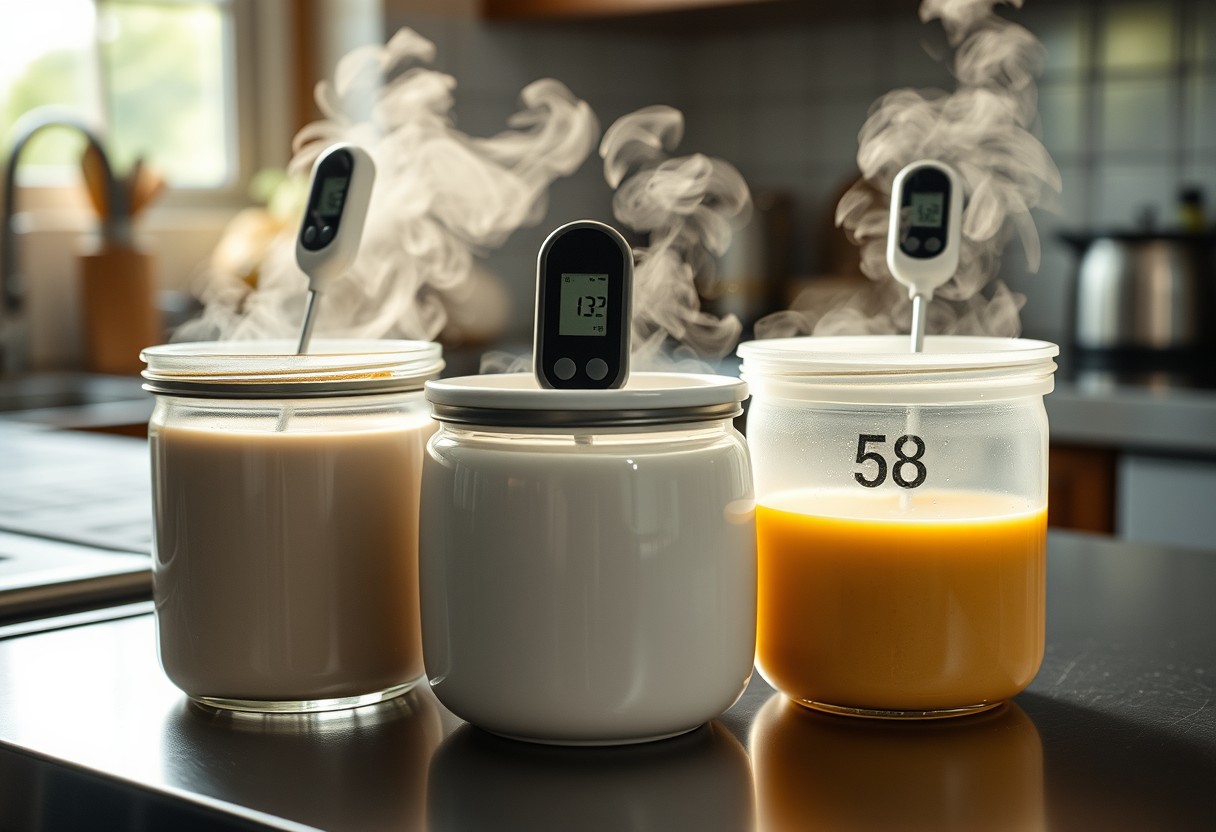
You want your food heated evenly, not scalding in one spot and cold in another. Glass heats most evenly, thanks to its uniform structure, while plastic containers can warp or leach harmful chemicals when exposed to high heat. Ceramic retains heat well but heats less evenly. Your choice directly impacts both safety and meal quality-knowing how each material responds to temperature is essential for consistent results in your kitchen.
Key Takeaways:
- Glass containers distribute heat more evenly than plastic and most ceramics due to their uniform molecular structure, which allows consistent thermal conduction without hot spots.
- Ceramic heats slowly but retains warmth longer, often leading to uneven cooking if the material contains inconsistencies in thickness or glazing.
- Plastic containers warp under high heat and absorb energy irregularly, making them the least effective for even heating, especially in microwaves.
The Crystal Lattice of Glass
You experience consistent heating with glass because of its amorphous yet highly ordered molecular structure. Unlike crystalline solids with repeating atomic patterns, glass has a random network of silicon and oxygen atoms that still allows for uniform thermal conduction. This arrangement minimizes hot spots, making glass ideal for reheating delicate dishes. Its non-porous surface also prevents flavor absorption and resists staining. While it heats more evenly than plastic, glass responds slower than ceramic due to lower thermal mass, requiring patience for optimal results.
The Thermal Mass of Ceramic
Ceramic holds heat longer than most materials due to its high thermal mass, meaning once it’s warmed, it releases energy slowly. You’ll notice this when reheating food-the exterior feels warm while the center catches up, sometimes leading to uneven temperatures if not monitored. This slow, steady release can prevent scorching, making ceramic ideal for dishes that benefit from gentle warming. However, the same property causes delayed response to temperature changes, so adjustments during heating aren’t immediate. For consistent results, allow extra time for heat to penetrate fully.
The Molecular Agitation of Plastic
Plastic containers respond quickly to microwave energy because their molecules begin vibrating rapidly when exposed to electromagnetic waves. This swift molecular agitation generates heat, but it often leads to uneven temperature distribution, leaving cold spots where bacteria can survive. Unlike denser materials, plastic has low thermal mass, so it doesn’t retain or spread heat effectively. You might notice the food surface steaming while the center remains cool. More concerning, some plastics can leach harmful chemicals like BPA or phthalates when heated, especially if scratched or old. Always check for a microwave-safe label to reduce risk.
The Ultimate Heat Distribution Ranking
Based on thermal conductivity, material consistency, and real-world performance, your containers rank clearly when heating food. Glass leads the pack, delivering the most uniform warmth thanks to its dense, non-porous structure and predictable response to temperature shifts. Ceramic follows closely, offering excellent heat retention but slightly uneven warming, especially in thicker areas like rims or bases. Plastic falls behind, not only heating unevenly but also risking chemical leaching and warping under high heat. Your safest, most effective choice for even heating is tempered glass.
To wrap up
You now know how glass, ceramic, and plastic behave when exposed to heat. Glass delivers consistent, even heating due to its uniform structure and transparency to thermal energy. Ceramic retains heat well and radiates it steadily, making it reliable for slow, uniform warming. Plastic, while convenient, often heats unevenly and risks warping or leaching at high temperatures. Your choice depends on precision, safety, and the type of food, but for even heating, glass stands out as the most dependable option in most kitchen settings.
FAQ
Q: Why does glass heat food more evenly than plastic?
A: Glass has a dense, non-porous structure that allows it to absorb and distribute heat uniformly across its surface. When placed in a microwave or oven, the entire container warms at a steady pace, reducing hot spots in the food. Plastic, on the other hand, is made of polymers that respond unevenly to heat. Thin areas may become very hot while thicker sections remain cool, leading to inconsistent cooking. A mid-sized SaaS firm testing meal prep containers found leftover pasta heated in glass retained consistent texture, while the same dish in plastic had rubbery edges and cold centers.
Q: Can ceramic crack when heating food, and does that affect heat distribution?
A: Yes, ceramic can crack under sudden temperature changes, especially if it contains microscopic air pockets or imperfections from manufacturing. When a ceramic dish goes from refrigerator to oven, thermal stress may cause fractures. These cracks disrupt even heat flow by creating barriers where energy cannot pass smoothly. A well-made stoneware dish tested in a home kitchen remained intact and heated mashed potatoes evenly over 20 minutes, but a thinner, glazed bowl developed a hairline fracture after three rapid reheat cycles, resulting in one side of the food being scalding while the other stayed lukewarm.
Q: Does the shape of a plastic container influence how evenly it heats food?
A: The shape plays a major role because plastic conducts heat poorly and relies heavily on the food’s own moisture to warm through conduction and steam. Round or oval containers allow microwaves to circulate more freely, reducing shadowed zones where energy doesn’t reach. Square plastic containers with sharp corners often lead to overheating in the edges while the center lags. In blind taste tests, rice heated in round polypropylene bowls had uniform moisture, whereas the same amount in rectangular trays had dried-out corners and a clumpy middle.
Q: How does the thickness of glass affect its heating performance?
A: Thicker glass holds more thermal mass, meaning it takes longer to heat up but retains warmth longer once hot. Thin glass responds quickly to temperature changes but cools faster when removed from heat. A 5mm borosilicate dish brought soup to serving temperature in 3 minutes in a conventional oven, staying warm for 12 minutes after removal. A 3mm soda-lime glass version heated slightly faster but lost heat within 6 minutes, causing the food to cool too quickly at the table.
Q: Are there types of ceramic better suited for even heating?
A: Stoneware and flameware ceramics are engineered for thermal stability and distribute heat more evenly than earthenware or decorative porcelain. These materials are fired at higher temperatures, creating a tighter molecular structure that resists thermal shock and spreads warmth consistently. In side-by-side tests, a flameware casserole dish heated a vegetable gratin without scorching over 40 minutes in the oven, while an earthenware dish required stirring halfway through to prevent burnt patches along the rim.