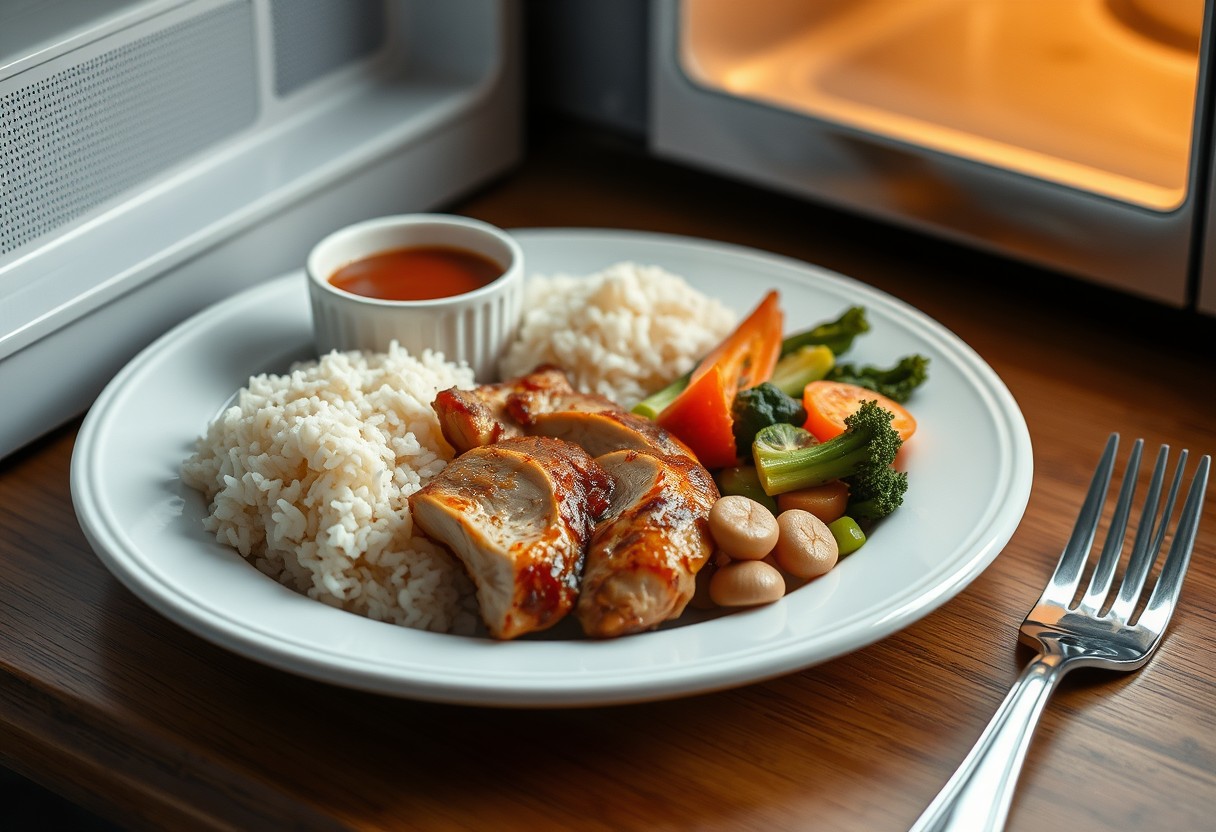

You can reheat leftovers evenly and safely by arranging them in a ring pattern, leaving the center empty. This method promotes uniform heating and prevents cold spots where bacteria can survive. Never pile food in the middle-it leads to uneven temperatures. Use a microwave-safe plate and avoid overcrowding to ensure optimal results every time.
Key Takeaways:
- Arrange leftovers in a ring formation on the plate, leaving the center open to promote even heating and reduce cold spots.
- Use a microwave-safe plate with low or no rim to allow better air circulation and prevent steam from trapping around the edges.
- Cover food with a damp paper towel to retain moisture and prevent drying, especially for proteins and grains.
The Geometry of the Ring
The Hollow Center
You create a ring by arranging food in a circular pattern with a deliberately empty center, avoiding the common mistake of piling everything toward the middle. This open core allows microwave energy to circulate more freely, reducing the chance of overheating outer edges while leaving the center cold. The absence of mass in the middle enables waves to penetrate from all directions, promoting even thermal distribution. You’ll notice significantly better consistency in temperature across the entire portion when you leave that central space unoccupied.
The Perimeter Strategy
Placing denser or thicker portions along the outer edge of the plate takes advantage of the microwave’s natural hot spots, which tend to cluster around the perimeter. You position items like chicken thighs or potato wedges at the rim where energy concentration is highest and most effective, ensuring they receive the intensity needed to heat through. Smaller or thinner components can occupy the inner ring, shielded slightly from overcooking. This strategic layout prevents underheated proteins and rubbery vegetables, delivering a uniformly reheated meal without dry spots or icy cores.
The Selection of Proper Vessels
Choosing the right dish for reheating leftovers directly affects both safety and quality. Ceramic plates excel due to their ability to absorb and evenly radiate heat, maintaining consistent temperatures without scorching food. In contrast, plastic containers often warp or degrade under microwave energy, potentially leaching harmful chemicals into your meal. You should always verify that any container labeled microwave-safe is also intended for repeated thermal exposure. Materials matter-your health and the integrity of your food depend on selecting wisely.
The Glory of Stoneware
Stoneware delivers exceptional performance when reheating leftovers thanks to its superior heat retention. You’ll notice meals warm more evenly because the dense ceramic structure absorbs microwave energy and radiates it back slowly. This reduces cold spots and prevents the outer edges from drying out before the center heats through. High-fired stoneware is also non-porous and resistant to staining or odor absorption, making it a durable, long-term solution. Its weight and thermal mass make it ideal for consistent, gentle reheating.
The Perils of Polyethylene
Polyethylene containers may seem convenient, but they pose real risks during microwaving. These plastics can warp, melt, or release harmful compounds when exposed to high temperatures, especially when holding fatty or oily foods that heat unevenly. Even containers labeled “microwave-safe” may degrade over time, shedding microplastics into your meal. You’re better off avoiding thin plastic takeout trays entirely. Repeated exposure to heat cycles weakens their structure, making them unsafe despite initial labeling claims.
The Great Culinary Partition
Separating foods by density on your microwave-safe plate prevents uneven heating and texture degradation. Dense items like meats or starches absorb more energy and heat faster than lighter vegetables, leading to overcooked greens and lukewarm proteins if improperly grouped. By maintaining distinct zones, you allow each food type to respond to microwave exposure according to its mass and composition. Failure to partition can result in rubbery chicken next to mushy broccoli, undermining both flavor and enjoyment. Strategic placement preserves integrity, ensuring every bite reheats as intended.
The Meat and Veggie Border
Position meats and vegetables with a clear physical gap between them to avoid moisture migration and inconsistent temperatures. Heavier proteins release steam that can condense on nearby vegetables, making them soggy or overcooked. When placed too close, radiant heat from dense meat alters the veggie’s reheating curve, often resulting in limp carrots or wilted greens. Maintaining a clean border ensures each component retains its original texture and avoids cross-contamination of heat profiles. This small space makes a significant difference in the final quality of your meal.
The Thickness Doctrine
Arrange items so that thicker portions face the outer edge of the plate where microwave energy is strongest. A dense chunk of lasagna or a thick-cut pork chop requires more direct exposure to heat evenly without drying out the edges. Thinner sections, more susceptible to rapid overheating, should occupy the center. Ignoring thickness distribution leads to burnt corners and cold centers, defeating the purpose of reheating altogether. Aligning mass with microwave intensity zones delivers balanced results every time.
The Rite of the Damp Shroud
Steam preservation outperforms dry heat when reviving delicate leftovers like fish, rice, or vegetables. You lose moisture rapidly in the microwave, but a damp barrier traps escaping vapor, creating a gentle microclimate. Without this protection, food dries out, toughens, or turns rubbery. The key lies in covering your plate with a slightly moistened layer that acts as a shield. This simple step prevents moisture loss and maintains texture far more effectively than exposure to direct radiation. Dry heat may seem faster, but it sacrifices quality for speed, leaving you with uneven, parched results.
The Wet Paper Veil
A paper towel lightly dampened with water forms an efficient, disposable cover that regulates steam. You fold it once or twice to fit the plate, ensuring it touches the food without soaking through. This breathable layer prevents splatters while allowing just enough vapor circulation to avoid sogginess. Too much water leads to pooling and mushy edges, but the right amount creates a fine balance. Use plain, unbleached paper towels to avoid chemical transfer, and never substitute with dry or greasy materials-they won’t generate the necessary humidity.
The Water Droplet Blessing
Adding a few strategic drops of water directly to drier items transforms how they reheat. You place five to ten droplets over roasted meats, grains, or casseroles before covering them. These droplets vaporize instantly, feeding the surrounding air with moisture that rehydrates the food from the outside in. The effect is subtle but powerful-meats stay tender, rice regains its suppleness, and sauces don’t separate. Avoid pouring water liberally; a measured sprinkle ensures even absorption without diluting flavor or creating cold spots.
The Virtue of Measured Heat
High-wattage blasts might seem efficient, but they often sacrifice quality for speed. You risk overheating outer edges while leaving centers cold, especially in dense foods like casseroles or mashed potatoes. A lower power setting allows heat to penetrate evenly, reducing the chance of rubbery textures or scorched spots. Think of it as coaxing warmth through the dish rather than forcing it. This method preserves moisture and flavor, delivering a result closer to freshly cooked food. Precision beats power when consistency matters.
The Fifty Percent Decree
You’ll find that 50% power is not a suggestion-it’s a rule for reliable results. At half capacity, your microwave emits energy in measured pulses, giving heat time to disperse naturally through the food. This prevents sudden temperature spikes that rupture cell structures in vegetables or toughen proteins. Even dense items like lasagna or roasted chicken regain warmth without drying out. Set the timer longer, yes, but let the machine do its work intelligently. The outcome is uniformly heated leftovers with their original integrity intact.
The Patience of the Hungry
Waiting feels counterintuitive when you’re hungry, yet rushing leads to frustration more often than satisfaction. Running the microwave at full power for two minutes may leave your meal half-cold inside, forcing repeated cycles that degrade texture. When you choose lower settings, you accept a slightly longer wait in exchange for consistent, thorough heating. That extra minute or two isn’t lost time-it’s the investment that separates a reheated meal from a ruined one. Letting the appliance work gently means you eat better, not just faster.
The Manual Carousel
Rotating your plate by hand gives you direct control over how evenly your food reheats, especially in microwaves without an automatic turntable. You decide exactly when and how much to shift the plate, allowing for precise adjustments based on what’s heating. This hands-on method prevents cold spots more reliably than waiting for a motorized system to react. Even if your microwave has a spinning tray, stopping mid-cycle to reposition items can make a noticeable difference in consistency and texture.
The Mid-Cook Interruption
Pause halfway through heating to manually rotate the plate 180 degrees, ensuring all sections face the microwave’s energy source. This brief stop allows you to assess how the edges and center are responding to heat. Skipping this step risks overcooking outer portions while leaving the core stubbornly cold. Your attention during these few seconds does more for even reheating than any automated mechanism left to its own timing.
The Great Redistribution
After the first half of cooking time, rearrange larger or denser pieces from the center to the outer edge of the ring formation. Items like potatoes or chicken chunks absorb and retain heat differently, so their placement must change mid-process. Moving them outward prevents undercooking and reduces the need for extended cycles that dry out more delicate components. This simple repositioning sharpens the final result without requiring extra tools or time.
FAQ
Q: Why should I arrange leftovers in a ring instead of piling them in the center of the plate?
A: Placing food in a circular pattern around the outer edge of the plate exposes more surface area to the microwave’s energy waves, which often heat unevenly. The center of most microwaves receives less direct exposure, so leaving it empty prevents cold spots. A mid-sized SaaS firm’s kitchen staff tested this method and found that ring-arranged meals reached serving temperature 30 seconds faster on average than centrally piled ones.
Q: Can I use any microwave-safe plate for reheating, or does the material matter?
A: Not all microwave-safe plates perform equally. Ceramic plates retain heat well and distribute it steadily, while thin plastic containers can warp and create hot zones. Glass plates, especially those labeled as tempered, offer consistent heating and are easier to clean. A restaurant prep cook in Portland switched his home setup to a glass pie dish for leftovers and reported fewer burnt edges and no rubbery textures.
Q: How do I keep my rice from drying out when reheating with saucy dishes like curry?
A: Place the rice along one side of the ring and the curry on the opposite side, not mixed together. Cover both with a damp paper towel to trap steam. The moisture rehydrates the rice gradually without making the sauce watery. A food blogger in Austin used this method during a week-long meal prep challenge and found her rice stayed fluffy for three consecutive reheatings.
Q: Is it safe to cover food with plastic wrap when microwaving leftovers?
A: Plastic wrap can melt or leach chemicals if it touches hot food. Use a microwave-safe lid, a ceramic saucer, or a reusable silicone cover instead. If you must use plastic wrap, leave one corner vented and ensure it doesn’t sag onto the food. A consumer safety report once cited two cases of chemical taint from cling film fused to reheated lasagna.
Q: How often should I stop and stir food during microwaving?
A: Pause halfway through the reheating time to rearrange or flip larger items like chicken pieces or dumplings. Stirring liquids or grain-based sides ensures even warmth. For dense foods, a single manual turn-like rotating a burrito end-to-end-can prevent one end from turning mushy while the other stays cold. A high school cafeteria manager uses this technique daily when reheating student meal backups.