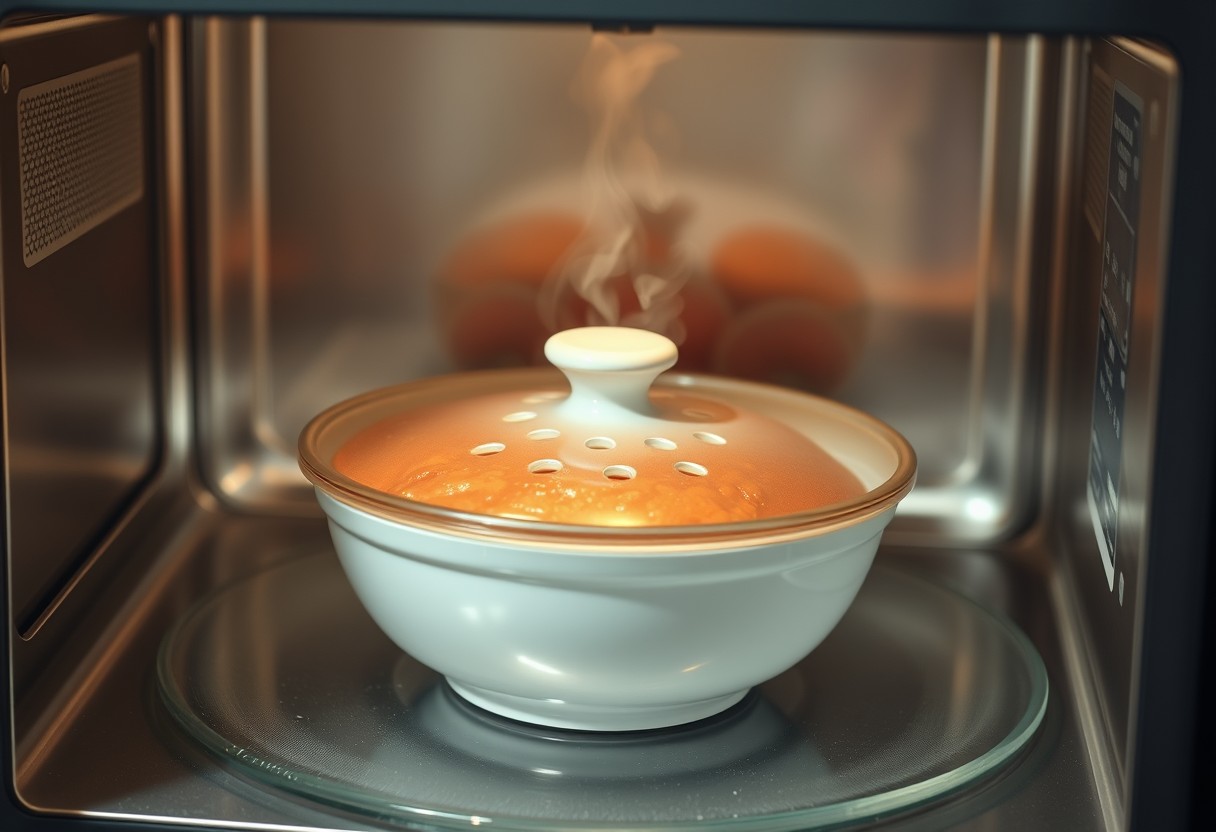
You can stop microwave splatter while keeping your food crisp by using the right cover and venting technique. Improper covering traps steam, leading to soggy meals and messy interiors. Uncovered cooking causes dangerous splatter that burns and breeds bacteria. The solution lies in controlled steam release-using breathable, vented materials that block mess without sacrificing texture. You’ll achieve cleaner, more appetizing results every time.
Key Takeaways:
- Paper towels, wax paper, or breathable microwave-safe lids allow steam to escape while blocking splatter, preventing a soggy texture.
- Proper venting-such as leaving a corner open or using containers with adjustable steam vents-balances moisture control and heat retention.
- Reheating in short bursts with intermittent pauses helps maintain food crispness and reduces uneven heating that leads to texture loss.
Selecting Porous and Vented Cover Materials
Using a cover that blocks splatter while letting steam escape is essential for keeping your microwave clean without sacrificing food texture. Porous materials strike the right balance by containing messes yet allowing moisture to dissipate, preventing trapped condensation from making meals soggy. You don’t need special equipment-common kitchen items can do the job effectively. The key is choosing breathable barriers that stand up to heat and won’t break down during cooking. With the right material, you maintain crispness where it matters while still protecting the interior of your appliance.
The benefits of paper towels and parchment paper
Paper towels are an accessible and effective choice for minimizing splatter during short heating cycles. They absorb surface moisture and allow steam to pass through, reducing the chance of a messy interior without sealing in too much humidity. Unbleached or recycled options work just as well and avoid potential chemical transfer. Parchment paper offers a reusable alternative with even better breathability, especially useful for foods that release a lot of grease or water. Both materials resist scorching under normal use and help preserve texture far better than plastic covers.
Utilizing specialized vented microwave lids
Vented microwave lids made from silicone or BPA-free plastic provide a durable, washable solution for everyday use. These covers feature built-in openings that let steam escape while blocking flying food particles, combining the best of containment and airflow. Unlike solid lids, they prevent pressure buildup and reduce sogginess by promoting continuous vapor release. Their snug fit on standard containers adds stability during rotation, and many are designed to stay cool enough to handle safely after cooking. This consistent ventilation supports even heating and protects both your meal’s quality and your microwave’s condition.

How-to Vent Containers for Optimal Texture
Avoid trapping steam directly against your food by creating intentional air gaps with your container lid. Leaving space for air circulation prevents moisture from pooling and keeps textures crisp, especially on items like roasted vegetables or crispy-skinned proteins. Position the lid slightly off-center so steam escapes while still shielding the microwave interior. This simple adjustment maintains surface dryness without sacrificing safety or inviting splatter.
The offset lid placement technique
Place the container lid so it covers most of the dish but leaves one edge intentionally uncovered. This gap allows steam to escape without creating condensation hotspots that lead to sogginess. You’ll notice improved results with foods that rely on surface texture, like reheated pizza or fried chicken. The lid still blocks most splatter while enabling airflow, striking a balance between cleanliness and quality. Adjust the gap size based on how much moisture the dish releases.
Safe perforation of film and wraps
When using plastic wrap or microwave-safe film, puncture it with a toothpick or fork in several spots to form small vent holes. These openings let steam escape safely, reducing pressure buildup that could cause tearing or burns. Always keep the wrap loose rather than tightly sealed to avoid trapping moisture against the food surface. Use only wraps labeled microwave-safe to prevent chemical leaching, and never allow plastic to touch high-fat foods during heating.
Critical Factors Influencing Heat Distribution
Lowering your microwave’s power level allows heat to penetrate food more evenly, reducing the sudden steam bursts that cause messy splatters. High wattage often overwhelms delicate textures, triggering explosive boiling beneath the surface. By matching the intensity to your dish’s needs, you maintain structural integrity while still achieving thorough heating. Dense foods benefit from slower energy input, while lighter items avoid scorching at reduced settings. This control is key to keeping meals both clean and palatable.
- Use 50-70% wattage for stews and casseroles to prevent eruption
- Select 30-50% for reheating leftovers with mixed ingredients
- Avoid 100% power unless rapid boiling is necessary
- Adjust in 10% increments for precise heat management
- Let standing time factor into total cook duration
Adjusting wattage for different food densities
Dense foods like potatoes or meat retain heat longer and absorb energy more slowly, so they respond best to medium power settings between 50% and 70%. Running full wattage creates a temperature imbalance-scorching the outside while leaving centers cold or causing internal pressure to build and burst. Lower settings allow gradual, uniform warming without violent steam release. You’ll notice fewer stains on your microwave walls and better texture retention when you match power to mass and moisture content.
Strategic food placement for even heating
Positioning matters just as much as timing when preventing hot spots and uneven cooking. Arrange items in a circle, leaving the center empty, to promote balanced microwave exposure. Thick portions should face outward where energy concentration is strongest, while thinner sections go toward the middle. Stirring or rotating halfway through helps, but correct initial layout reduces the need. A well-placed dish heats more predictably, minimizing cold zones and the risk of sudden splatter events from trapped steam.
Advanced Tips for High-Moisture Ingredients
Handling liquids in the microwave demands a shift from standard covering methods to avoid turning meals into a bowl of lukewarm sludge. Trapping too much steam around high-moisture foods like soups or stews accelerates sogginess, undermining texture and flavor. Instead of sealing containers completely, use partial covers with intentional gaps or vented lids that allow moisture to escape in a controlled way. For best results, stir liquids midway through heating to redistribute heat and reduce pressure buildup beneath the surface.
- Use a microwave-safe plate at an angle to cover, leaving one side open for steam release
- Place a paper towel over the container, then tilt a second plate on top to create airflow
- Opt for glass lids with adjustable steam vents set to halfway open
| Technique | Best For |
| Angled plate cover | Soups, broths, and sauces |
| Double-layer venting (paper towel + plate) | Stews and saucy leftovers |
| Adjustable glass lid | Batch-reheating with consistent results |
Managing soups, sauces, and stews
Reheating soups and sauces without a soggy outcome means balancing heat penetration with moisture control. Start by using a wide, shallow container to increase surface area and promote even heating with less trapped vapor. Stop covering the bowl completely-instead, drape a paper towel loosely over the top and rest a dinner plate on an angle to block splatter while allowing steam to escape. Stir every 30 seconds to prevent skin formation and ensure internal temperatures rise evenly without overcooking the edges.
Preserving the crunch of reheated vegetables
Vegetables like broccoli, green beans, or roasted Brussels sprouts lose their bite when steam accumulates during reheating. Place them in a microwave-safe dish with a single layer and add a teaspoon of water to generate minimal steam from below. Cover with a vented lid or a microwave-safe plate set slightly ajar. Heating in short bursts of 60 seconds followed by a brief pause lets moisture dissipate and prevents limpness. The result is tender-crisp texture, not a mushy pile.
Routine Maintenance for a Splatter-Free Environment
Ignoring leftover splatters lets residue bake onto interior walls, increasing the risk of smoke and unpleasant odors during future use. You prevent this by wiping down the microwave after each use with a damp cloth and mild cleaner. Built-up grime not only affects performance but can ignite under high heat, creating a fire hazard. Regular care keeps your appliance running safely and efficiently. For more on safe covering options, see this guide on What Can I Use to Cover Food in Microwave.
Effective daily cleaning habits
After removing your meal, take a minute to inspect the interior for any visible splashes or food particles. Use a soft sponge and warm soapy water to wipe down walls, ceiling, and turntable while surfaces are still warm-this makes residue easier to remove. Letting spills linger allows them to harden and become harder to clean later. Consistent, light cleaning prevents the need for aggressive scrubbing and protects the microwave’s finish from damage caused by harsh tools or chemicals.
Deodorizing and removing stubborn residue
When dried spills resist regular cleaning, heat a microwave-safe bowl of water with lemon slices or vinegar for three minutes to loosen grime through steam. Let it sit for five minutes before carefully removing the bowl. The moist heat softens stuck-on food, allowing you to wipe it away gently. This method also neutralizes lingering odors without synthetic fragrances. Never use abrasive pads or ammonia-based cleaners, as they can cause permanent surface damage or release toxic fumes.
Final words
You now have the tools to stop microwave splatter while keeping your food crisp and evenly heated. Using vented, porous covers allows steam to escape, preventing sogginess without sacrificing cleanliness. Choosing the right materials and positioning food properly makes a measurable difference in texture and consistency. Regular cleaning and mindful reheating habits support long-term results. You don’t need special gadgets-simple, deliberate steps deliver the best outcomes. Apply these methods consistently, and you’ll maintain both meal quality and appliance performance over time.
FAQ
Q: Can I use a paper towel to cover food in the microwave without trapping too much steam?
A: Yes, a plain white paper towel works well for many foods because it absorbs surface moisture while allowing steam to escape through its porous fibers. It prevents splatters by catching small bursts of hot liquid, especially during short reheat cycles. For items like reheated pizza or crispy-skinned leftovers, the paper towel wicks away excess moisture that would otherwise soften the surface. Avoid printed or recycled paper towels, as dyes and contaminants can transfer to food under heat.
Q: Why does covering food with plastic wrap often make dishes soggy?
A: Plastic wrap forms an airtight seal that traps all steam against the food’s surface, creating a humid microenvironment that softens crusts and breaks down texture. Even when vented, the material holds condensation close to the food, which drips back during heating. This effect is most noticeable with breaded items, roasted vegetables, or anything with intentional crispness. Replacing plastic wrap with breathable alternatives reduces this issue significantly.
Q: What household items can act as effective microwave vents?
A: Inverted saucers, chopsticks, or silicone steam trays placed under microwave-safe lids create small gaps for steam to escape. A ceramic plate set slightly off-center over a bowl allows vapor to rise from one side while blocking splatter. Microwave popcorn bags use built-in venting slits as a model-similar airflow can be mimicked using a lidded container with a corner lifted by a non-metal object. These setups maintain pressure balance without sealing in humidity.
Q: Does microwaving food at lower power settings reduce splatter and sogginess?
A: Lower power levels extend cooking time but apply heat more evenly, reducing sudden eruptions of trapped steam that cause splattering. At 50-70% power, dense foods like potatoes or casseroles heat gradually, minimizing internal pressure buildup. This method also preserves textural contrast, such as a firmer edge on a reheated pastry. Combine reduced power with partial covering for best results-full exposure increases splatter risk, while full coverage invites sogginess.
Q: Are silicone microwave covers better than other options for preventing sogginess?
A: Silicone lids designed for microwaves often include built-in steam vents that regulate airflow while blocking spills. Their flexibility allows them to fit snugly over various dish sizes without forming a complete seal. Some models have adjustable vent openings, giving control over how much moisture escapes. Unlike plastic wrap or solid lids, vented silicone covers protect the microwave interior while preserving the integrity of delicate textures, making them ideal for steamed rice, fish, or moist baked goods.