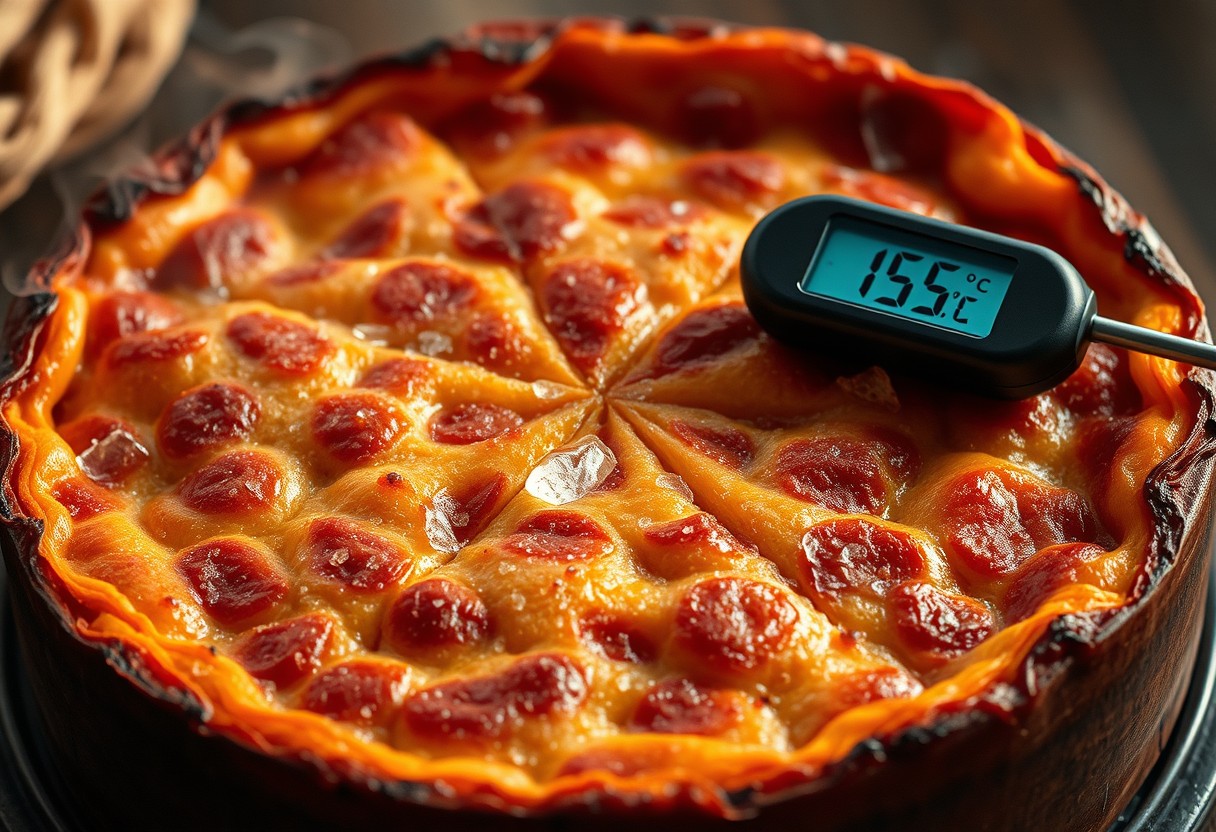
You’ve likely bitten into a dish that’s scorching on the edges but cold at its core-a common microwave flaw. This uneven heating can create food safety risks, as cold spots may harbor harmful bacteria. The issue isn’t your appliance’s fault alone; it stems from how energy interacts with your food’s shape, composition, and moisture. Understanding this helps you avoid undercooked meals.
Key Takeaways:
- Heat transfer in microwaves relies heavily on the distribution of electromagnetic waves, which tend to concentrate at the edges of food, causing those areas to absorb more energy and heat up faster than the center.
- Thermal conduction in most foods is slow, especially in dense or low-moisture items, meaning the interior doesn’t receive enough conducted heat from the hot outer layers before the edges become overheated.
- Uneven heating patterns are also influenced by a food’s shape and composition-items with thick centers and thin outer layers, like a lasagna slice or a burrito, naturally develop hot edges and a cold core due to limited wave penetration and moisture variation.
The Agitation of the Invisible
Microwaves rely on electromagnetic radiation to heat your food, and you’re directly experiencing this energy every time you reheat a meal. This invisible force penetrates your dish and compels water molecules to spin rapidly, generating internal friction that manifests as heat. You’re not just warming food-you’re orchestrating a microscopic kinetic event where electromagnetic waves transfer energy directly to polar molecules. The result is an uneven thermal response, often leaving centers cold while edges overheat due to concentrated wave interaction.
Molecular Friction and Kinetic Energy
Each microwave photon excites polar molecules, especially water, causing them to rotate and collide with neighboring molecules. These collisions convert electromagnetic energy into kinetic energy that becomes measurable heat. You feel this outcome when biting into a scalding edge while the center remains chilled. The intensity of molecular motion determines temperature rise, but because energy distribution isn’t uniform, some regions absorb more photons than others, creating hotspots where molecular activity is most aggressive.
The Frequency of the Magnetron
Your microwave operates at a precise frequency-typically 2.45 GHz-engineered to match the natural resonance of water molecules. This specific frequency allows maximum energy absorption, making the heating process efficient. You benefit from this tuned output every time the appliance runs, as it ensures water-rich areas respond immediately. However, the same precision means drier or less polar zones receive far less energy, explaining why some parts stay cold despite prolonged exposure to the magnetron’s rhythmic pulses.
The Perils of Surface Geometry
The Physics of Penetration Depth
Waves from your microwave penetrate food only a few centimeters at most, depending on density and composition. What you may not realize is that this shallow reach limits heating to the outer layers, leaving the center untouched even after extended cooking. The energy dissipates rapidly beyond this depth, meaning thicker portions rely on secondary heat transfer to warm through. You’re essentially counting on conduction to finish the job-something microwaves aren’t designed to optimize on their own.
Edge Concentration of Energy
Edges and corners attract more wave activity because they present multiple surfaces for energy to strike simultaneously. As waves bounce inside the cavity, these protruding areas absorb disproportionate amounts of power, often becoming scalding while inner zones remain cool. This uneven accumulation can lead to burnt tips and undercooked centers in items like lasagna or stuffed pastries. Your microwave doesn’t distribute energy evenly by design-its physics naturally favors surface extremities.
The Moisture Hierarchy
Water-rich ingredients like tomatoes, zucchini, or leafy greens heat up faster because they contain more polar molecules that respond intensely to microwave energy. You’ve likely noticed how sauces bubble vigorously while adjacent drier components barely warm. This happens because microwaves target water molecules directly, making high-moisture foods primary hotspots in your dish. Even small differences in water content between neighboring ingredients can lead to dramatic temperature imbalances, leaving you with scalding edges and a cold center.
Dielectric Heating and Salinity
Salt changes how food interacts with microwaves by increasing electrical conductivity, which amplifies dielectric heating in seasoned areas. When you sprinkle salt unevenly, those spots absorb energy more aggressively, creating localized bursts of heat. This means a well-seasoned outer layer can become dangerously hot while unsalted inner portions remain unaffected. The presence of ions from dissolved salt enhances the polarization effect, making salty zones far more responsive than their bland counterparts.
Frozen Barriers and Molecular Stillness
Frozen water molecules are locked in place, unable to rotate freely in response to microwave fields, which drastically reduces their ability to generate heat. As a result, icy regions act as thermal insulators, blocking energy from reaching deeper layers. You might see steam rising from the edges while the core stays frozen not because microwaves avoid it, but because the rigid structure of ice resists molecular movement essential for heating.
The Slothful Nature of Conduction
Heat moves through solid food at a surprisingly sluggish pace, relying on a tedious chain reaction between neighboring molecules. You’re essentially waiting for each particle to absorb energy and pass it along, like a line of people handing buckets to put out a fire. This transfer slows dramatically the farther you get from the surface, leaving the center untouched even as edges begin to scorch. Unlike faster forms of energy delivery, conduction doesn’t rush-it creeps.
Thermal Transfer in Solids
Molecules in dense foods like meat or potatoes are tightly packed, which might seem ideal for heat movement, but they actually resist rapid energy flow. Each molecule must physically vibrate long enough to nudge the next one into motion, and this process takes time. Your food’s interior remains cold not because energy isn’t present, but because it hasn’t had time to travel inward. Even after the outer layers feel hot, the core may still be lagging minutes behind in thermal response.
The Cold Heart of the Burrito
A burrito fresh from the microwave often burns your tongue on the outside while hiding a frozen center, and now you know why. The tortilla and outer fillings heat quickly, but the dense, layered core depends entirely on slow conduction. No amount of extra heating compensates for this delay-pushing more energy only risks overcooking the edges. The result is a frustrating contrast: steamy edges shielding a shockingly cold middle, all due to physics you can’t see.
The Dance of the Turntable
Your microwave’s rotating plate isn’t just for show-it’s a calculated response to the chaotic behavior of microwave energy inside the cavity. As waves bounce off metal walls, they form standing waves that create zones of intense heat and cold. By rotating your food, the turntable moves it through these uneven fields, averaging out exposure over time. This motion helps prevent one spot from overheating while another remains icy, though it can’t fully eliminate disparities caused by wave interference. The rotation is a simple mechanical fix for a complex physics problem.
Hot Spots and Interference Patterns
Waves reflecting inside the microwave chamber collide and interfere, generating unpredictable hot spots where energy peaks. These zones occur when wave crests align, amplifying their effect, while troughs cancel out heating in other areas. Your food passes through these peaks and nulls as it turns, leading to inconsistent temperatures. Even with rotation, dense or irregularly shaped items may shield certain regions, leaving them in low-energy zones. This interference is inherent to microwave design and cannot be fully erased by motion alone.
The Limits of Mechanical Stirring
While the turntable improves heat distribution, its effectiveness diminishes with larger or denser dishes that resist uniform exposure. The rotation speed is fixed, offering no adaptation to food type or container shape, so some areas remain under-irradiated. Thick meals may absorb energy at the edges before the center receives sufficient waves, resulting in a deceptive exterior warmth masking a cold core. Mechanical movement assists, but physics ultimately restricts how evenly microwaves can penetrate and heat solid matter.
The Art of the Edable Ring
Shaping your food into a donut-like ring before heating transforms how energy reaches each part of the meal. By leaving the center open, microwaves penetrate the entire circumference evenly, eliminating the dense core where cold spots thrive. This simple reconfiguration allows thermal energy to act uniformly, ensuring the middle no longer lags behind. You’re not fighting physics-you’re aligning with it. For deeper insights into microwave behavior, explore Why Does Food Heated in the Microwave Cool Faster?, which examines how heat retention shifts after removal from the microwave.
Strategic Plating for Even Results
Positioning food in a circular pattern on the plate creates an optimal path for microwave energy distribution. You avoid clustering items in the center, which blocks wave penetration and traps cold zones. Instead, the outer ring receives direct exposure while the open middle allows reflected waves to circulate back into the food. This layout dramatically increases heating consistency and reduces the need for repeated reheating. Think of your plate as a conductor’s board-how you arrange the pieces determines the harmony of the final result.
The Necessity of the Resting Period
Letting food sit for one to two minutes after microwaving allows heat to continue moving through conduction. Even after the microwave stops, thermal energy keeps redistributing from the hotter outer edges into the cooler inner areas. Skipping this pause means you might taste coldness in the center, not because it wasn’t heated, but because the transfer hadn’t finished. This brief interval is essential for achieving uniform temperature and maximizing both safety and satisfaction in every bite.
Conclusion
You now understand that uneven heating in your food stems from how microwaves interact with shape, moisture, and depth. The edges absorb energy quickly, while the center lags due to slow thermal conduction. Your microwave’s turntable helps, but it can’t override physics. Dense or thick portions need time for heat to travel inward, which is why letting food rest matters. By arranging items thoughtfully and covering them to trap steam, you take control of the process and improve results every time.
FAQ
Q: Why does my food feel scorching on the edges but still cold in the center after microwaving?
A: Microwaves penetrate food from the outside in, and their energy is absorbed most intensely near the surface. The edges of your dish receive direct exposure from multiple angles due to the reflective interior of the microwave, causing them to heat rapidly. The center, however, relies on slower thermal conduction to warm up, which often doesn’t have enough time to catch up during a standard heating cycle.
Q: Can the shape of my container affect how evenly my food heats?
A: Yes. Round containers promote more even heating because microwaves can circulate around the curved sides without concentrating in corners. Square or rectangular dishes create hotspots at the edges and corners where energy accumulates, leaving the middle underheated. A plate with straight edges forces microwaves to interact more intensely at the corners, increasing the chance of overheating those areas while the center lags.
Q: Does stirring food halfway through help prevent cold centers?
A: Stirring redistributes heat by moving warmer portions from the edges toward the center and bringing cooler inner portions to the outside where microwave energy is stronger. This simple action compensates for the microwave’s uneven energy distribution. For soups, sauces, or casseroles, pausing to stir once or twice during heating can make a noticeable difference in temperature uniformity.
Q: Why do some parts of my food dry out or burn while others stay cold?
A: Areas with lower moisture content or thinner geometry, like the edges of a lasagna slice or the rim of a baked potato, lose water faster and absorb microwave energy more efficiently. As these regions dry out, they heat even more rapidly, sometimes burning. Denser or thicker sections in the middle retain more moisture and require more energy to warm, but microwaves don’t penetrate deeply enough to deliver sufficient heat before the outer parts overcook.
Q: How does the turntable help with uneven heating?
A: The rotating turntable moves food through different areas of the microwave’s cavity, exposing various parts to the standing wave patterns where energy is strongest. Without rotation, certain spots would remain in low-energy zones, resulting in persistent cold spots. While the turntable improves distribution, it doesn’t eliminate the fundamental limitations of microwave penetration depth or conduction speed, so some unevenness still occurs.