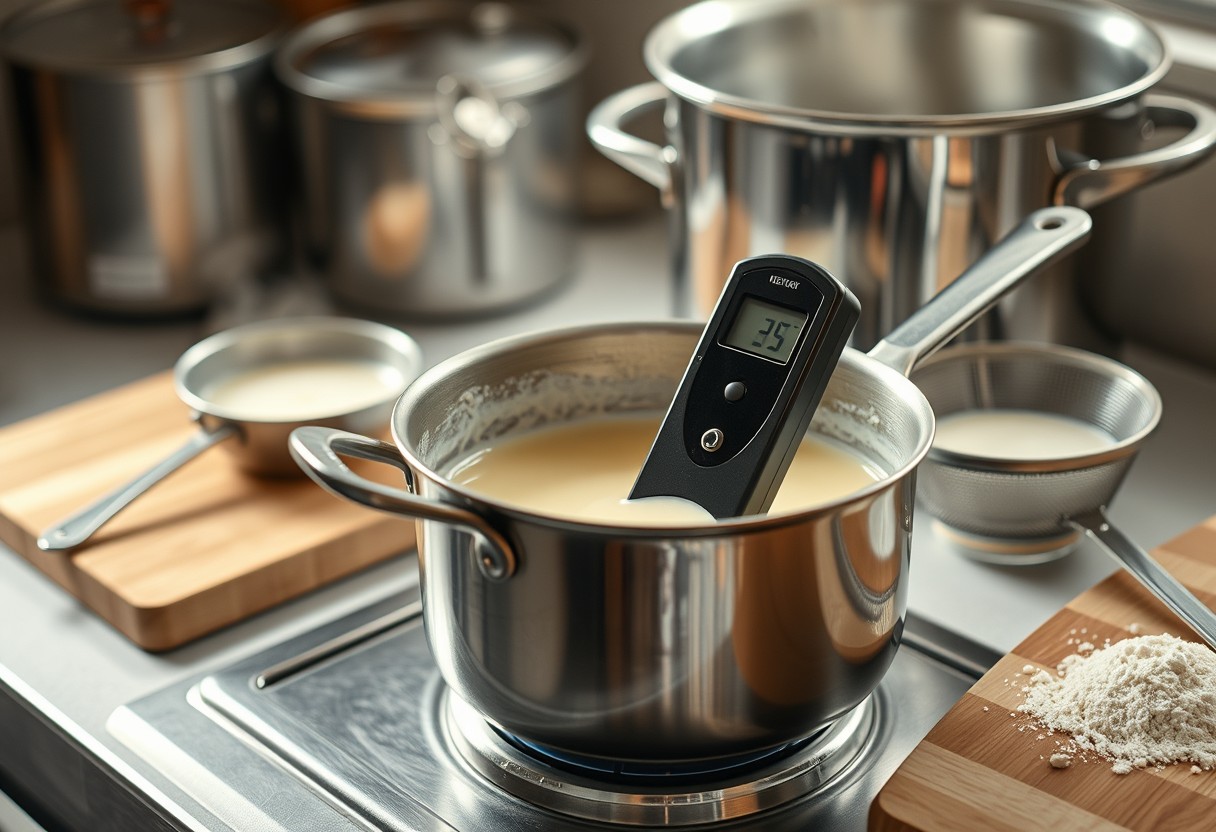
You’ve likely stirred a creamy sauce only to see it turn grainy, broken, or lumpy-especially when using milk, cream, or cheese. This texture disaster often happens due to overheating or rapid temperature shifts. The good news: with the right techniques, you can maintain a smooth, velvety consistency every time. Knowing how to manage heat and combine ingredients properly makes all the difference.
Key Takeaways:
- Dairy-based sauces separate or turn grainy when exposed to high heat or sudden temperature changes; maintaining low, consistent heat throughout cooking prevents curdling and preserves smooth texture.
- Tempering dairy ingredients by slowly incorporating hot liquids before adding them to a sauce base helps avoid shock that leads to clumping and uneven consistency.
- Using fresh dairy products and avoiding acidic ingredients unless carefully balanced reduces the risk of protein coagulation that causes lumps and graininess in finished sauces.
Understanding the Factors of Dairy Curdling
Dairy-based sauces rely on delicate chemical balances to maintain their smooth texture. When exposed to certain conditions, the proteins in milk and cream can rapidly lose stability, leading to an undesirable grainy or lumpy result. The primary triggers are high heat and acidity, both of which disrupt the protein structure and cause separation. By recognizing these factors early, you gain control over the sauce’s integrity before problems arise. Understanding the science helps you adjust your technique in real time, ensuring a silky finish every time.
- Heat sensitivity causes rapid protein bonding when temperatures rise too quickly
- Acidic ingredients like wine, tomatoes, or lemon juice lower pH and trigger curdling
- Fat content plays a protective role-higher fat dairy resists separation better
- Protein denaturation is irreversible once it becomes visible as clumps or grittiness
- Gentle heating preserves emulsion and prevents structural collapse
Heat Sensitivity and Protein Denaturation
Exposing dairy to high heat forces its proteins to unfold and bond aggressively, a process known as protein denaturation. Once this occurs, the network of clumped proteins traps fat and water unevenly, creating a gritty mouthfeel. You must avoid boiling or even rapid simmering when working with milk, cream, or cheese-based liquids. Instead, gentle warming over low to medium heat allows gradual temperature integration without shock. Even a few seconds of overheating can permanently damage the sauce’s texture, making temperature vigilance essential throughout cooking.
Acidic Ingredients and pH Imbalance
Adding acidic components such as vinegar, citrus juice, or wine to a dairy sauce lowers its pH, pushing it toward the isoelectric point where casein proteins lose charge and collapse. This pH imbalance leads to immediate clumping, especially if introduced to hot milk. You should never mix acid and dairy at high temperatures unless the recipe specifically accounts for stabilization. Even naturally acidic foods like tomatoes require careful handling when combined with cream. The shift in charge neutrality happens fast and is often irreversible, resulting in a broken, unappetizing sauce.
Essential Tips for Ingredient Preparation
Success in creating smooth, creamy dairy-based sauces begins long before the stove is turned on. Your ingredient choices and prep methods directly influence whether your sauce emulsifies beautifully or breaks into unappetizing clumps. Paying close attention to dairy temperature and fat content sets a strong foundation for stability. Consider these key steps to ensure optimal results every time:
- Always use full-fat dairy products-they resist curdling better due to higher fat and lower protein ratios
- Bring dairy to room temperature before adding it to hot mixtures to minimize thermal shock
- Stir this simple gesture prevents your sauces from curdling at the end of cooking gently but consistently when incorporating dairy
- Avoid boiling once dairy is added; maintain gentle heat only
Using Room Temperature Dairy
Dairy straight from the refrigerator can shock a warm sauce base, causing proteins to seize and create a grainy texture. Bringing milk, cream, or sour cream to room temperature before use allows for smoother integration and reduces the risk of separation. This small step makes a dramatic difference, especially when blending into a roux or simmering liquid. Letting your dairy sit out for 20-30 minutes ensures even mixing and helps preserve the delicate emulsion that gives sauces their luxurious mouthfeel.
Selecting High-Fat Content Options
Fat acts as a protective buffer in dairy, shielding proteins from heat-induced coagulation. When you choose high-fat ingredients like heavy cream, whole milk, or full-fat sour cream, you’re giving your sauce a natural defense against lumping. Low-fat or nonfat alternatives often contain more whey and casein, which are prone to curdling under heat. The table below highlights common dairy options and their impact on sauce stability:
| Dairy Product | Effect on Sauce Texture |
|---|---|
| Heavy cream (36-40% fat) | Most stable; resists curdling even at moderate heat |
| Whole milk (3.25% fat) | Good stability when tempered properly |
| Sour cream (full-fat) | Smooth results if warmed first; adds tang and richness |
| Skim milk or nonfat yogurt | High risk of curdling; best avoided in heated sauces |
How-To Guide for Temperature Management
Controlling heat is the most effective way to prevent dairy proteins from seizing and creating a grainy texture. Milk and cream contain delicate casein and whey proteins that coagulate rapidly when exposed to sudden temperature changes. By applying heat gradually and evenly, you allow these proteins to unfold slowly without clumping. Maintaining steady control over your stove’s output ensures a smooth emulsion forms, preserving the sauce’s luxurious consistency. Never rush this phase-thermal shock is the leading cause of curdling, even with perfectly fresh ingredients.
| Factor | Impact on Sauce Texture |
| High heat exposure | Triggers rapid protein coagulation, leading to lumps |
| Sudden temperature change | Causes dairy to split, even if simmered briefly |
| Gradual warming | Promotes even fat and protein dispersion, prevents clumping |
| Consistent low heat | Supports stable emulsion formation in creamy sauces |
Implementing the Low and Slow Method
You achieve the smoothest results by heating dairy over low, consistent heat from the start. Begin with a cold or room-temperature base and add your milk or cream gradually while stirring constantly. This slow integration allows the proteins and fats to adapt without separating. A heavy-bottomed pan helps distribute heat evenly, reducing hot spots that can scorch the mixture. Never leave the sauce unattended-even brief overheating can ruin an otherwise perfect batch before you notice any visible bubbles.
Mastering the Tempering Technique
When combining warm dairy with a cooler ingredient like a roux or egg yolk mixture, tempering prevents sudden protein shock. Start by adding a small amount of the hot liquid to the cold component, stirring continuously until it warms up. Repeat this process several times, increasing the volume each time, before fully merging the two mixtures. The gradual rise in temperature keeps the structure intact, ensuring a silky, lump-free finish. Skipping this step risks immediate curdling, especially with sensitive ingredients like cream or half-and-half.
Stabilizing Your Sauce with Thickening Agents
Starch-based thickeners like flour and cornstarch help prevent dairy sauces from becoming grainy by coating proteins and fats, creating a more stable emulsion under heat. When properly incorporated, these agents act as a physical barrier, reducing the risk of curdling caused by high temperatures or acidity. You’ll achieve the smoothest results when the starch is evenly dispersed before dairy is added, ensuring consistent texture and reliable heat resistance throughout cooking.
Creating a Smooth Roux Base
Roux serves as a foundational thickener that integrates seamlessly with dairy when prepared correctly. Begin by melting butter and whisking in an equal amount of flour over medium heat, cooking for 1-2 minutes to eliminate raw taste without browning. The key is to let the roux cool slightly before slowly incorporating cold milk or cream, which prevents clumping. This method ensures a silky, lump-free base that supports the sauce’s stability from the start.
Using Cornstarch Slurries Correctly
Cornstarch offers a clear, smooth thickening power ideal for delicate dairy sauces. Mix it with an equal part of cold liquid-such as water or milk-until fully dissolved before adding it to warm (not boiling) dairy. Introducing the slurry too late or without proper dispersion leads to instant clumping. For best results, stir continuously and bring the sauce to a gentle simmer, which activates the starch’s full thickening potential and delivers a glossy, even texture.

Corrective Actions for Lumpy Textures
If your dairy-based sauce has already developed a lumpy or grainy texture, don’t discard it immediately-mechanical interventions can often restore smoothness. The most effective method is to immediately remove the sauce from heat and pass it through a fine-mesh strainer, which catches any curdled proteins. Alternatively, an immersion blender can quickly break down lumps without incorporating excess air, preserving the sauce’s integrity. Avoid vigorous whisking at this stage, as it may worsen separation. Acting fast increases the chances of full recovery, especially if the sauce hasn’t overheated beyond the point of protein denaturation.
Straining and Blending Solutions
A fine-mesh strainer or chinois can rescue a sauce where dairy has begun to curdle, filtering out undesirable lumps and coagulated proteins. Pour the sauce gently through the strainer, using a spoon to press softer bits if needed. For a faster fix, an immersion blender directly in the pot breaks up clumps efficiently, though you must blend before the sauce fully breaks. These methods work best when applied immediately after noticing texture issues, preventing further degradation and delivering a silky result even after minor separation.
Incorporating Emulsifiers
When reconstituting a lumpy dairy sauce, adding a small amount of emulsifier like egg yolk or mustard can help rebond separated fats and liquids. Whisk the emulsifier into a warm liquid base before gradually incorporating the broken sauce. This stabilizes the mixture and prevents further graininess. Be cautious not to overheat afterward, as high temperatures can undo the re-emulsification. The right emulsifier, used promptly, transforms a failed sauce into a cohesive and glossy finish, even after visible separation.
To wrap up
You now have the practical knowledge to keep your dairy-based sauces smooth and velvety every time. By managing heat carefully, preparing ingredients properly, and using the right thickening agents, you prevent curdling before it starts. If lumps do form, simple fixes like gentle blending or straining restore texture without starting over. Your attention to detail at each stage directly determines the final result. A well-executed sauce reflects consistent technique, patience, and understanding of dairy’s behavior under heat.
FAQ
Q: Why does my cheese sauce turn grainy when I make it at home?
A: Cheese sauces become grainy when proteins in the dairy overcoagulate due to excessive heat or rapid temperature changes. High temperatures cause casein proteins to clump and separate from the fat and moisture, creating a gritty texture. This often happens when cheese is added too quickly to a hot mixture or when the sauce is boiled after adding dairy. Using aged cheeses, which have drier textures and less moisture, can also contribute to graininess if not melted slowly and gently.
Q: Can I fix a lumpy Alfredo sauce once it starts to curdle?
A: A slightly lumpy Alfredo sauce can sometimes be rescued by immediately removing it from the heat and placing the pan in an ice bath to halt further protein tightening. Whisk vigorously to smooth out small clumps. Adding a splash of warm cream or milk while whisking may help reintegrate the fats and proteins. For persistent lumps, strain the sauce through a fine-mesh sieve to restore a silky consistency. Avoid reheating the sauce aggressively, as this worsens separation.
Q: Does the type of cheese affect how smoothly it melts into a sauce?
A: Yes, different cheeses melt in distinct ways based on their moisture, fat, and acidity levels. Cheeses like young cheddar, Gruyère, Fontina, and Monterey Jack have higher moisture and fat content, making them ideal for smooth melting. Hard, aged cheeses such as Parmesan or extra-sharp cheddar contain less moisture and are more prone to becoming grainy if used alone. Blending a small amount of aged cheese with a high-melting variety helps deliver flavor without compromising texture.
Q: Should I use cold or room-temperature dairy when making a creamy sauce?
A: Always bring dairy ingredients-milk, cream, or grated cheese-to room temperature before incorporating them into a hot base. Cold dairy introduced abruptly creates thermal shock, leading to curdling. Warming milk or cream slightly in the microwave or by placing the container in warm water ensures a gradual integration. Letting refrigerated cheese sit out for 15-20 minutes before use also improves meltability and reduces the risk of clumping.
Q: How can a roux help prevent lumpiness in dairy-based sauces?
A: A roux-equal parts butter and flour cooked together-acts as a stable foundation that supports emulsification when dairy is added. The starch in flour coats fat and liquid molecules, preventing separation under heat. When building a cheese or cream sauce, cook the roux gently until blond or pale gold, then slowly whisk in warmed milk or cream. This creates a smooth béchamel base, which provides structure and allows cheese to melt evenly without forming lumps.