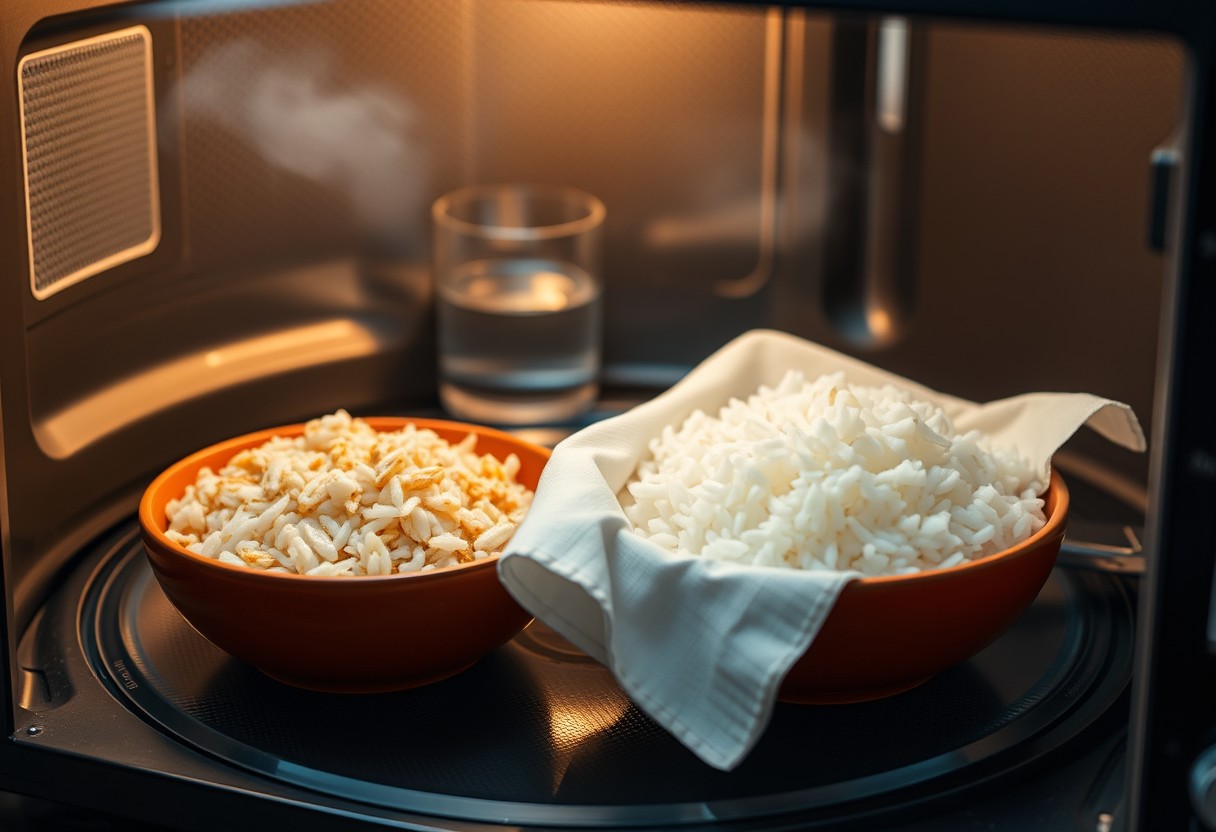
You’ve likely reheated rice only to find it dry and tough, but this texture change isn’t random-it’s science. When cooked rice cools, its starch molecules realign and harden, a process accelerated by improper storage. The microwave can worsen this if used incorrectly. But you can reverse and prevent hardness with simple techniques, ensuring soft, fluffy rice every time.
Key Takeaways:
- Rice hardens in the microwave due to starch retrogradation, a process where cooked starch molecules realign and crystallize as they cool, making the texture firm and dry.
- Storing rice at room temperature for long periods speeds up hardening; rapid cooling and proper refrigeration slow down starch recrystallization.
- Adding a few drops of water or covering rice with a damp paper towel during reheating reintroduces moisture and helps restore softness by generating internal steam.
Understanding the Biological Factors of Starch Retrogradation
When rice cools after cooking, its starch molecules begin to reorganize into rigid crystalline structures through a process called retrogradation. Amylose and amylopectin, the two primary components of rice starch, behave differently during this phase. As the temperature drops, amylose rapidly aligns into ordered chains, while amylopectin slowly recrystallizes over time. This molecular rearrangement forces trapped water out of the starch matrix, leading to a firmer, drier texture. The extent of this change depends on rice variety, cooling speed, and initial gelatinization.
- Starch retrogradation begins within minutes of cooling
- Crystallization expels moisture, causing hardness
- Long-grain rice tends to retrograde slower than short-grain
- Reheating can partially reverse the process if done correctly
The role of amylopectin in grain structure
Within each rice grain, amylopectin forms a branched network that holds water during cooking and provides softness. You’ll notice that varieties high in amylopectin, like glutinous rice, initially have a sticky, tender texture. As the rice cools, these branches slowly realign into tighter, more ordered patterns. This structural shift reduces water retention and increases firmness. The degree of branching affects how quickly this happens-less branching means faster retrogradation and a harder final texture after storage.
How moisture migration leads to crystallization
Movement of water within the grain accelerates starch retrogradation once cooking stops. As rice cools, moisture shifts from the interior of the starch granules to the surrounding environment. This internal drying allows hydrogen bonds to form between starch chains, creating stable crystalline regions. These rigid zones resist softening even when reheated. You’re most likely to see this effect in rice left uncovered or cooled rapidly, where surface moisture evaporates quickly, triggering deeper structural changes within the grain.
Identifying Storage Factors That Accelerate Hardening
Low-temperature refrigeration dramatically accelerates the staling of cooked rice due to starch retrogradation, a process where gelatinized starch molecules realign into rigid structures. When you store rice in the fridge, especially for more than a few hours, the cold environment promotes rapid crystallization of amylose and amylopectin, leading to a noticeably harder texture. To minimize this effect, avoid prolonged refrigeration when possible. Instead, consider freezing rice if long-term storage is needed, as frozen conditions slow molecular reorganization. For more insights on handling pre-cooked rice, check out this guide on what is the best way to cook pre-cooked rice in ….
- Refrigeration speeds up starch retrogradation, making rice hard faster than at room temperature
- Freezing cooked rice slows texture degradation compared to refrigeration
- Airtight containers help reduce moisture loss during cold storage
- Storing rice above 60°C or below 4°C minimizes bacterial growth but affects texture differently
The impact of cold-chain storage on rice texture
Cold-chain storage forces starch molecules in rice to recrystallize quickly, turning soft grains firm and dry within hours. You may notice that rice stored in the refrigerator overnight often feels denser and chewier than when first cooked. This transformation isn’t due to microbial action but rather structural changes in the starch under cool conditions. The lower the temperature, the faster amylopectin loses its hydrated structure, resulting in a grain that feels tough even if fully cooked initially. Keeping rice at stable, non-refrigerated temperatures slows this process significantly.
Why air exposure causes surface dehydration
Air exposure allows moisture on the rice surface to evaporate rapidly, creating a dry, hardened outer layer while the center remains relatively soft. When you leave cooked rice uncovered in the fridge, circulating air pulls out water molecules, accelerating both texture loss and staling. Even brief exposure can initiate this drying effect, especially in low-humidity environments. Using an airtight container with minimal headspace reduces contact with dry air, preserving moisture and delaying hardening. Sealing rice immediately after cooling is one of the most effective ways to maintain its original softness.
How to Reheat Rice Using the Steam Method
Generating localized steam inside your microwave is the most effective way to restore softness to hardened rice. You don’t need special equipment-just a microwave-safe bowl and a method to trap moisture. When steam circulates around the rice, it gently rehydrates the dried-out starch granules, reversing some of the hardening caused by retrogradation. The key is maintaining consistent, low-level moisture during reheating, which prevents scorching while allowing the grains to absorb water vapor. Without sufficient steam, rice will remain tough or develop uneven textures.
The ice cube and parchment paper technique
Place your rice in a microwave-safe bowl and add a single ice cube on top before covering it with parchment paper. As the microwave runs, the ice melts slowly, releasing moisture that turns into steam without making the rice soggy. The parchment paper traps the vapor just enough to soften the grains while still allowing slight ventilation to prevent overcooking. This controlled release of moisture delivers evenly reheated rice with a fluffy texture, avoiding the rubbery or burnt spots that often occur with other methods.
How to use a damp paper towel for moisture retention
Lay a clean paper towel flat, dampen it with water, and wring out any excess so it’s moist but not dripping. Drape it directly over the rice in a microwave-safe container before heating. The damp towel releases a steady amount of steam as it warms, creating a humid microenvironment that helps rehydrate each grain. Using a properly dampened towel prevents drying and delivers noticeably softer results compared to reheating rice uncovered or with too much water.
Tips for Optimizing Microwave Settings and Equipment
Proper microwave settings play a decisive role in preventing rice from turning hard or rubbery during reheating. Using lower power levels allows heat to penetrate evenly, giving the starches time to relax without scorching the outer grains. A high-wattage burst often creates hot spots that dry out edges while leaving centers stiff. You’ll achieve better consistency by selecting a setting between 50% and 70% power and extending the time slightly. This method ensures your rice heats through gently and uniformly, preserving both texture and moisture.
Selecting the best microwave-safe vented containers
Your choice of container directly affects steam distribution and final texture. Opt for microwave-safe dishes with built-in vents or leave a small gap under the lid to let excess moisture escape while retaining enough humidity. Sealed containers trap too much steam, making rice soggy, while uncovered ones dry it out. Glass or ceramic containers respond more evenly to microwaves than plastic, reducing the risk of uneven reheating. Always check for labels confirming microwave safety to avoid chemical leaching or cracking under heat.
Why medium power levels produce superior results
Medium power settings give your rice the time it needs to rehydrate internally without surface damage. At full power, microwaves excite water molecules too quickly, causing rapid evaporation and leaving inner grains underheated and firm. By lowering the intensity, you allow heat to migrate gradually into the core, reversing starch retrogradation more effectively. This approach prevents burnt edges and chalky centers, delivering uniformly soft rice with each use.
How to Use Liquid Additives for Texture Restoration
Adding a small amount of liquid can transform hardened rice back into a soft, palatable dish. When grains dry out after refrigeration, they lose moisture and become stiff due to starch retrogradation. By introducing water or broth, you reintroduce the hydration needed to loosen the molecular structure. The key is moderation-too much liquid leads to mushiness, while too little has no effect. Cover the rice during heating to trap steam, which works with the added liquid to restore texture effectively. This method delivers consistent, reliable results even with severely dried leftovers.
Measuring the correct liquid-to-rice ratio
You should use about 1 to 2 tablespoons of liquid for every cup of cooked rice. Start with the lower amount if the rice was only slightly dry, as over-wetting can ruin its structure. Pour the liquid evenly over the surface before microwaving to ensure uniform absorption. The rice will absorb moisture more efficiently when heated gradually rather than blasted at full power. Exceeding the recommended ratio risks turning your meal into a soggy mess, so precision matters. A well-measured amount ensures optimal rehydration without compromising texture.
Enhancing flavor while restoring softness
Liquid additives do more than revive texture-they can elevate taste. Replace plain water with broth, coconut milk, or a splash of soy sauce to enrich the rice while it rehydrates. Even a few drops of sesame oil or a bouillon cube dissolved in warm stock adds depth. These choices don’t interfere with moisture absorption; instead, they integrate flavor into the revival process. Choose liquids that complement the original dish for seamless results. Using flavorful liquids means you gain both tenderness and improved taste in one step.
Conclusion
You now understand why rice turns hard in the microwave-starch retrogradation occurs as cooked rice cools, causing moisture to redistribute and crystals to form. By using proper reheating techniques like adding a splash of water or covering the rice to trap steam, you maintain softness. Choosing the right container, adjusting microwave power levels, and storing rice correctly also make a clear difference. These practical steps ensure your rice retains a pleasant texture every time you reheat it.
FAQ
Q: Why does rice get hard when reheated in the microwave?
A: Rice becomes hard in the microwave due to a process called starch retrogradation. After cooking, the gelatinized starch molecules in rice begin to cool and realign into a more ordered, crystalline structure. This recrystallization causes the rice to lose moisture and firm up, especially when cooled rapidly or stored for several hours. Microwaving without proper moisture control accelerates the drying effect, making the texture tough and unpalatable.
Q: Can adding water before microwaving help keep rice soft?
A: Yes, sprinkling 1-2 tablespoons of water over the rice before microwaving can significantly improve softness. The added moisture creates steam during heating, which helps loosen the retrograded starches and rehydrate the grains. Covering the container with a damp paper towel or microwave-safe lid traps this steam, mimicking a steaming environment and preventing surface drying.
Q: Is there a difference in how white and brown rice react to microwave reheating?
A: Brown rice tends to become harder and drier than white rice when microwaved due to its higher fiber content and intact bran layer, which retains less moisture during storage. White rice, while still prone to hardening, often reheats more evenly because it absorbs and releases water more readily. Adjustments like longer steaming time or extra liquid may be necessary for brown rice.
Q: How long should rice be microwaved to stay soft without turning mushy?
A: For one serving (about 1 cup), heat rice on medium power (50-70%) for 60 to 90 seconds. Stir halfway if possible, or fluff with a fork afterward to distribute heat. High power settings can overcook outer grains while leaving inner portions cold and hard. Using lower power with added moisture preserves texture without creating a soggy result.
Q: Does storing rice in certain containers affect how hard it gets?
A: Airtight containers help slow down moisture loss during refrigeration, reducing the degree of hardening. Glass or BPA-free plastic containers with tight seals perform better than loosely covered bowls. However, even well-stored rice undergoes starch retrogradation; the key is combining proper storage with effective reheating techniques to restore softness.