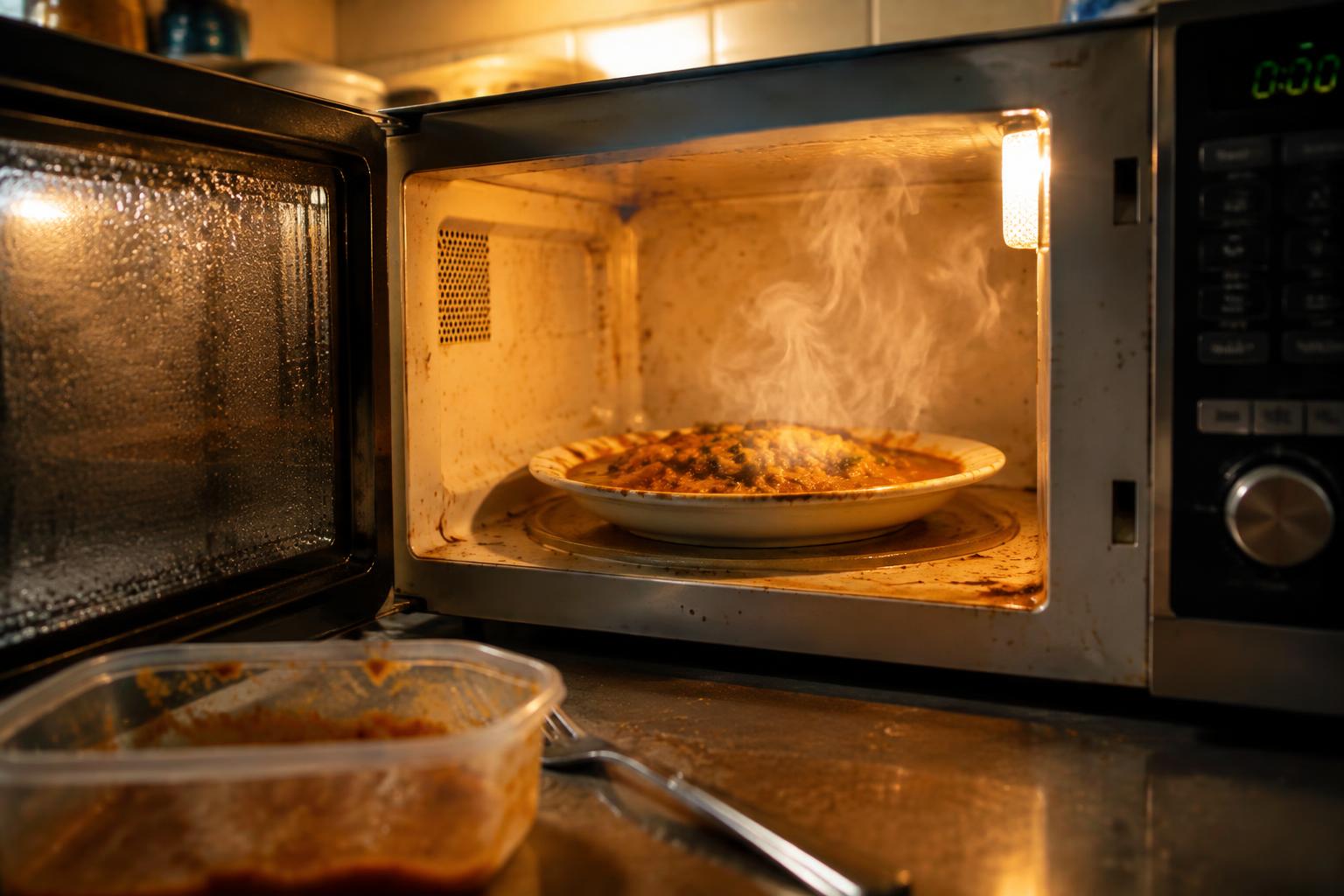
You’ve opened the microwave after heating leftovers and been hit with a powerful aroma, only to find the actual taste underwhelming. This mismatch between smell and flavor is rooted in how microwaves excite volatile molecules, sending them into your nose before they reach your tongue. The result can be deceptive-intense odors don’t always mean strong taste, especially when heat distribution is uneven or moisture is lost.
Key Takeaways:
- Microwaves heat food unevenly, causing certain areas to overheat and release volatile compounds more intensely, which amplifies odor without improving taste.
- The nose detects aromatic molecules more quickly and sensitively than the taste buds can register flavor, making the smell of microwaved food seem stronger than its actual taste.
- Steam buildup during microwaving traps and concentrates odors, especially in sealed containers, while the food’s texture and temperature can dull flavor perception on the palate.
The Great Molecular Agitation
You experience intense aromas the moment you open the microwave door because rapid heating causes volatile compounds to burst into the air. Microwaves excite water molecules violently, and that intense internal vibration forces flavor-carrying molecules out of the food faster than conventional cooking. While your nose detects these airborne compounds immediately, your taste buds receive a weaker signal because the same agitation can break down delicate flavor structures. This mismatch means the smell often overpromises what the actual taste can deliver, especially in foods with subtle seasoning or moisture-heavy compositions.
The Sensory Betrayal of the Tongue
You’re not imagining it-your tongue is simply less equipped than your nose when it comes to detecting flavor nuances. While scent receptors in your nasal cavity can identify hundreds of different volatile compounds released during microwaving, your taste buds are limited to just five basic signals: sweet, salty, sour, bitter, and umami. This means up to 80% of what you perceive as flavor actually comes from smell, not taste. When microwave heating fails to evenly release aromatic molecules, your brain receives conflicting signals-your nose catches a powerful whiff, but your tongue finds little to match it, creating a disconnect that feels like deception.
The Structural Integrity of a Bouncy Ball
You can feel it the moment it leaves your hand-a bouncy ball’s firm, elastic surface compressing slightly before snapping back with energetic precision. That resilience comes from tightly linked polymer chains, usually made of polybutadiene or similar synthetic rubber, engineered to withstand repeated impacts without losing shape. Each bounce depends on uniform density and cross-linked molecular bonds that return kinetic energy efficiently. If those bonds weaken due to heat or material fatigue, the ball loses its spring, becoming sluggish or even sticky. Maintaining structural integrity ensures maximum rebound, a physical performance not unlike how flavor compounds must remain stable to deliver consistent taste.
The Invisible Theft of Flavor
Heat reshapes how your food releases aroma, but microwaves often trap or unevenly distribute these volatile compounds. You lose subtle top notes-like the bright citrus in a sauce or the herbal lift in a marinade-because the rapid cooking doesn’t allow for gradual flavor development. Steam buildup inside the microwave seals in some aromas while venting others unpredictably, distorting what eventually reaches your nose. Unlike stovetop methods that caramelize and layer scent molecules over time, the microwave’s speed can short-circuit this process, leaving behind a dish that smells stronger than it actually tastes.
Summing up
You’ve likely noticed how microwaved food can fill a room with a powerful aroma, yet taste milder than expected. This happens because volatile compounds responsible for smell are rapidly released during microwave heating, often more intensely than in conventional cooking. Your nose detects these airborne molecules quickly, creating a strong first impression. Taste, however, relies on a balance of flavor compounds, texture, and temperature-elements that microwaving doesn’t always preserve. The result is a sensory mismatch: your nose expects bold flavor, but your tongue experiences something more subdued.
FAQ
Q: Why does food heated in a microwave often smell stronger than it tastes?
A: Microwave ovens heat food by agitating water molecules, which creates steam and carries volatile aroma compounds to the surface quickly. These aromatic molecules reach your nose before you even take a bite, creating a strong initial impression. The taste, however, depends on a broader mix of chemical components and textures that may not be evenly distributed or fully activated by the microwave’s rapid heating method.
Q: Do microwaves change the chemical structure of food in a way that affects smell?
A: Microwaves do not alter the chemical structure of food more than conventional cooking methods, but they do heat unevenly and often at lower surface temperatures. This means Maillard reactions-responsible for browning and deep flavor development-rarely occur. Without these reactions, the food lacks complex taste compounds, even though aromatic volatiles are still released and detected by the nose.
Q: Can the container or covering affect how strong microwaved food smells?
A: Yes. Covering food traps steam and concentrates aroma molecules, which intensify the smell when the lid is removed. Plastic wraps, paper towels, or microwave-safe domes can absorb or interact with certain compounds, sometimes adding their own subtle odors. Glass or ceramic containers tend to interfere less, preserving the original scent profile more accurately.
Q: Why does microwaved fish or garlic seem especially pungent right after heating?
A: Foods high in sulfur compounds like fish, garlic, and cruciferous vegetables release potent volatile molecules when heated. Microwaving rapidly vaporizes moisture, carrying these compounds into the air quickly. The sharp smell of reheated fish, for instance, comes from trimethylamine and other amines that become airborne but don’t necessarily enhance the taste on the tongue.
Q: Is there a way to make microwaved food taste as strong as it smells?
A: Adding a brief broil or pan-sear after microwaving can help. This creates surface browning and activates flavor compounds that microwaves alone can’t produce. Stirring food halfway through heating ensures more even temperature distribution, while finishing with fresh herbs, citrus zest, or a drizzle of flavored oil reintroduces aromatic elements that enhance both smell and taste.