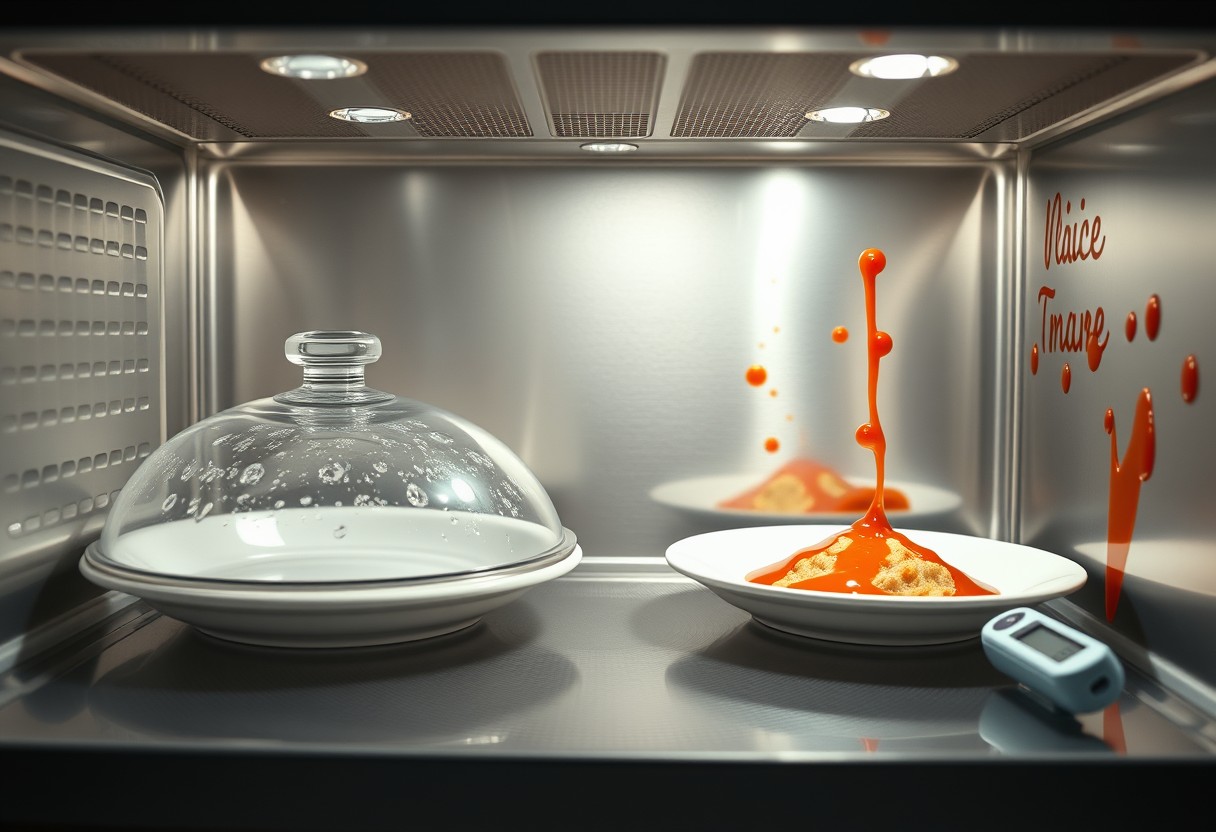
You’ve likely reheated food only to find it soggy, dry, or exploded across the interior. Covering your dish isn’t just about preventing messy splatters-it’s key to even heating and retaining moisture. More importantly, a proper cover helps eliminate dangerous cold spots where bacteria can survive, making your meal both safer and more enjoyable.
Key Takeaways:
- Covering food in the microwave traps steam, creating a moist environment that helps food heat evenly and prevents it from drying out.
- A microwave-safe lid or cover reduces mess by containing splatters, making cleanup faster and keeping the appliance interior clean.
- Using the right cover can improve food safety by ensuring heat penetrates cold spots, lowering the risk of consuming underheated portions.
The Physics of the Vapor Trap
Trapping steam inside your microwave by covering food creates a miniature sauna that accelerates cooking through intense, moist heat. Water molecules heated in your meal turn to vapor, and when confined, they circulate and reabsorb into the food’s surface. This environment dramatically increases thermal transfer efficiency, meaning your dish cooks faster and more evenly than it would in dry air. The sealed moisture acts as a hidden force multiplier, turning your microwave into a pressurized cooking chamber-even without actual pressure.
Steam as a Kinetic Catalyst
Steam carries far more energy than hot air alone, and when you cover your food, that vapor becomes an active cooking agent. Each water molecule in the steam moves rapidly, transferring kinetic energy directly to the surface of your meal on contact. You’re not just reheating-you’re engaging a dynamic process where invisible vapor strikes food with precision, raising its internal temperature faster than microwave radiation could achieve in isolation. This is why covered dishes often feel hotter and cook through in less time.
Latent Heat Transfer Efficiency
When steam condenses on cooler surfaces of your food, it releases latent heat-the same energy used to turn water into vapor in the first place. This phase change dumps substantial thermal energy directly into the food without requiring additional microwave exposure. You benefit from natural heat recycling that boosts cooking performance, reducing overall time while improving consistency. The cover sustains this cycle by keeping humidity high, ensuring continuous condensation and maximizing energy use from every burst of steam.
Combatting the Cold Spot Menace
Trapped steam doesn’t just prevent mess-it actively reshapes how heat travels through your food. When you cover your dish, rising moisture condenses against the lid and drips back down, creating a continuous loop that pushes thermal energy into dense zones like the center of a casserole. This feedback loop ensures the coolest part of your meal catches up to the edges, eliminating pockets of cold that can harbor bacteria or ruin the eating experience. Without coverage, those inner sections stay stubbornly cool, no matter how long you run the timer.
Atmospheric Equilibrium
Your microwave creates uneven energy distribution, but covering the dish stabilizes the internal climate. The enclosed space quickly reaches a humid equilibrium where steam saturation reduces the amount of additional energy needed to raise the food’s core temperature. You’re not just heating leftovers-you’re maintaining a pressurized microenvironment that forces heat deeper, faster. This balance means even thick layers of mac and cheese heat through uniformly, turning what was once a gamble into a predictable result.
Convection Within the Bowl
Microwaves excite water molecules, but it’s the steam they generate that drives convection currents inside the covered container. As vapor rises, it carries heat upward and outward, then cycles back down along the cooler center, forming a natural circulation pattern. This movement ensures the thermal energy penetrates dense regions more effectively than radiation alone could manage. Your bowl becomes a self-stirring system, quietly correcting imbalances while you focus on other tasks.
The Great Splatter Prevention
A lid on your microwave-safe container isn’t just a suggestion-it’s your first line of defense against a volcanic tomato sauce eruption. When heated, liquids expand rapidly and trapped steam builds pressure, especially in dense, saucy dishes. Without a cover, that pressure releases violently, launching scalding droplets across the microwave’s interior. The lid acts as a physical barrier, containing the bursts and directing steam upward, not outward. This simple step keeps your cooking environment clean and, more importantly, prevents burns from unexpected splashes.
Surface Tension and Eruptions
Tomato-based sauces are particularly prone to sudden bursts because of their high water content and thick consistency. As the sauce heats, steam forms beneath the surface, but the dense layer resists release, building pressure until it violently ruptures through the surface tension. You’ve likely seen this mid-reheat explosion turn your microwave’s ceiling into a polka-dotted mess. Covering the dish stabilizes the environment, allowing steam to escape gradually through the lid’s vent or gap, preventing those dangerous, messy blowouts.
Post-Cooking Cleanup Labor
Every uncovered microwave session adds another layer of dried-on food to the walls and ceiling, and over time, that grime becomes stubborn, baked-on residue that requires harsh scrubbing. What starts as a few stray splatters turns into a cleaning chore that eats up your time and patience. By simply using a cover, you eliminate up to 90% of the mess, keeping the interior nearly spotless. You’ll spend less time wiping down surfaces and more time enjoying your meal-without the risk of inhaling fumes from chemical cleaners.
Rescuing Your Leftovers from Desiccation
Leaving food uncovered in the microwave exposes it to intense, dry heat that rapidly pulls moisture from the surface, often turning tender proteins into tough, leathery remnants of last night’s meal. You’ve likely bitten into reheated chicken or fish only to find it stringy and dry-this is desiccation in action. By covering your dish, you create a microenvironment where rising steam circulates back into the food, preserving its original texture. The simple act of trapping moisture makes the difference between a satisfying second serving and a disappointing, overcooked bite.
Protein Hydration
Microwaving uncovered strips proteins of their natural juices, leading to a dramatic loss in tenderness. When you reheat meat, poultry, or fish without a cover, the high heat forces internal moisture to escape, leaving fibers tight and dry. Covering the dish slows this evaporation, allowing the proteins to retain moisture and stay supple throughout reheating. You’ll notice a marked improvement in both juiciness and mouthfeel, especially in leaner cuts that are prone to drying out quickly under direct microwave energy.
The Starch Softening Effect
Starchy foods like rice, pasta, and potatoes rely on retained water to maintain their soft, palatable texture. Without a cover, microwaves drive off surface moisture, causing these items to harden or develop an unappetizing, gummy exterior. When you trap steam by covering the dish, the ambient humidity keeps starches evenly warmed and prevents them from becoming stiff or rubbery. This results in leftovers that taste freshly prepared, not like a dried-out version of their former selves.
Selecting Your Shield
Choosing the right cover transforms how heat and moisture interact with your food. A glass lid traps steam effectively, ensuring even warmth throughout your meal, while a paper towel absorbs excess moisture that can leave food soggy. You’ll find glass excels with dense dishes like casseroles, where consistent temperature matters most. For quick reheat jobs-say, a bowl of soup or steamed vegetables-a paper towel prevents messy bursts and keeps textures intact. Each option has strengths, but matching material to meal makes all the difference in outcome.
Vented Plastic Options
Vented microwave-safe plastic lids offer convenience and precision, allowing steam to escape through built-in openings. You benefit from reduced pressure buildup, which lowers the risk of sudden spills when removing the cover. These lids work especially well with liquids or saucy dishes that tend to bubble unpredictably. Look for BPA-free labels and avoid warping by not letting the plastic touch the food directly. A vented design maintains texture while preventing over-saturation from trapped condensation.
Ceramic Lids and Weight
Ceramic lids retain heat longer than most materials, contributing to more uniform reheating. Their weight helps seal in moisture without needing a tight lock, making them ideal for dishes that dry out quickly, like baked pasta or roasted vegetables. You’ll notice less surface cooling because ceramic radiates warmth back into the food. Just ensure any ceramic you use is labeled microwave-safe to prevent cracking or overheating. The heft improves steam retention, giving leftovers a freshly cooked quality.
The Chemical Safety Dance
Plastic containers aren’t always built to handle rapid temperature shifts, and when you microwave food without proper shielding, you risk chemical migration from container to meal. Some plastics release harmful compounds like phthalates or bisphenols when heated, especially when in direct contact with fatty or acidic foods. By covering your dish with a microwave-safe lid or paper towel, you reduce the need for high-risk plastic use. One innovator even designed a reusable shield specifically for this concern-check out My Invention – Microwave Guard : r/inventors to see how users are rethinking safety.
Heat-Stable Polymers
Different plastics react unpredictably under heat, but containers labeled as microwave-safe are typically made from heat-stable polymers like polypropylene. These materials resist deformation and are less likely to leach toxins into your food. You should still avoid old, scratched, or non-labeled plasticware, as damage increases the chance of chemical breakdown. When in doubt, transfer food to glass or ceramic before heating-your body won’t absorb stray molecules, and you eliminate the guesswork entirely.
Pressure and Venting Logic
Trapped steam builds pressure, and without proper venting, containers can warp or burst, releasing both hot contents and potentially degraded plastic particles. A covered microwave dish needs a slight opening to let vapor escape safely. This small gap maintains structural integrity while preventing dangerous pressure spikes that compromise both food safety and container chemistry. Always leave a corner lifted or use a vented lid to balance containment and release-your lunch stays clean and free of unwanted contaminants.
Final words
You now know that covering food in the microwave does far more than keep your appliance clean. It traps steam to distribute heat evenly, prevents dry patches, and stops cold spots from ruining your meal. A simple lid or damp paper towel changes how energy interacts with your food, preserving moisture and texture. You avoid messy splatters and reduce bacterial risks by heating leftovers more thoroughly. Your choices in cover material also affect safety and quality. What you use matters as much as the act itself.
FAQ
Q: Why does covering food in the microwave actually change how it heats?
A: Trapping steam is the key. When food heats in the microwave, water molecules turn to vapor. A cover keeps that moisture circulating around the food, creating a mini steaming environment. This helps cook items more evenly and prevents the outer layers from drying out before the center warms through. Think of it like a steamer basket, but one you already own and keep on your counter.
Q: Can any plate or lid work as a microwave cover?
A: Not all covers are safe or effective. Microwave-safe glass lids, ceramic plates, or vented plastic covers are ideal because they allow a small amount of steam to escape while still retaining most moisture. Avoid sealing containers airtight or using metal-trimmed dishes, which can spark. A paper towel works well for quick reheat jobs, absorbing excess moisture while blocking splatters.
Q: Does covering food reduce microwave time?
A: It can, but that’s not the main benefit. Food covered properly often heats more efficiently because trapped steam contributes to the cooking process. For example, a baked potato wrapped in a damp paper towel may soften in eight minutes instead of twelve. The real advantage isn’t speed, though-it’s consistency and texture.
Q: Is there a health risk if I don’t cover my food?
A: The primary risks are uneven heating and potential bacterial survival in cold spots. Microwaves heat unevenly by design, and uncovered food is more likely to have pockets that stay cold while other areas overheat. Covering helps distribute heat, reducing the chance that harmful bacteria linger in underheated zones, especially in dense foods like chicken or casseroles.
Q: What happens to food texture when it’s microwaved uncovered?
A: Uncovered food loses moisture rapidly, leading to rubbery cheese, tough pasta, or leathery skin on leftovers. A mid-sized SaaS firm might not care about this, but anyone who’s reheated lasagna knows the difference. Covering preserves tenderness by maintaining humidity inside the microwave cavity, mimicking the conditions of a conventional oven’s broiler setting without the dry heat.