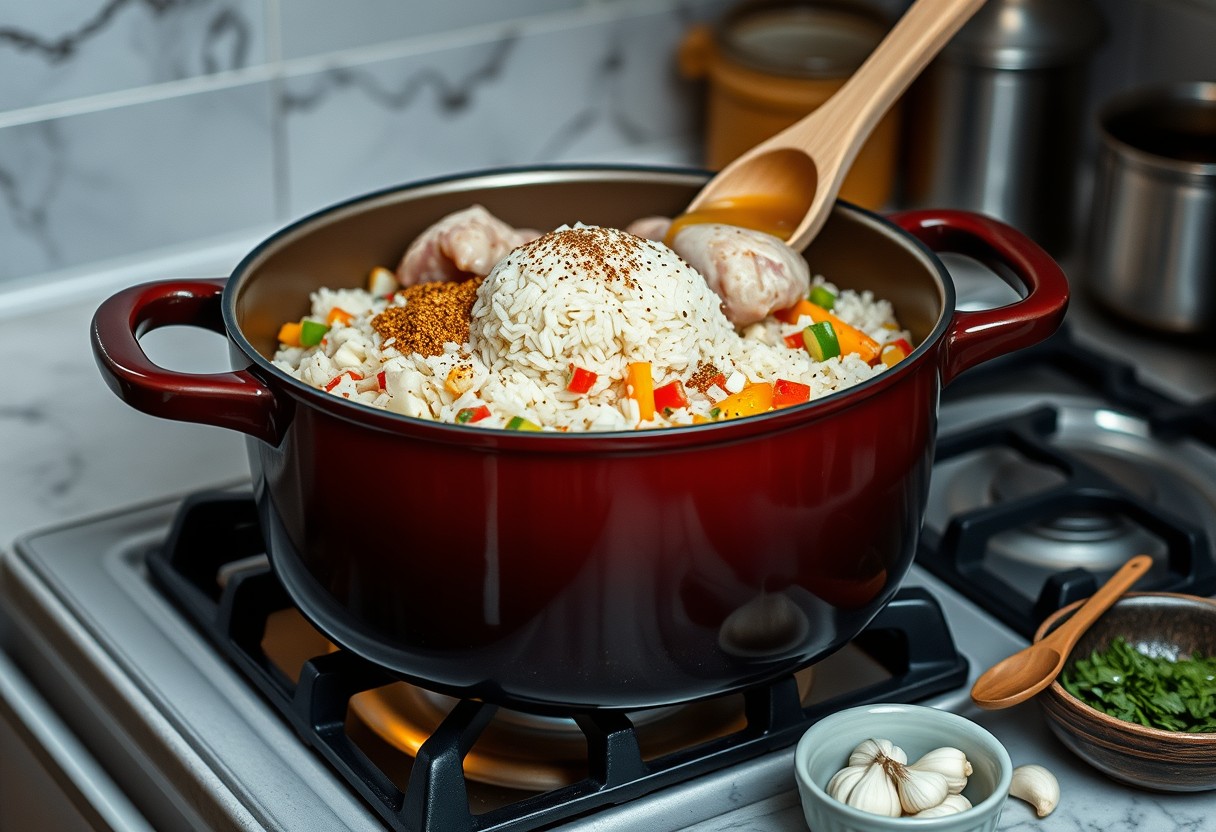
You can turn a bland one-pot meal into something deeply satisfying with one effective technique: flavor layering. Instead of tossing everything in the pot at once, you build taste step by step. This method prevents flatness and ensures each ingredient contributes fully. The result? A dish that tastes like it took hours, not just one pan and minimal cleanup.
Key Takeaways:
- Aromatic vegetables and fats form the base of flavor-sautéing onions, garlic, or shallots in oil or butter before adding other ingredients builds a rich foundation that permeates the entire dish.
- Layering ingredients by cooking them in sequence, not all at once, preserves individual textures and tastes; harder vegetables go in first, while delicate greens or proteins are added later to avoid overcooking.
- A splash of acidic liquid-like lemon juice, vinegar, or wine-stirred in at the end brightens the final dish, cutting through richness and making flavors pop without needing extra salt.
The Scented Foundation of the Pan
Building flavor in one-pot meals starts with what you do at the very beginning-before liquids ever touch the pan. Heat your pot until it’s hot enough to make a drop of oil shimmer, then add your aromatics. This high-temperature start forces onions, garlic, and celery to release their sugars and oils rapidly, creating a deep, savory base that permeates every bite of the finished dish. Let them cook undisturbed for a few moments to encourage browning, as caramelized bits stuck to the pan are concentrated flavor waiting to be unlocked.
The Holy Trinity of Aromatics
Onions, carrots, and celery form the backbone of countless savory dishes, and for good reason. When chopped finely and sautéed in fat, these vegetables break down into a sweet, earthy foundation that supports everything added afterward. The onion delivers sharpness and sugar, the carrot adds subtle sweetness, and the celery contributes herbal depth and texture. Cooking them slowly in oil ensures they soften evenly and develop complex layers of taste, transforming from raw ingredients into a unified, fragrant base that defines the character of the entire meal.
Toasting the Spices
Once the vegetables have softened, introduce ground spices directly to the hot pan. Stir constantly for just 30 to 60 seconds, allowing the heat to awaken volatile oils locked within the powders. You’ll notice an immediate boost in fragrance-cumin becomes nutty and warm, paprika deepens into smokiness, and turmeric blooms into earthy brightness. This brief toasting step prevents spices from tasting flat or dusty and instead integrates them into the dish as bold, aromatic drivers of flavor, not afterthoughts.
The Ritual of the Deglaze
After building depth with your initial sear, the caramelized bits clinging to the bottom of the pan are not burnt residue to discard-they’re concentrated flavor gold. Introducing a liquid at this stage unlocks those stubborn particles, transforming them into the backbone of your sauce. The sudden hiss and rising steam signal the start of something essential: a rich, layered base that wouldn’t exist without this step. Timing matters-wait too long and the fond dries out, too soon and the liquid won’t have enough heat to react properly.
Wine and Stock Interventions
Wine brings acidity and complexity, while stock delivers savory depth-both excel at lifting the fond from the pan’s surface. Pour a splash while the pan is still hot, and the liquid should sizzle immediately, not pool. Red or white wine works depending on your dish, but avoid “cooking wine” from the grocery aisle-it contains salt and preservatives that dull flavor. For stock, use low-sodium versions to maintain control over seasoning, and ensure it’s warm to prevent thermal shock to the pan.
The Art of the Scrape
A metal spatula or wooden spoon becomes your tool for precision when breaking loose the fond. Move in small concentric circles, applying gentle pressure so you don’t scratch the cookware. The dark bits should lift easily and dissolve into the liquid, turning the pool in the pan into a glossy, aromatic mixture. Avoid using silicone utensils here-they lack the firm edge needed to dislodge the flavorful crust effectively. Keep the heat steady; too low and the scraping does nothing, too high and you risk burning the newly freed particles.
The Strategic Pile-Up of Solids
Building flavor in a one-pot meal hinges on how you layer ingredients, not just what you use. You control the outcome by placing the most heat-resistant proteins at the bottom, where they receive direct contact with the pan’s surface. This ensures a deep sear develops before more delicate components are added. Stacking matters-tossing everything in at once leads to steamed textures and muted taste. By organizing solids according to their cooking needs, you preserve integrity and maximize browning, which translates to richer, more complex results in every bite.
Hard Searing the Flesh
Start with high heat and enough space between each piece of meat to avoid crowding. You want steam to escape, not trap, so the surface dries quickly and turns caramelized and crisp. Resist the urge to stir too soon-let the proteins cling to the pan long enough to develop that foundational crust. Flipping only once preserves this reaction, locking in juices while setting the stage for deeper layers of flavor. A well-seared exterior becomes the backbone of the entire dish’s taste profile.
The Vegetable Hierarchy
After the meat is set aside, introduce vegetables in order of density. Begin with root vegetables like carrots or potatoes-they can withstand residual heat and continue cooking slowly without breaking down. Softer items like bell peppers or zucchini go in later, preserving their texture and color. Adding them too early turns them mushy and dulls the overall brightness of the dish. Timing each addition precisely maintains contrast and keeps every component distinct and flavorful.
The Last-Minute Acidic Rescue
Think one-pan meals are just for lazy nights? This viral post proves otherwise-especially when you deploy a splash of acid at the end. A final drizzle of citrus or vinegar does more than brighten; it cuts through rich fats with laser precision, transforming a heavy dish into something balanced and alive. You’ll notice the difference immediately: flavors lift, grease disappears, and your taste buds wake up.
The Citrus Punch
Citrus juice added just before serving reawakens dull notes in your one-pot meal. A squeeze of lemon or lime introduces a bracing freshness that cuts through oil and fat, especially in creamy or cheese-laden dishes. You don’t need much-half a lemon for four servings is enough. Overdo it and you’ll overwhelm, but the right amount makes the entire dish taste cleaner, sharper, and more intentional.
Herbaceous Resurrections
Herbs tossed in at the end absorb the acid and redistribute it across the surface of the food. Flat-leaf parsley, cilantro, or even a few torn basil leaves don’t just add color-they carry droplets of citrus or vinegar across the surface of the dish, delivering bursts of brightness with every bite. The oils in fresh herbs reactivate when touched by acid, releasing aromatic compounds that make your meal smell as vibrant as it tastes.
To wrap up
You now have a straightforward method to make one-pot meals taste deeper and more complex without extra cleanup. By layering ingredients at the right times-building flavor with aromatics, searing proteins first, deglazing the pan, stacking solids strategically, and finishing with a touch of acidity-you control how each element contributes to the final dish. This approach works in everyday cooking, whether you’re making chili, stew, or a simple pasta. You don’t need special tools or rare ingredients. You only need to pay attention to sequence and timing, turning routine meals into something far more satisfying.
FAQ
Q: What exactly is the “layering” trick in one-pot cooking?
A: The layering trick involves adding ingredients to the pot in a specific order to build depth of flavor. Instead of tossing everything in at once, you start with aromatics like onions and garlic, then sear proteins, deglaze with liquid, add vegetables, and finish with herbs or acid. Each step creates a distinct flavor note, and the layers accumulate without requiring extra pots or pans. A home cook making a chicken and vegetable stew might brown the chicken first, remove it, sauté onions and carrots, scrape up the browned bits, return the chicken, add broth and tomatoes, and simmer-each action contributes a unique taste dimension.
Q: Why does browning the meat first make a difference in flavor?
A: Browning meat triggers the Maillard reaction, a chemical process that develops complex, savory flavors and rich color. When proteins and sugars in the meat react under high heat, they form hundreds of new flavor compounds. Skipping this step leaves the dish tasting flat. A mid-sized SaaS firm’s employee, short on time, might be tempted to dump raw chicken into the pot, but taking five extra minutes to sear it properly transforms the base of the meal, making the final result taste like it simmered for hours.
Q: Can I use this layering method with vegetarian dishes?
A: Yes, the layering technique works just as well for plant-based meals. Start with onions, garlic, or ginger in oil, then add mushrooms or tofu to develop browning, followed by spices, vegetables, and liquid. For a lentil and sweet potato curry, frying the spices in oil for 30 seconds after the onions unlocks their essential oils, deepening the flavor before adding the lentils and coconut milk. The structure of layering remains the same, even without meat.
Q: How does deglazing contribute to the layering process?
A: Deglazing lifts the caramelized bits-called fond-from the bottom of the pan after searing, dissolving them into the cooking liquid. These browned remnants are packed with flavor. Pouring in wine, broth, or even water while scraping the pan incorporates that richness into the sauce. In a beef and barley stew, deglazing with red wine adds acidity and body, blending the meat’s depth with the liquid base, ensuring no flavor is lost to the pan.
Q: When should I add acidic ingredients like lemon juice or vinegar?
A: Acidic ingredients are best added near the end of cooking to preserve their brightness. If added too early, their sharpness can dull during long simmers. A spoonful of lemon juice stirred into a lentil soup just before serving lifts the entire dish, cutting through richness and balancing flavors. This final touch acts as a flavor amplifier, making each layer already built in the pot more distinct and vibrant.