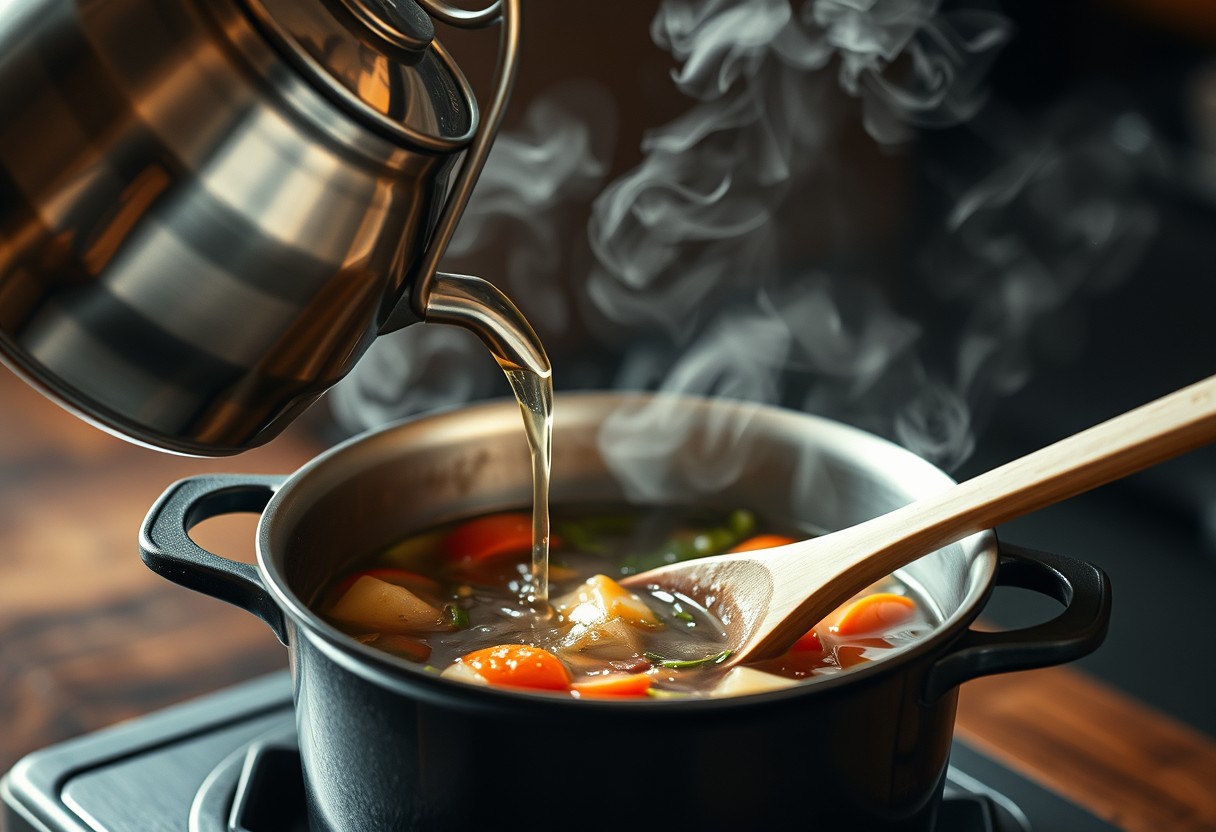
You’ve seasoned your dish carefully, built layers of flavor, and now it’s time to add liquid-but one wrong move can ruin everything. Pouring in cold water directly into a hot pan dilutes taste and breaks down texture. The right technique preserves concentration and depth. You don’t need more liquid-you need smarter hydration. Temperature, timing, and method make all the difference.
Key Takeaways:
- Adding water in small, controlled amounts prevents flavor loss and maintains the dish’s intended concentration, especially when deglazing or adjusting consistency.
- Using hot water instead of cold minimizes temperature shock to the cooking process, preserving even heat distribution and reducing the risk of toughening proteins or halting simmering.
- Introduce liquid gradually through the edge of the pan or pot to target fond without disturbing delicate ingredients, preserving texture and maximizing flavor extraction.
The Sin of Sogginess
Patience defines the line between a deeply flavored dish and a watery disappointment. When you rush flavor concentration, you risk trapping excess liquid that blunts every bite. Simmering too quickly forces steam to escape before the liquids properly reduce, leaving you with a thin, lifeless result. You must resist the urge to add more water when the pan looks dry-this impulse only resets the clock. True depth comes from slow, steady cooking, allowing natural moisture to evaporate and intensify taste without dilution.
The Reduction High
Success arrives when you let time work in your favor. As liquids simmer gently, water evaporates while flavors grow bolder, creating a rich, cohesive base. You’ll notice the sauce clinging to the spoon-a sign you’ve reached the peak of concentration. This moment is your goal: maximum taste with minimal liquid. Push past the urge to stir constantly or boost the heat; stillness and restraint deliver the most rewarding results.
Death by Drowning
One careless pour can undo hours of careful cooking. Adding water too freely floods the pan, washing away the concentrated essence you’ve built. You might think you’re correcting dryness, but you’re actually erasing flavor. Each drop of added water dilutes the foundation irreversibly. Trust the process-what looks like scarcity often becomes abundance with just a few more minutes of patient reduction.
The Heat of the Matter
Temperature control is your strongest ally when introducing water without weakening flavor. Adding cold water to a hot pan risks shocking the emulsion, breaking down carefully built textures and causing fats to seize or separate. Instead, you maintain stability by ensuring any added liquid is at or near boiling. This keeps the cooking medium cohesive, allowing water to integrate smoothly. The moment you lower the temperature too drastically, you risk losing the silky consistency that binds your dish together. Precision here prevents disaster.
Boiling Point Only
You should only add water that has already reached a full boil. Introducing cooler liquid-even just warm-can destabilize the delicate balance of fat and moisture in your pan. When water hits boiling temperature, its integration becomes nearly seamless, preserving the integrity of the sauce or braise. This single step prevents curdling, separation, and thinning, which are common when cold water disrupts high-heat emulsions. Keep a separate pot of water simmering nearby to ensure immediate access to boiling liquid whenever needed.
Keeping the Peace
Once boiling water is added, your stirring technique becomes critical. Slow, circular motions from the center outward help maintain emulsion stability without introducing air or causing splashing. Aggressive stirring can break the bond between fat and liquid, leading to a grainy or split texture that’s difficult to recover. Use a wooden spoon or silicone spatula to gently fold the water in, allowing it to absorb gradually. This calm approach protects the sauce’s body and ensures a smooth, restaurant-quality finish.
Proper Liquid Assets
Stocks and broths are your most reliable tools for building rich, layered flavor without compromising texture. When you use a well-made chicken, beef, or vegetable stock, you’re not just adding moisture-you’re introducing deep umami complexity that water alone can never provide. These liquid assets carry concentrated savory notes from simmered bones, herbs, and aromatics, integrating seamlessly into sauces, grains, and braises. Choosing a high-quality, low-sodium version gives you control, letting you season precisely while avoiding dilution.
Broth is King
Broth stands above other liquids because it delivers both hydration and flavor in a single pour. You’re not just preventing dryness-you’re actively enhancing the dish with rich, rounded savoriness that evolves as it reduces. A good broth contains gelatin, which adds body and helps sauces cling to ingredients. Whether you’re cooking risotto or deglazing a pan, using homemade or carefully selected store-bought broth ensures every drop contributes meaningfully, not just fills volume.
Pre-game Reductions
Reducing your stock or broth before adding it to a dish concentrates its flavor and removes excess water content that could weaken your final result. You’re essentially pre-cooking the liquid to intensify its impact-what remains is a denser, more potent version of itself. Simmer it by half or more, then store it chilled for quick use. When you add this reduction during cooking, you gain depth without introducing unnecessary volume, preserving the integrity of your sauce or braise.
The Art of the Drip
Precision defines how you manage moisture in a dish that risks drying out. Instead of pouring, use controlled additions to preserve texture and concentration. You maintain control when you add liquid just a few drops at a time, allowing each to absorb or evaporate before considering the next. This method prevents sudden temperature drops that halt cooking or create steam pockets. Your dish retains its integrity, building depth without surrendering to wateriness. Trust your instincts-watch the surface tension, listen for the sizzle, and respond with restraint.
The Slow Bleed
Water introduced through a slow bleed keeps your sauce or braise from splitting or thinning too
The Fond Farewell
When you see that rich, caramelized layer stuck to the bottom of your pan, don’t panic-those are not burnt mistakes, they’re concentrated flavor waiting to be released. Deglazing is your moment to reclaim that depth by adding a small amount of liquid and scraping the pan with a wooden spoon. The scraped fond dissolves into the liquid, creating an instant sauce base full of savory complexity. You’re not washing away flavor; you’re unlocking it. Done right, this technique enhances without thinning, preserving the intensity your dish has built up to this point.
Booze and Fire
Alcohol can be a powerful deglazing agent, but it demands respect. When you pour spirits like whiskey or wine into a hot pan, the sudden heat can ignite the vapors-flames may rise instantly, so keep your face back and never lean over the skillet. Let the alcohol simmer and reduce fully before proceeding; incomplete evaporation leaves behind harsh raw notes. Used wisely, booze extracts the fond beautifully while adding its own nuanced character, transforming simple drippings into something deeply aromatic and layered.
Scars on the Pan
Not every sear ends in golden perfection-sometimes the bits darken too far, bordering on acrid. If your fond edges into bitterness, act quickly: remove the pan from heat and pour in liquid immediately to halt further charring. Use broth or water, not alcohol, to avoid amplifying the burnt taste. Stir gently to incorporate only the looser, darker particles; leave the truly blackened fragments if they don’t lift easily. Even scarred pans can yield usable flavor, as long as you strain carefully and taste as you go.
Last Ditch Efforts
When too much water has already mixed into your dish, your only path forward is aggressive reduction. Heat becomes your ally, but timing and attention are non-negotiable. You must expose the surface of the liquid fully to the air, allowing steam to carry off excess moisture without destroying the dish’s integrity. A wide, shallow pan accelerates evaporation far better than a deep pot. Keep the heat steady-too high risks scorching, too low drags out the process. Patience here isn’t passive; it’s active correction.
The Hail Mary
Open the lid and crank the heat to high-this is your final chance to salvage texture and concentration. The risk of burning spikes sharply, so constant stirring is mandatory, especially in corners where sauces cling and carbonize. Evaporation works fastest when surface area and airflow are maximized, so never walk away. What takes ten minutes on medium may finish in three on high, but only with vigilance. This move won’t rebuild flavor lost to dilution, but it can rescue body and intensity if caught in time.
Starch and Prayer
A small handful of raw rice or a sliver of bread added temporarily can absorb surprising amounts of excess water without dissolving completely. Remove it after ten minutes-it’s not meant to stay. Alternatively, a quick slurry of cornstarch and cold water stirred in at the end thickens rapidly and masks overhydration. The result isn’t perfect, but it’s functional: a cohesive, spoon-coating consistency that saves presentation and mouthfeel when all else fails.
Conclusion
You now know that adding water during cooking doesn’t mean sacrificing flavor or texture. By introducing liquid in small amounts, using concentrated forms like wine or stock, and timing your additions to match the dish’s needs, you maintain depth and consistency. Techniques like deglazing or steaming with a lid trap moisture where it’s needed without flooding the pan. You control the outcome by responding to what’s happening on the stove, not following rigid rules. Mastery comes from practice, observation, and understanding how each drop affects the final result.
FAQ
Q: Why does adding water to a dish often make it taste bland or watery?
A: Water lacks flavor and fat, so pouring it directly into a hot pan or pot dilutes the concentrated juices, oils, and seasonings that give a dish depth. When water hits high heat, it can cool the cooking surface abruptly, interrupting processes like caramelization or emulsification. The result is a thinner sauce or stew with muted taste and poor texture. To avoid this, always use a flavorful liquid like broth, wine, or even reserved pasta water, which contains starch and salt to help bind and enrich the dish.
Q: Can I use plain water at all without ruining my dish?
A: Yes, but only if you plan ahead. If water is your only option, boost its flavor by dissolving a small amount of soy sauce, miso paste, or a pinch of bouillon into it before adding. Even a splash of vinegar or lemon juice mixed with water can preserve brightness while adjusting consistency. The key is treating water as a neutral carrier, not a final ingredient. Always add it slowly and allow it to reduce, so excess moisture evaporates and flavors re-concentrate.
Q: How much liquid should I add when correcting a dry pan or sauce?
A: Start with two tablespoons. Many home cooks pour too much, thinking more liquid fixes dryness, but this is usually the opposite of helpful. Two tablespoons give enough moisture to loosen stuck bits from the pan or adjust thickness without overwhelming the dish. After adding, stir well and wait 30 seconds. If more is needed, repeat in small increments. This method keeps control over texture and taste, especially in sauces, stir-fries, and braises.
Q: What is deglazing, and how does it help when adding liquid during cooking?
A: Deglazing means pouring liquid into a hot pan after sautéing to lift the browned bits-called fond-that stick to the bottom. These bits are packed with flavor. Using a small amount of wine, stock, or even beer allows the liquid to boil rapidly, dissolving the fond and incorporating it into a sauce. The process adds complexity without dilution because the liquid reduces quickly, leaving behind a rich, integrated taste. Always scrape the pan with a wooden spoon as the liquid simmers.
Q: Is there a way to add moisture without introducing extra liquid?
A: Yes, steam and solid ingredients can hydrate a dish without thinning it. Covering a pan with a lid traps natural moisture from food, allowing gentle steam to finish cooking without drying. Ingredients like tomatoes, mushrooms, or zucchini release water as they cook and can be stirred in to plump up a dry stir-fry or sauce. A pat of butter or a drizzle of olive oil also improves mouthfeel and cohesion, mimicking the effect of added liquid without the risk of dilution.