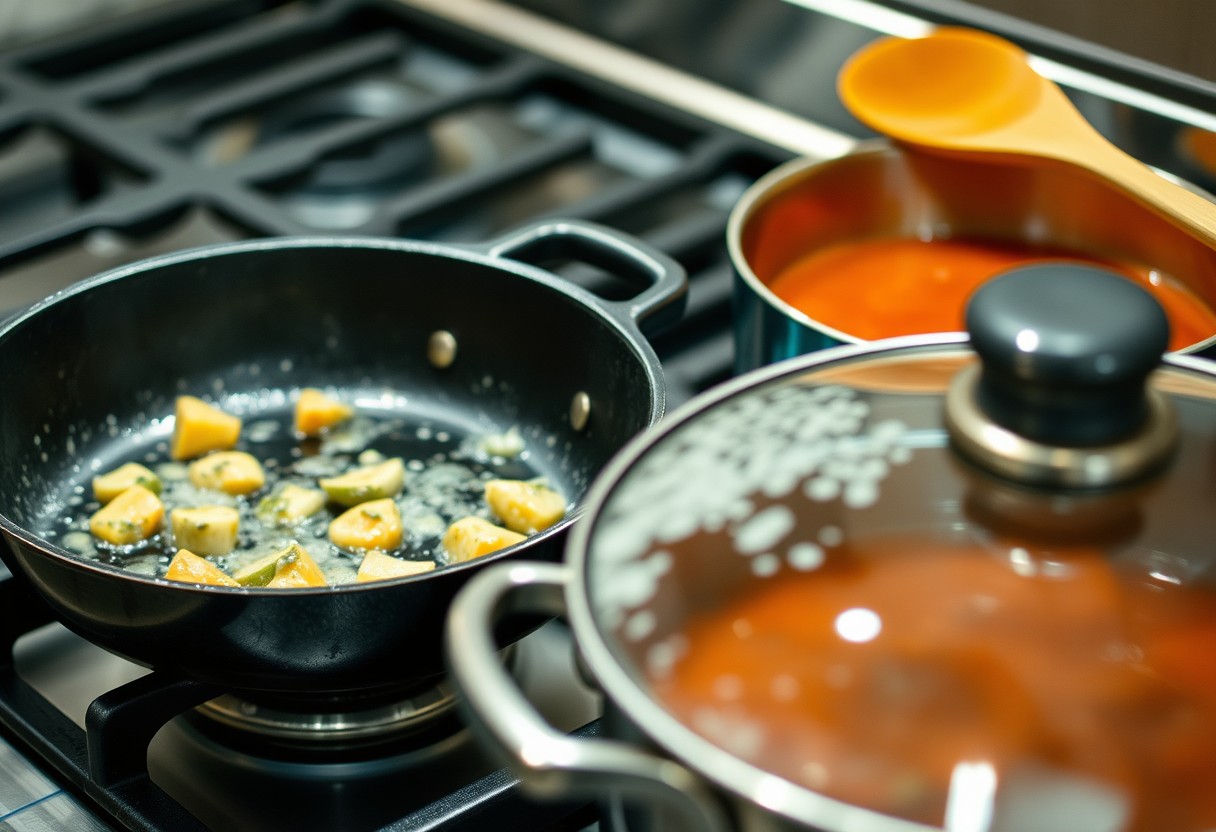
You control the outcome of your dish every time you decide whether to cover your pan. Trapping steam with a lid speeds cooking and retains moisture, ideal for vegetables or braising. But leaving it off promotes browning and reduces sauces effectively. Making the wrong choice can lead to soggy food or dangerous boil-overs. Know the science behind each decision.
Key Takeaways:
- Covering a pan traps steam and heat, which speeds up cooking and preserves moisture-ideal for simmering sauces, boiling pasta, or steaming vegetables.
- Leaving the pan uncovered allows excess moisture to evaporate, helping to thicken sauces, achieve crisp searing, and develop deeper browning on meats and vegetables.
- The decision to use a lid depends on the desired outcome: use it to control evaporation and maintain consistent heat, skip it when reducing liquids or building texture.
Evaluating Essential Moisture Retention Factors
When slow-cooked liquids are meant to remain consistent in volume, covering the pan becomes essential. A lid traps rising steam and redirects it back into the dish, minimizing evaporation during prolonged cooking. This is especially effective in braising, where maintaining liquid levels ensures even heat transfer and ingredient tenderness. Without a cover, moisture escapes rapidly, risking dryness and uneven texture. For best results, use a tight-fitting lid to create a closed environment that preserves both liquid and flavor throughout the cooking process.
- Traps steam to maintain liquid volume
- Prevents excessive evaporation in moist-heat cooking
- Keeps ingredients submerged for uniform tenderness
- Supports consistent temperature inside the pot
Preventing unwanted liquid reduction
Covering your pan stops too much liquid from boiling off, which is especially important when braising meats or simmering sauces. Without a lid, moisture turns to steam and escapes, leaving behind a thicker, sometimes overly concentrated result. When you want the cooking liquid to stay at a steady level, a cover ensures the environment stays humid and controlled. Leaving the pan uncovered in these cases can lead to dry, tough outcomes, so keep the lid on when preserving volume is key.
Maintaining tender textures in long-simmered dishes
Long cooking times require consistent moisture to break down tough fibers in ingredients like chuck roast or dried beans. A covered pot keeps steam circulating and prevents the liquid from dropping below effective levels. This enclosed environment allows collagen to convert into gelatin slowly, yielding fork-tender results. If the pan is left uncovered, liquid diminishes too fast, causing food to cook unevenly or scorch. For dishes that demand hours of simmering, a lid is non-negotiable to preserve both moisture and texture.
Mastering Heat Distribution and Efficiency Tips
A lid drastically reduces the time it takes for liquids to reach a boil by trapping heat inside the pot. When you cover your pan, steam circulates more efficiently, raising the internal temperature faster than in an open vessel. This method is especially helpful when boiling water for pasta or preparing soups-situations where speed and energy conservation matter. For more insights on lid use in slow cooking, check this Crockpot Question. Cover on or off when cooking? discussion.
- Trapped heat accelerates boiling
- Covered pans use less energy
- Steam circulation boosts cooking efficiency
Accelerating the time to reach a boil
Water reaches its boiling point significantly faster when the pan is covered because the lid prevents heat from escaping into the air. You’ll notice a visible difference-sometimes cutting minutes off the wait-especially when heating larger volumes. Keeping the pan covered creates a closed environment where rising steam reflects back into the liquid, maintaining higher temperatures throughout the pot. This simple step improves stove efficiency and ensures you’re not wasting energy during early cooking stages.
Ensuring even cooking for thick proteins
Thick cuts like chicken breasts or pork chops benefit from a covered pan once seared, as the trapped heat helps cook them evenly through the center without over-browning the exterior. The consistent ambient temperature inside the covered skillet prevents cold spots and promotes uniform doneness. Using a lid at this stage means juices stay balanced within the meat, reducing dryness and improving texture. This technique works best after initial browning to lock in flavor while finishing gently.
How-to Optimize Surface Texture and Browning
To achieve a rich, golden crust on proteins or vegetables, you must leave the pan uncovered during high-heat cooking. Moisture trapped under a lid prevents surface drying, which directly inhibits browning. By allowing steam to escape freely, the exterior dehydrates slightly, creating ideal conditions for Maillard reactions. This transformation results in deep flavor and an appetizing texture. Keep the pan open to ensure maximum contact between food and hot surface-this is the fastest path to a crisp sear.
Promoting steam escape for a golden crust
Leaving the pan uncovered is essential when you want a deeply caramelized exterior on meats or seared vegetables. Steam builds up quickly under a lid, cooling the surface and slowing browning. When you keep the pan open, moisture evaporates rapidly, letting the food’s surface reach higher temperatures. This direct exposure to heat encourages a crisp, flavorful crust that enhances both mouthfeel and aroma. Never cover the pan during initial searing if texture is your goal.
Avoiding soggy results in high-heat stir-fries
Stir-frying demands high heat and dry conditions, which means keeping the pan uncovered at all times. Covering it traps steam, turning a crisp stir-fry into a soft, boiled mess. Ingredients like bell peppers, snap peas, or thinly sliced beef release moisture quickly. When you leave the pan open, that moisture boils off instead of pooling, allowing each piece to brown slightly. This ensures a restaurant-quality texture-snappy, charred, and full of wok hei, even in a home kitchen.
Implementing Heat and Overflow Control Strategies
Controlling heat through lid placement is essential when preventing food from scorching during high-intensity cooking. Leaving the pan uncovered allows steam to escape, which keeps the temperature lower and more stable, reducing the risk of burning delicate ingredients. You gain direct visibility and faster evaporation, making it easier to monitor consistency and adjust in real time. This method proves especially effective when working with sugary glazes or reduced sauces that can go from caramelized to charred within seconds.
Monitoring high-heat sautéing to prevent burning
Sautéing over high heat demands constant attention, particularly when the pan remains uncovered. Without a lid to trap steam, temperatures at the pan’s surface rise quickly, increasing the chance of burning or uneven browning. You must keep ingredients moving frequently using a toss or stir technique to ensure even exposure. If you notice smoke forming or bits sticking to the bottom, reduce the heat immediately-lingering too long can ruin both flavor and texture in under a minute.
Managing lid placement to stop pot boil-overs
Boiling large volumes of liquid without supervision often leads to messy, dangerous overflow. Keeping the pot uncovered gives you full control over the simmer and lets excess steam dissipate naturally. When you cover the pot, pressure builds and liquids expand rapidly, raising the risk of violent boil-overs that can cause burns or stove damage. You should never leave a covered boiling pot unattended, especially when cooking starchy water-based mixtures like pasta or potatoes, which foam easily and require airflow to stabilize.
Differentiating Lid-Based Cooking Techniques
Utilizing lids for gentle vegetable steaming
Place a lid over the pan when steaming vegetables to trap heat and moisture, creating a humid environment that cooks them evenly and preserves their vibrant color. Without a lid, delicate greens or thin slices of carrot lose moisture too quickly and may overcook on the edges before the center softens. Covering speeds up the process while maintaining texture and nutrients, especially for dense vegetables like broccoli or cauliflower. Keep the lid slightly ajar if condensation threatens to make the dish soggy.
Leaving the pan open for concentrated sauce reduction
Uncover the pan when reducing sauces to allow steam to escape, intensifying flavor through evaporation. Keeping the lid on during reduction traps moisture and prevents the sauce from thickening properly, resulting in a watery consistency. A steady simmer without a lid concentrates the liquid, enhancing depth and richness. Watch closely to prevent scorching, particularly with sugar-heavy reductions like tomato sauce or balsamic glazes.
To wrap up
You now understand how the presence or absence of a lid directly influences moisture, heat, and texture in your cooking. You use a lid when you want to trap steam, speed up cooking, or retain liquid, such as when simmering rice or braising short ribs. You leave the pan uncovered when you aim to reduce a sauce, achieve crisp skin on poultry, or prevent sogginess in sautéed vegetables. Your choice shapes the outcome, and mastering this simple decision improves your control over every dish you prepare.

FAQ
Q: When should I cover a pan while cooking?
A: Covering a pan speeds up cooking by trapping heat and moisture, making it ideal for tasks like simmering sauces, steaming vegetables, or braising meats. A lid helps maintain a consistent temperature and prevents rapid evaporation, which is useful when you want to soften ingredients quickly or cook food through without drying it out. For example, when preparing rice or boiling pasta, a covered pot brings water to a boil faster and retains steam for even cooking.
Q: Are there times when I should never use a lid on a frying pan?
A: Yes, avoid using a lid when searing meat, sautéing vegetables, or reducing a sauce. Leaving the pan uncovered allows moisture to escape, which promotes browning and develops flavor through caramelization. If you cover the pan during these processes, trapped steam can make food soggy instead of crisp. For instance, frying bacon with the lid on results in limp strips rather than a crunchy texture.
Q: Does covering a pan affect how oil behaves during cooking?
A: Trapping heat with a lid raises the pan’s internal temperature beyond what the burner alone produces, which can cause oil to smoke prematurely. Most cooking oils have specific smoke points, and enclosing the pan may push them past that threshold, especially if using olive oil or butter. Keeping the pan uncovered gives better control over oil stability and reduces the risk of burning, particularly during high-heat methods like stir-frying.
Q: Can leaving a pan uncovered lead to safety issues?
A: Splattering hot oil or boiling liquid can pose a burn hazard when cooking without a lid at high temperatures. While airflow is necessary for browning, sudden pops from moisture hitting hot fat-such as when frying chicken or onions-are common. In these cases, a partial cover or splatter screen offers a compromise: it limits mess and protects against burns while still allowing steam to escape and preventing a fully enclosed environment.
Q: How does pan material influence whether I should use a lid?
A: Heavy pans like cast iron or thick stainless steel retain heat well and often perform better uncovered because they maintain temperature during searing. Lighter materials such as thin aluminum heat unevenly and may benefit from a lid to stabilize cooking conditions. A ceramic-coated pan might require a lid to prevent surface scorching when cooking moist dishes like stews, whereas using one on a carbon steel wok defeats the purpose of achieving wok hei, or breath of the wok, which relies on open-flame exposure and vapor release.