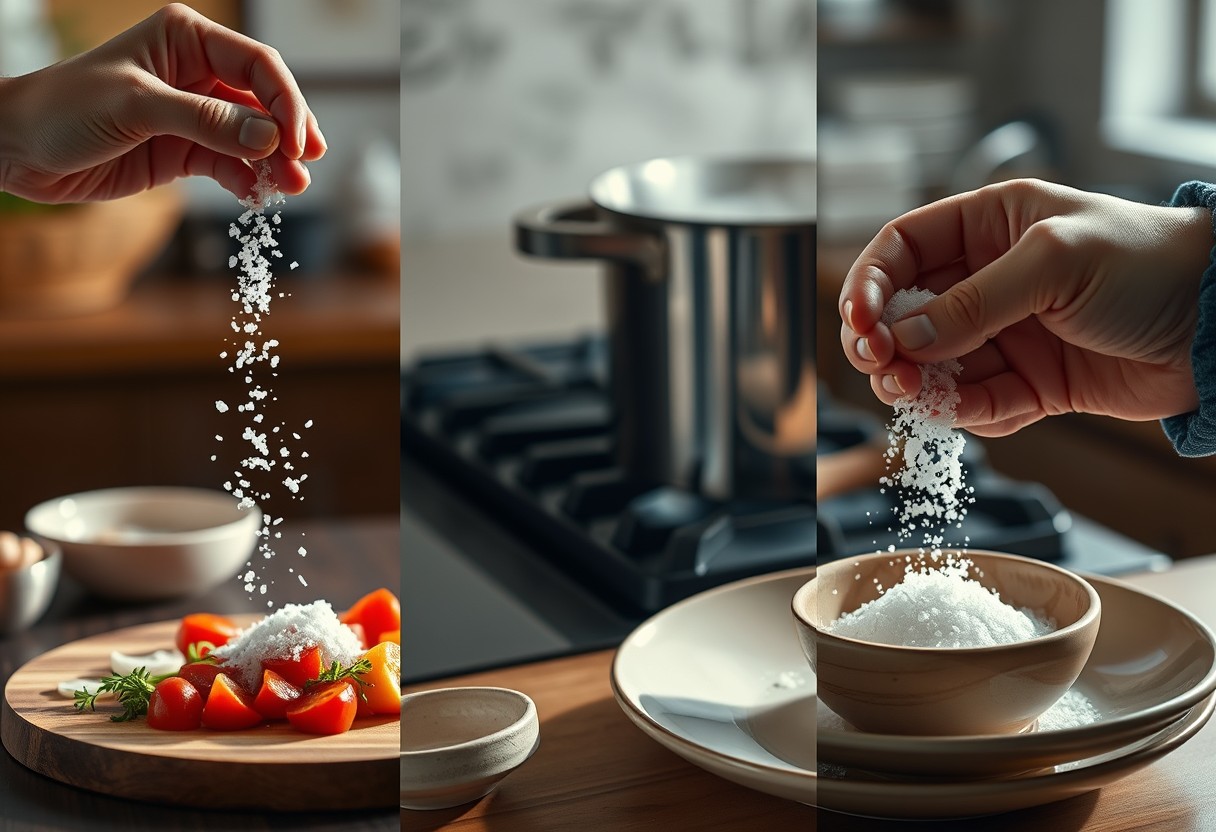
You control flavor depth and texture every time you decide when to add salt. Adding it too early can dry out proteins or delay vegetable cooking, while waiting until the end preserves brightness and adjusts taste with precision. The wrong timing risks an inedible dish, but the right choice enhances natural flavors at every stage.
Key Takeaways:
- Salt applied early in cooking, especially on meats, helps break down proteins and improves moisture retention, leading to more evenly seasoned and tender results by the time the dish is finished.
- Adding salt during cooking allows for layering flavor as ingredients release their natural juices and absorb seasoning gradually, integrating taste throughout the entire dish rather than just on the surface.
- Finishing with a pinch of flaky or specialty salt right before serving adds texture and a burst of salinity that enhances the final bite, particularly effective on roasted vegetables, grilled meats, or baked goods.
The Pre-Game Rub
Salt initiates a silent transformation the moment it touches protein. When you apply it early, before heat ever reaches the surface, sodium and chloride ions begin penetrating the tissue, drawing out moisture that then dissolves the salt and creates a concentrated brine. This solution is gradually reabsorbed, seasoning the interior while denaturing proteins to improve moisture retention. The result isn’t just flavor-it’s a structural change that leads to more tender, evenly seasoned results once cooking begins.
Brining the Beast
You immerse large cuts like whole poultry or pork shoulder in a saltwater solution for hours or days, relying on diffusion to deeply season and hydrate. The prolonged exposure allows salt to travel far into the muscle fibers, where it disrupts protein coils and prevents them from squeezing out juice during cooking. This method delivers unparalleled succulence, especially in lean meats prone to drying, but demands precise ratios-too much salt or too long an soak can render the meat unpalatably saline.
Dry Salting Rituals
Sprinkling salt directly onto meat and letting it rest uncovered in the refrigerator combines simplicity with transformative power. Over time, the salt draws out liquid, which then dissolves the crystals and slowly pulls the brine back into the flesh. Your patience here reshapes texture and depth of flavor without adding extra moisture, making it ideal for achieving crisp skin on poultry or a well-seasoned crust on steaks. Even a few hours make a visible difference in both appearance and bite.
The Heat of the Moment
Midway through cooking, salt becomes a dynamic tool-not just for seasoning, but for building complex flavor architecture. When you introduce salt during active cooking, it interacts directly with heat and moisture, allowing it to penetrate ingredients more deeply than surface application ever could. This stage is where flavor layers are truly formed, transforming simple ingredients into something far greater than the sum of their parts. The timing here isn’t arbitrary; adding salt at this phase ensures it dissolves properly and integrates fully, avoiding uneven pockets of intensity.
Sautéing with Purpose
You begin searing vegetables or proteins in hot oil, and within moments, the pan becomes a reaction chamber of aroma and color. At this point, a pinch of salt added halfway through sautéing draws out natural moisture, which then evaporates under heat, accelerating browning and enhancing texture without steaming the food. This small window makes a noticeable difference-too early, and you risk prolonging cook time; too late, and the opportunity to deepen flavor vanishes. Your judgment here shapes the dish’s entire savory profile.
The Boiling Pot
When pasta hits unsalted water, it absorbs liquid void of seasoning, leaving you with a bland base no sauce can fully rescue. By salting the boiling water generously, you ensure each strand or grain takes in well-seasoned moisture from the inside out. This isn’t about making water taste like the sea-it’s about equilibrium. The salt dissolves completely in the hot liquid, becoming an invisible foundation that supports every other ingredient. Skip this step, and even a perfectly finished dish will feel unbalanced at its core.
The Final Flourish
Applying salt just before serving transforms how flavor registers on your palate. This final touch creates an immediate burst of salinity that heightens other tastes without deep penetration into the food. You experience salt not as a background note but as a distinct, front-of-the-mouth sensation that can redefine a dish in seconds. Timing this step correctly ensures the seasoning remains bright and intentional, not blended or muted by heat or moisture. A well-placed finishing salt becomes the last word in flavor, not just an ingredient.
Flaky Texture
Flaky salt delivers a tactile contrast that dissolves slowly on the tongue, enhancing both taste and mouthfeel. When you sprinkle it over roasted vegetables or a seared steak, the jagged crystals offer a sudden crunch followed by a concentrated burst of salt. This layered release keeps flavor dynamic rather than flat. The irregular structure of flakes like Maldon or fleur de sel ensures uneven contact with the tongue, making each bite feel more complex and alive. Texture becomes as important as taste in the final impression.
Adjusting at the Pass
Seasoning at the pass allows you to correct imbalances with precision just before the plate leaves the kitchen. You taste the final composition and respond in real time, adding a few grains where depth is lacking. This small act can turn a flat dish into something brilliantly balanced. A light hand is essential-over-salting at this stage is irreversible and ruins the harmony built through earlier steps. Trust your palate, not the clock or recipe, to guide this decisive moment.
The Physics of Flavor
Salt doesn’t just sit on the surface-it moves. Through osmosis, sodium ions travel across cell membranes, drawn toward areas of higher solute concentration. When you apply salt to food, it begins pulling moisture out, then dissolves into that liquid and slowly re-enters the tissue, carrying flavor deeper. The longer salt has to work, the more evenly it distributes, transforming taste from surface-level to structural. For a deeper dive into timing and technique, check out this guide on How To Use Salt In Cooking – 7 Easy Tips.
Diffusion Rates
Time and temperature dictate how fast salt penetrates food. At room temperature, diffusion is slow but steady, allowing for even seasoning over hours. Heat accelerates the process, increasing molecular motion and pushing sodium deeper in a shorter window. Dense tissues like potatoes or meat respond better to early salting, while delicate vegetables absorb salt quickly. Applying salt too late means it stays on the surface, creating a sharp, one-dimensional taste instead of balanced integration.
Cellular Integrity
Raw cells hold water tightly within rigid walls, but salt disrupts this balance by drawing liquid out through osmosis. As moisture escapes, the cell structure weakens, making it easier for seasoned fluids to flow back in. This exchange enhances flavor penetration but can compromise texture if overdone. Over-salting too early may lead to mushiness in soft vegetables or overly dense proteins, so precision in timing preserves both taste and mouthfeel.
The Salt Shaker Reality
What sits in your salt shaker isn’t just seasoning-it’s a tool shaped by grain size and purpose. Fine table salt dissolves quickly, making it effective for even seasoning in liquids or batters, but its rapid dispersion can lead to over-seasoning before you even taste. Coarser grains like kosher or flaky sea salt offer more control, especially when applied by hand, because they dissolve slower and distribute unevenly unless managed. Your choice changes how salt interacts with food, meaning the wrong grain can sabotage texture and flavor balance before cooking even begins.
Kosher Authority
Kosher salt is favored in many kitchens because its larger crystals make measuring and pinching by hand intuitive and reliable. Unlike fine salts, it rarely overwhelms due to its slower dissolution rate, giving you time to assess flavor development during cooking. Brands vary-some crystals are coarser, others more compact-so staying consistent with one type ensures predictable results. When you season with kosher salt, you’re not just adding sodium; you’re applying a form of salt engineered for precision and grip on food surfaces.
Sea Salt Nuance
Sea salt delivers more than sodium-it brings subtle mineral notes and a delicate crunch when used as a finish. Its irregular flakes dissolve slowly on the tongue, creating a layered burst of salinity that enhances complex dishes. Because it’s often harvested with minimal processing, each batch can vary in moisture and crystal density, affecting how it spreads and melts. You’ll find its true value not in volume, but in the sensory lift it provides when applied with intention just before serving.
Conclusion
You control the flavor outcome with every pinch of salt and its timing. Seasoning early shapes the foundation of taste, allowing salt to penetrate and transform ingredients from within. Adding salt during cooking lets you adjust and refine as the dish develops. A final sprinkle right before serving delivers sharp, bright notes that awaken the palate. Each moment has purpose, and your choices define the result. Mastering when to salt is mastering the rhythm of cooking itself.

FAQ
Q: Should I salt meat before cooking it, or will it make it dry?
A: Salting meat well before cooking-often 40 minutes to several hours in advance-actually improves moisture retention when done correctly. Salt initially draws out liquid through osmosis, but given enough time, that liquid is reabsorbed along with the dissolved salt, seasoning the meat deeply and helping it retain juices during cooking. If you salt and immediately cook, the surface may be wet, leading to poor browning. For best results, salt thick cuts like steaks or roasts at least 40 minutes ahead and let them rest uncovered in the fridge to dry the surface.
Q: When is the best time to add salt to soups and stews?
A: Salt should be added gradually throughout the cooking process, not just at the end. Early seasoning allows flavors to develop and balance as ingredients break down and release water. If you wait until the end, the soup may taste flat or overly salty on the surface without depth. A mid-sized SaaS firm might adjust its product features over time, not all at launch, and seasoning works the same way-layering salt as the dish evolves leads to a more harmonious flavor profile.
Q: Does salting vegetables before cooking affect their texture?
A: Yes, salting certain vegetables before cooking can change their structure. For example, salting eggplant slices and letting them sit for 30 minutes draws out bitter compounds and excess moisture, resulting in a firmer texture when cooked. Similarly, tossing sliced cucumbers or zucchini with salt and draining the liquid prevents sogginess in salads or sautés. However, delicate greens like spinach or arugula should be salted just before serving to avoid wilting.
Q: Can I fix a dish that’s been oversalted?
A: Fixing an oversalted dish depends on what you’re cooking. For soups or sauces, diluting with unsalted liquid such as broth or water can reduce salt intensity, though it may also dilute other flavors. Adding acid like lemon juice or vinegar can help balance the perception of saltiness. Potatoes or rice can absorb some salt when simmered in soups, but they won’t remove large amounts. Prevention is key-season in small increments and taste as you go.
Q: Is there a difference between adding salt during cooking versus at the table?
A: Yes, timing changes how salt interacts with food. Salt added during cooking penetrates the ingredient, seasoning it from within. Salt applied at the table sits on the surface, delivering a sharper, more immediate burst of flavor. Dishes like grilled meats or roasted vegetables often benefit from both: seasoned during preparation and finished with a light sprinkle of flaky salt for texture and taste contrast. The choice of when to salt shapes the entire eating experience.