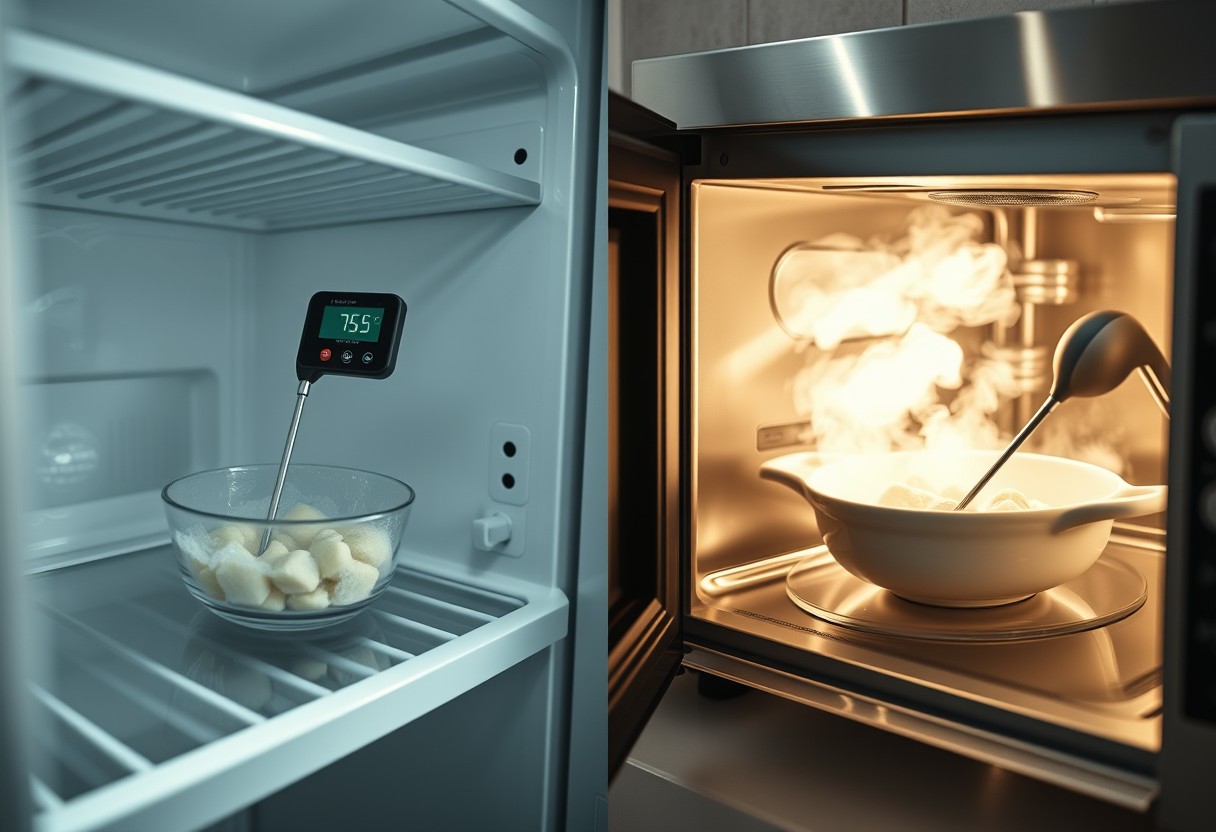
You can microwave food straight from the refrigerator, but temperature shock may create dangerous cold spots where bacteria survive. As chilled food heats unevenly, parts remain in the microbial danger zone while others overcook. This increases the risk of foodborne illness, especially with meats and dairy. On the positive side, microwaving cold food is generally safe if done correctly-using lower power and allowing standing time ensures more even heat distribution.
Key Takeaways:
- Cold food straight from the refrigerator heats unevenly in the microwave, leaving cold spots where harmful bacteria can survive if the internal temperature doesn’t reach a safe level.
- Temperature gradients in refrigerated items-especially dense foods like casseroles or meats-can cause outer layers to overheat while the center remains chilled, increasing the risk of texture damage and inconsistent cooking.
- Allowing food to sit at room temperature for a few minutes before microwaving can promote more uniform heating, though perishable items should not be left out longer than 30 minutes to avoid bacterial growth.
The Molecular Slumber
Cold food pulled directly from the refrigerator is not merely chilled-it’s in a state of molecular dormancy. The water and fat molecules inside your leftovers have slowed to a near standstill, their kinetic energy sapped by low temperatures. You’re asking your microwave to do more than heat; you’re asking it to restart motion where almost none exists. This initial resistance means uneven warming, with outer layers absorbing energy while the core remains locked in cold inertia.
Kinetic Energy Deficits
Energy transfer in your microwave relies on molecules absorbing radiation and vibrating rapidly. When food starts cold, those molecules are sluggish and less responsive to incoming microwaves. You face a delayed reaction in heating because the initial energy goes simply to waking up frozen or refrigerated particles, not raising the overall temperature. This lag increases the time needed for your meal to reach a safe, edible state, often leading to frustration when surfaces steam while centers stay icy.
Thermal Gradient Struggles
Your microwave emits energy at a consistent rate, but cold food doesn’t absorb it evenly. The outer layers heat quickly, creating a steep thermal gradient between the hot surface and the still-cold interior. This imbalance results in a high risk of overheating certain zones while others remain underheated. Without manual intervention like stirring or pausing to let heat distribute, you compromise both safety and quality, as the microwave cannot correct these disparities on its own.
The Microbial Minefield
Every time you microwave refrigerated food, you’re walking through a hidden hazard zone where bacteria can survive if conditions aren’t just right. Cold spots remain after heating, especially in dense or irregularly shaped items, allowing pathogens like Salmonella or Listeria to persist. These pockets may never reach temperatures high enough to kill harmful microbes, even if the surface feels hot. Your microwave’s speed doesn’t guarantee safety-incomplete internal heating is a silent risk that could lead to foodborne illness with real consequences.
The Danger Zone Threshold
Pathogens thrive between 40°F and 140°F-the range known as the danger zone-and refrigeration only suspends their growth, never eliminates it. When you microwave straight from the fridge, some parts of your food may linger in this range too long while others overheat. If the internal temperature of the dish doesn’t consistently surpass 165°F, dangerous bacteria can survive and multiply rapidly. You might think steaming edges mean safety, but they can be misleading when the center remains undercooked.
Uneven Radiation Distribution
Microwaves emit energy in waves that create hot and cold zones within the cavity, leading to inconsistent cooking. This means even a few seconds can determine whether a portion reaches a safe temperature or remains a breeding ground for bacteria. Stirring or rotating helps, but dense sections-like the core of a casserole or meatball-often absorb less radiation. Without thorough, measured heating, you risk consuming food that’s hot on the surface but unsafe at its center.
The Texture Tragedy
Placing cold leftovers directly into the microwave subjects them to rapid temperature swings that can permanently alter their texture, often turning tender meats rubbery and delicate sauces grainy. When food transitions too quickly from refrigerator cold to piping hot, its internal structure doesn’t have time to adjust, leading to uneven heating and moisture loss. For best results, allow dishes to sit at room temperature for a few minutes before reheating. You can learn more about safe and effective reheating practices by visiting Microwave – Leftovers – GE Kitchen Appliances.
Protein Fiber Contraction
Cold proteins, like those in chicken or fish, tighten dramatically when exposed to sudden heat, forcing out moisture and creating a tough, dry texture. This rapid contraction happens because the fibers don’t have time to reabsorb fluids lost during refrigeration. Microwaving straight from the fridge intensifies this effect, leaving you with meat that’s leathery instead of tender. Letting the dish warm slightly before heating helps maintain its original consistency and juiciness.
Starch Retrogradation Acceleration
Starches in foods like rice, pasta, or mashed potatoes undergo retrogradation when cooled, a process that reverses gelatinization and makes them firm or stale. Reheating too quickly in the microwave locks in this degraded texture, resulting in rubbery rice or gluey mashed potatoes. When you bypass gradual warming, the starch molecules don’t have a chance to rehydrate evenly, making the final texture far less appealing than when reheated with care and patience.
The Art of the Interval
Using lower power settings when microwaving refrigerated food gives heat time to spread evenly through the dish. Instead of blasting the outer layers while the center stays cold, you allow thermal energy to migrate inward without overcooking sensitive areas. This method is especially effective for dense or thick portions, where temperature differentials can lead to scalding edges and raw spots. By extending the cooking time at reduced intensity, you maintain structural integrity and achieve a more consistent final temperature throughout the meal.
Pulsed Magnetron Cycles
Microwaves don’t emit energy continuously, even on high power-they cycle on and off in intervals dictated by the selected power level. At 50% power, the magnetron runs half the time, creating natural pauses that let heat diffuse between bursts. These off-periods are where thermal equalization happens silently but effectively, reducing the risk of overheating outer layers. You’re not just lowering intensity; you’re building in rest periods that mimic conventional cooking rhythms, giving cooler zones time to catch up without surface damage.
The Necessity of Stirring
Stirring during reheating disrupts hot spots and transfers warmth from the edges to the center, actively correcting uneven energy absorption. Without this simple action, you risk leaving cold pockets where pathogens can survive, especially in saucy or chunky dishes. Even with lower power settings, microwave distribution isn’t uniform, so your intervention ensures every portion reaches a safe temperature. Pause halfway through, mix thoroughly, and resume-this small step makes a significant difference in both safety and texture.
The Ceramic Barrier
Ceramic dishes influence how microwave energy interacts with refrigerated food, altering both heating speed and pattern. Unlike plastic or metal, ceramic resists microwave penetration, causing radiation to concentrate in the food rather than the container. This means cold spots may persist deeper within the meal, especially if the dish is thick or densely glazed. You’ll notice uneven warming, where edges overheat while the center remains chilled. The material’s opacity to microwaves creates a barrier effect, slowing dielectric excitation in lower layers and increasing the risk of undercooked zones.
Dielectric Heating Properties
Different materials respond uniquely to microwave radiation based on their dielectric properties. In ceramic, low dielectric loss means the container absorbs minimal energy, leaving most waves to target the food. However, this also means energy distribution depends heavily on the food’s own composition, not the dish. When starting cold, water-rich areas heat faster while drier or denser regions lag. You might see bubbling at the surface while inner portions stay below safe temperatures, creating a false sense of thorough reheating.
Thermal Conductivity of Glass
Glass shares similarities with ceramic but conducts heat more evenly once warmed. While it allows microwaves to pass through efficiently, its low thermal conductivity means it doesn’t transfer surface heat inward. As a result, the food’s interior relies solely on internal molecular friction to warm up. If you’re using a glass container straight from the refrigerator, the initial cold mass further slows this process. You may experience prolonged heating times and increased risk of cracking if temperature gradients become too extreme across the container.
To wrap up
You can microwave food straight from the refrigerator, but how it heats depends on more than just convenience. Cold spots linger when dense or uneven portions don’t absorb microwaves evenly, increasing the risk of undercooked zones where bacteria survive. Materials matter too-glass or ceramic containers handle thermal shifts better than plastic. Letting food sit at room temperature for a few minutes before microwaving improves heat distribution. You retain better texture and ensure safer, more consistent results by adjusting timing and power based on portion and container.
FAQ
Q: Can you microwave food straight from the refrigerator?
A: Yes, you can microwave food directly from the refrigerator, but results vary based on the type of food and container. Dense items like casseroles or thick stews often heat unevenly when cold, leading to hot spots and cold centers. To improve outcomes, use medium power settings and stir or rotate the dish midway through heating. Glass or ceramic containers handle temperature shifts better than plastic, which may warp or leach chemicals if not labeled microwave-safe.
Q: Why does cold food sometimes explode or splatter in the microwave?
A: Rapid heating causes steam to build up inside refrigerated food, especially items with high moisture content like soups or sauces. When the outer layer heats quickly while the inside remains cold, pressure accumulates until it bursts through the surface. Covering food with a microwave-safe lid or paper towel absorbs excess moisture and redirects steam, reducing mess. Letting food sit at room temperature for a few minutes before microwaving also helps balance internal temperatures.
Q: Is it safe to reheat dairy-based dishes like creamy pasta or soup from the fridge?
A: Dairy-based foods can separate or curdle when reheated too quickly from a cold state. The proteins in milk or cream denature under sudden heat, leading to a grainy texture. For smoother results, transfer the dish to a microwave-safe bowl, cover it, and heat at 50% power in 30-second intervals, stirring between each. A mid-sized restaurant kitchen might reheat béchamel this way to preserve consistency during service.
Q: Does microwaving cold food affect its nutritional value?
A: Microwaving preserves more nutrients compared to boiling or frying, regardless of starting temperature. However, reheating refrigerated vegetables multiple times can reduce vitamin C and B levels due to repeated exposure to heat and oxygen. Single reheating has minimal impact. Steamed broccoli stored overnight retains most antioxidants when warmed once in the microwave with a splash of water to maintain moisture.
Q: Should you let food sit out before microwaving it?
A: Allowing refrigerated food to reach room temperature slightly improves heating uniformity, but leaving perishable items out for more than two hours increases bacterial risk. A safer alternative is microwaving at reduced power-60% to 70%-for a longer duration. This method gradually raises the internal temperature without overcooking edges. For example, a chilled lasagna reheated at 70% power for 8-10 minutes develops fewer rubbery layers than one blasted at full power for 5 minutes.