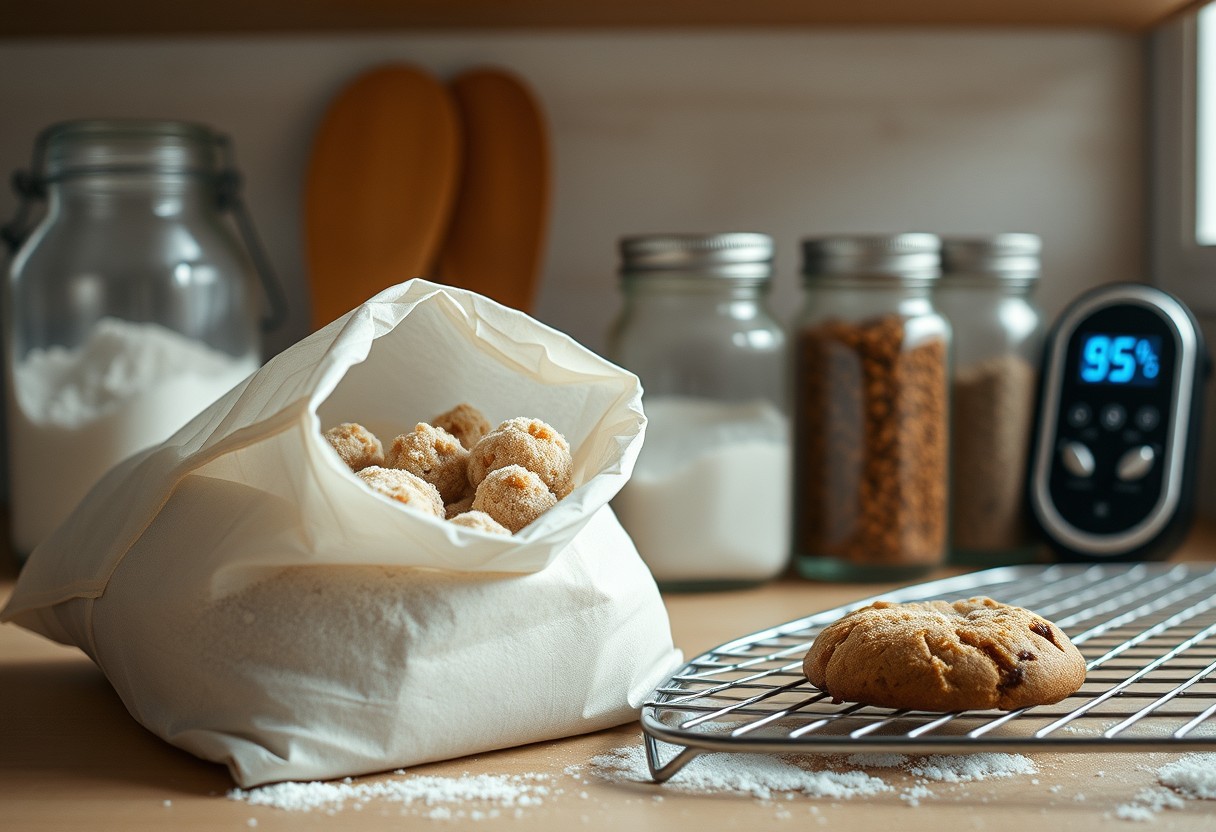
You’ve likely pulled out flour only to find it clumped, or tried to dissolve sugar that refuses to cooperate. Humidity alters how dry ingredients absorb moisture, affecting everything from texture to shelf life. In high humidity, baking powder can lose potency, while salt may cake and spices lose aroma. Understanding these shifts helps you prevent ruined recipes and wasted pantry staples.
Key Takeaways:
- High humidity increases moisture absorption in dry ingredients like flour and sugar, leading to clumping and inaccurate measurements that can throw off baking results.
- Chocolate and spices lose potency and texture faster in humid conditions, with chocolate prone to blooming and spices failing to release full flavor due to trapped moisture.
- Controlling pantry airflow and using airtight containers significantly slows ingredient degradation, preserving freshness and maintaining consistent performance in everyday cooking.
The Airborne Invader of Dry Goods
Humidity seeps into your pantry silently, transforming free-flowing powders into stubborn clumps that resist mixing and measuring. You’ve likely opened a box of baking powder or soup mix only to find it fused into a solid mass-this caking occurs when hygroscopic ingredients absorb moisture from the air. The presence of even slight humidity allows water molecules to bond with particles, creating bridges that lock them together. This change compromises both texture and performance, making accurate measurement difficult and potentially altering recipe outcomes.
Sodium Chloride and Caking
Salt may seem indestructible, but in high-humidity environments, it becomes surprisingly vulnerable to moisture absorption. When exposed to damp air, sodium chloride draws in water molecules and begins to clump, reducing its flow and delaying dissolution in cooking. Some commercial salts include anti-caking agents like calcium silicate to resist this, but pure or sea salts often lack such protection. Stored improperly, your salt can harden into a dense block, rendering it impractical for everyday use and affecting seasoning precision.
Powdered Sugar Solidification
Powdered sugar contains cornstarch to prevent clumping, yet it remains highly sensitive to ambient moisture. In humid conditions, it readily absorbs water from the air, triggering immediate agglomeration that turns fine crystals into a compacted lump. This solidification not only ruins its siftability but also impacts sweetness distribution in frostings and glazes. Once hardened, reconstituting it to its original texture is nearly impossible, so prevention through airtight storage is essential for consistent results.

The Flour Hydration Equation
Humidity shifts how much water your flour absorbs, directly affecting dough consistency. On muggy days, the air already saturates the flour with moisture, meaning it takes in less liquid during mixing. If you follow a recipe to the exact volume of water without adjusting, your dough can become slack and sticky. This imbalance undermines gluten development and leads to poor oven spring. For reliable results, always assess dough texture as you mix rather than relying solely on listed amounts.
Weight versus Volume Calibration
Different batches of flour can hold varying amounts of moisture depending on storage conditions, making volume measurements unreliable. A cup of flour on a humid day may weigh more due to absorbed water, throwing off your ratios even if the number looks correct. Using a kitchen scale eliminates this inconsistency-measuring by weight ensures you’re adding the same amount of actual flour each time. This precision is essential for repeatable dough performance, especially when ambient humidity fluctuates.
Liquid Ratios on Rainy Days
You’ll often need less water when baking bread during wet weather because flour enters your bowl already hydrated. Start by holding back 5-10% of the recipe’s stated liquid and add it gradually only if needed. Dough that feels tacky but not wet usually signals proper hydration under high humidity. Skipping this adjustment risks a weak, overly moist dough that collapses during proofing. Staying flexible with liquid amounts keeps your structure intact despite damp air.
The Battle for Structural Integrity
The Softening of the Cracker
Humidity infiltrates crackers the moment they leave the sealed package, rapidly dissolving their crispness into a limp, unappetizing texture. Water molecules in the air are drawn to the starch and salt on the surface, creating a thin film of moisture that begins breaking down the structure. You’ve likely noticed how a cracker that snaps sharply in dry air turns soggy and chewy within hours in humid conditions. This isn’t just unpleasant-it signals a complete loss of intended mouthfeel and quality, undermining even the finest ingredients.
Maintaining the Perfect Fry
Fried foods depend on a delicate balance of moisture and heat, and high humidity disrupts this equilibrium from the moment the oil hits the pan. When ambient moisture is elevated, the surface of fried items absorbs water vapor as quickly as it releases steam, preventing the formation of a crisp crust. You’ll find that even perfectly fried chicken or onion rings turn leathery and soft within minutes. The oil may sputter more, and the final product lacks the golden, shattering crunch you expect-compromising both texture and satisfaction.
Sugar Work and the Sticky Trap
Humidity infiltrates sugar-based preparations with subtle persistence, altering their behavior in ways that can derail even the most careful technique. Water vapor in the air interferes with precise boiling points, making it harder to reach and maintain the exact temperatures needed for stages like soft ball or hard crack. This interference means your syrup may never achieve the proper consistency, leading to sticky, undercooked results despite following the recipe exactly. Cooling stages become unreliable as ambient moisture is reabsorbed, sabotaging texture development.
Caramelization Complications
High humidity makes caramelization an unpredictable process, as excess moisture in the air slows evaporation and delays the sugar’s temperature rise. You might find yourself waiting longer than expected for the syrup to darken, only to face sudden burning once the water finally boils off. The presence of airborne water vapor can also cause hot sugar to seize when cooled, turning a smooth batch into a grainy lump. Achieving that smooth, amber transformation demands not just attention but also environmental control.
Meringue Meltdowns
Beating egg whites with sugar in muggy conditions introduces invisible moisture that prevents stable foam formation. The added humidity weakens protein bonds, resulting in flat, weeping meringues that fail to hold their shape during baking. Even if peaks form initially, they often collapse as excess moisture evaporates unevenly. Your effort can be undone by the time you pull the tray from the oven, leaving behind a weeping, sticky mess instead of crisp, airy peaks.
The Seasoning Stagnation
Humidity transforms fine spices from free-flowing seasonings into clumped, lifeless residues that barely resemble their original form. You’ve likely opened a jar of garlic powder only to find it solidified into a dense mass, rendering it nearly useless. Damp air is the primary culprit, seeping into containers and activating moisture-sensitive compounds that degrade both texture and potency. The aromatic oils responsible for bold flavors evaporate or oxidize, leaving behind a flat, stale taste. Even brief exposure can begin this decline, especially in coastal or tropical climates where ambient moisture remains consistently high.
Clumped Garlic Powder
Garlic powder rapidly absorbs moisture from humid air, forming hard clumps that resist dispersion. Once this happens, the powder loses its ability to blend evenly into dishes, leading to uneven flavor distribution. The denser the clump, the more difficult it becomes to break apart without introducing contaminants. This degradation isn’t just physical-chemical changes dull the pungency you rely on for depth in sauces, rubs, and marinades. Even a slightly musty odor signals advanced breakdown, meaning the spice is no longer performing as intended.
Oil-Based Spices and Oxidation
Spices infused with oil, like chili crisp or toasted sesame blends, face accelerated spoilage in humid environments. Moisture encourages microbial growth while simultaneously speeding up oxidation of the oil base. Rancidity develops faster than you might expect, producing off-flavors that overpower rather than enhance. The presence of water also destabilizes emulsions, causing separation and textural flaws. Storing these in airtight, opaque containers slows the process, but only if exposure to warm, damp air is consistently minimized from the moment of opening.
Tactical Pantry Defense
Modern storage technology gives you the upper hand against moisture infiltration, especially when preserving dry ingredients long-term. Airtight containers with locking seals create a physical barrier that stops ambient humidity from reaching vulnerable goods like flour, spices, and legumes. Including food-safe silica gel packets inside these containers actively absorbs residual moisture, reducing the risk of clumping, mold, and spoilage. These tools work together to maintain ingredient freshness and consistency, ensuring what you pull from your pantry performs exactly as expected, batch after batch.
Vacuum Sealing Solutions
You remove air-and along with it, moisture-when you vacuum seal ingredients like rice, pasta, or dried herbs. This method drastically slows degradation caused by humidity and oxidation, extending shelf life by months. Sealed bags with one-way valves prevent external air from re-entering, maintaining a stable internal environment. For frequent cooks or bulk shoppers, this protection means fewer replacements and more reliable results. Just ensure your sealer creates a complete vacuum, as even small leaks compromise effectiveness over time.
Temperature versus Humidity Balance
Storing dry goods in a cool space isn’t enough if humidity fluctuates. Cold areas like basements often trap damp air, creating condensation inside jars when temperatures shift. The ideal pantry sits between 50-70°F with relative humidity below 60%, minimizing moisture absorption without overdrying sensitive items. Placing a simple hygrometer nearby lets you monitor conditions in real time. Adjust with dehumidifiers or ventilation rather than moving ingredients constantly, which exposes them to more airborne moisture.
| Protection Method | Impact on Ingredient Longevity |
|---|---|
| Airtight glass or BPA-free plastic containers | Prevents moisture ingress; keeps flour, sugar, and spices free-flowing for up to 6 months longer |
| Vacuum sealing with moisture barriers | Extends shelf life of grains and legumes by 2-3 times in high-humidity climates |
| Silica gel packs (food-grade) | Reduces internal container humidity by up to 40%, preventing mold in spice blends |
| Pantry climate control (temp + humidity monitoring) | Maintains optimal storage conditions, avoiding texture and potency loss across all dry goods |
To wrap up
You now understand how humidity quietly alters the behavior of common ingredients in your kitchen. Flour absorbs moisture and clumps, sugar turns sticky and resists aeration, and spices lose potency when exposed to damp air. Even the structure of baked goods can shift when humidity interferes with gluten development and leavening. By recognizing these subtle changes, you adjust storage methods and recipes accordingly. Controlling moisture through airtight containers and climate-aware timing ensures consistent results every time you cook or bake.
FAQ
Q: Why does flour clump in humid weather?
A: Flour absorbs moisture from the air, and in high humidity, it takes in enough water to form small clumps. This happens because the starch molecules in flour are hygroscopic, meaning they naturally attract and hold water. When exposed to moist air over time, flour becomes lumpy, which can affect how evenly it mixes into batters or doughs. Sifting flour before use during humid months helps break up these clusters and ensures more consistent results in baking.
Q: Can humidity really change how sugar behaves in recipes?
A: Yes, granulated sugar can absorb moisture in humid conditions, causing it to stick together or form a film on the surface of stored sugar. Brown sugar is even more sensitive due to its molasses content and will become rock-hard when exposed to dry air but may turn overly soft or sticky in damp environments. In candy making, excess atmospheric moisture can prevent sugar syrups from reaching proper temperatures, leading to failed caramelization or crystallization issues.
Q: How does humidity affect the crispness of baked goods like cookies or crackers?
A: High humidity slows down the evaporation of water during baking, so items like crackers or meringues may not dry out fully in the oven. After cooling, they often reabsorb moisture from the air and lose crispness quickly. Storing them in airtight containers with silica packets or using a dehumidifier in the kitchen can help maintain their texture longer. Bakers in tropical climates sometimes adjust bake times slightly longer to drive off more internal moisture.
Q: Does salt go bad in humid kitchens?
A: Salt doesn’t spoil, but it can absorb moisture and form clumps when stored in humid conditions. Iodized salt contains additives like calcium silicate that help resist caking, while sea salt and kosher salt lack those and are more prone to clumping. If your salt has hardened, crushing it with a spoon or adding a few grains of uncooked rice to the container can restore flow. Keeping salt in sealed jars away from steam sources prevents this issue.
Q: Why do spices seem less potent in certain seasons?
A: Humidity causes ground spices to absorb moisture, accelerating the breakdown of volatile oils responsible for flavor and aroma. Whole spices last longer because their protective outer layers shield these compounds, but once ground, they degrade faster in damp air. A spice jar that smells faint after a few months might not be old-it could have been exposed to a humid environment. Storing spices in tightly closed glass jars, away from the stove and sink, preserves their strength across seasons.