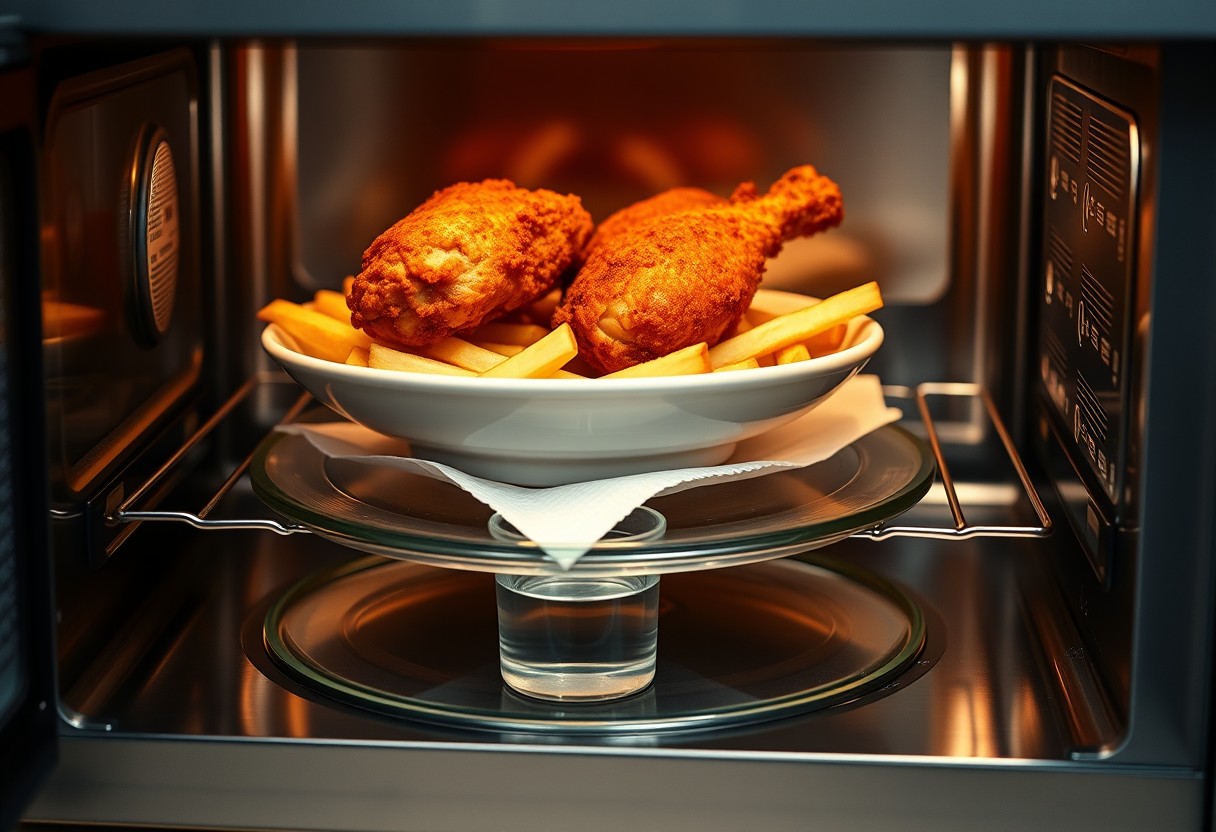
You can reheat fried food in a microwave and still preserve some of its crispness if you know the right method. The key is to avoid direct, full-power heating, which turns crunchy coatings soggy in seconds. Instead, using a microwave-safe plate with a paper towel and low to medium power settings helps manage moisture and heat distribution. While the microwave isn’t ideal for fried foods, it’s often the fastest option-especially when you’re short on time. With a few smart adjustments, you’ll get results that are far better than expected.
Key Takeaways:
- A paper towel placed under and over fried food absorbs excess moisture during microwaving, helping preserve some crispness by reducing steam buildup.
- Short bursts of heating at medium power allow more control over texture, preventing the outer layer from turning rubbery before the inside warms through.
- Finishing with a quick air fry or stovetop sear after microwaving restores crunch far better than microwaving alone, especially for dense items like fried chicken or spring rolls.
Understanding the Impact of Microwave Radiation on Fried Textures
Microwave radiation excites water molecules within your fried food, rapidly generating internal steam. This buildup of moisture migrates outward, penetrating the crispy outer layer and soft
Essential Tools to Improve Microwave Performance
Maximizing the effectiveness of your microwave when reheating fried food starts with simple yet impactful tools that manage moisture and heat distribution. Placing a paper towel beneath and over the food absorbs steam that would otherwise soften the outer crust, preserving some crispness. For even better results, use a microwave-safe rack to lift the food off the plate, allowing air to circulate underneath. This combination reduces sogginess significantly, especially in items like fried chicken or spring rolls. Learn more about smart techniques at Achieving Crispy Perfection: The Art of Microwaving Your ….
The Importance of Paper Towels
Placing a dry paper towel under and over your fried food during microwaving helps trap rising moisture that can quickly turn a crispy coating into a limp, unappetizing layer. The towel acts as a barrier, absorbing steam before it condenses back onto the surface. For best results, use plain, non-printed towels to avoid ink transfer under heat. You’ll notice a clear improvement in texture, especially with delicate items like onion rings or fish fillets, where even slight dampness causes rapid breakdown of the breading.
Using Elevated Microwave Racks
Elevating your fried food on a microwave-safe rack prevents direct contact with the hot plate, which traps steam and creates soggy spots on the bottom. When you raise the item, air flows evenly around it, promoting uniform heating and minimizing moisture buildup. This method delivers a noticeably firmer texture, particularly in dense foods like chicken nuggets or samosas. Make sure the rack is labeled microwave-safe to avoid sparking or melting-using the wrong material risks damaging both the appliance and your meal.
The Step-by-Step Microwave Reheating Technique
To preserve as much crispness as possible, use your microwave’s power settings and heat in intervals rather than one continuous cycle. Start by placing the fried food on a microwave-safe plate lined with a paper towel to absorb excess moisture. Never use full power-this leads to rapid steam buildup and a soggy result. Instead, opt for a controlled approach that prioritizes texture retention over speed, especially for delicate items like fried chicken or onion rings.
| Food Type | Recommended Power Level |
| Fried chicken, nuggets, or fish | 50% power |
| Fried shrimp or calamari | 40% power |
| French fries or tater tots | 60% power |
| Lightly battered vegetables | 30% power |
Adjusting Power Levels
Your microwave’s power level directly affects how evenly and crisply your food reheats. Set the power to 30-60% depending on the item’s density and coating thickness. Lower settings prevent overheating the interior while allowing the outer layer to retain some firmness. A dense piece like fried chicken benefits from 50% power, whereas delicate tempura requires a gentler 30%. Always test with a shorter time first-you can always add more heat, but you can’t undo sogginess.
The Interval Heating Method
Heat your food in 30-second bursts, pausing to flip or stir between cycles. This allows heat to distribute without trapping steam under the crust. Waiting 10-15 seconds between intervals helps moisture escape, reducing condensation that softens the exterior. For most portions, two to three intervals are sufficient. Check texture after each round-your goal is warmth without sacrificing all crispness. Overheating even slightly can ruin the progress made through careful power control.
Critical Factors Influencing Reheating Success
Success in reheating fried food in a microwave hinges on understanding two core variables: food density and thickness, and original oil and fat content. These elements directly affect how microwaves penetrate and heat the item, determining whether the result stays acceptably crisp or turns soggy. Ignoring them can lead to uneven heating, rubbery textures, or burnt edges. Adjusting power levels and timing based on these factors gives you far greater control over the final outcome.
Food Density and Thickness
Thicker, denser pieces like chicken thighs or potato wedges require longer exposure to microwave energy, but they also trap steam more readily, increasing the risk of sogginess. You must balance thorough heating with moisture management by using lower power settings over extended periods. Thin items, such as onion rings or tempura shrimp, heat quickly and are more prone to becoming limp or chewy if overheated. Monitoring their progress in short intervals prevents overcooking and preserves some structural integrity.
Original Oil and Fat Content
Foods fried with high-fat content, like crispy pork belly or golden mozzarella sticks, retain heat differently due to the way oil interacts with microwave radiation. Fat heats rapidly and can become excessively hot, leading to burnt exteriors while the center lags behind. You need to reduce power levels to allow even warmth penetration without scorching. Items with less inherent fat often dry out faster, so preserving even warmth without sacrificing texture demands careful timing and shielding techniques.
Pro Tips for Specific Types of Fried Foods
Adjusting your reheating method based on the type of coating helps preserve crispness and avoid sogginess. Foods with breadcrumbs respond best to lower power settings and short bursts, while those in tempura or beer batter need extra care due to their delicate structure. Placing a paper towel beneath the food absorbs excess moisture, but direct contact with the plate should be minimized to prevent steam buildup. Each coating has unique heat tolerance, so tailored strategies make a visible difference in the final result.
- Use 50% power for breaded chicken or fish
- Avoid reheating tempura longer than 30 seconds
- Pat dry fried shrimp before microwaving
- Place mozzarella sticks on their side to reduce breading collapse
- Reheat onion rings in single layers with space between
| Fried Food Type | Recommended Approach |
| Breaded chicken cutlets | 30 seconds at 50% power, paper towel underneath |
| Beer-battered fish | 20 seconds max, high moisture risk |
| Friedzucchini slices | Single layer, 15 seconds, dry surface first |
| Apple fritters | Low power, 25 seconds, avoid internal steam burst |
Reheating Breaded Items
Breaded items like chicken tenders or eggplant parmesan hold up better when reheated with controlled heat. Start by arranging them in a single layer on a microwave-safe plate lined with a paper towel to catch excess oil. Use 50% power for 30 seconds to gently warm without turning the breading into a rubbery layer. The crumb structure can trap steam, so flipping halfway helps release moisture from the underside. For thicker coatings, a second 15-second pulse may be needed, but avoid over-microwaving to prevent a gummy texture.
Handling Battered Foods
Battered foods such as onion rings or fish and chips are especially prone to becoming limp and greasy. Their light, airy texture collapses quickly under high heat, so limit microwave time to 20-30 seconds at most. Place them on a slightly elevated surface like a microwave-safe rack if available, allowing air circulation underneath. Never stack or cover them, as trapped steam softens the outer layer instantly. The thin batter absorbs moisture fast, so check early-overheating by just a few seconds can ruin the delicate crispness you’re trying to restore.
Post-Microwave Finishing Techniques
The Importance of Resting Time
Letting your fried food sit for one to two minutes after microwaving makes a noticeable difference in texture. Steam trapped inside the coating needs time to escape, and during this pause, the exterior begins to firm up as moisture redistributes. Skipping this step means cutting into the food while it’s still steam-logged, which can turn a slightly crisp surface into a soft, soggy layer. That brief wait allows the outer shell to stabilize, giving you a much better chance at preserving some integrity in every bite.
Quick-Crisping Alternatives
If you need more than just rested results, a fast pass under the broiler or into a hot skillet can revive lost crispness effectively. Place the reheated item in an oven-safe pan and broil for 60-90 seconds, flipping once, until the surface regains its crunch. A cast-iron skillet over medium heat works just as well, adding direct contact that microwaves can’t provide. These methods take minimal extra effort but deliver a dramatic improvement in mouthfeel compared to microwave-only reheating.
To wrap up
You now have a reliable method to reheat fried food in the microwave without sacrificing all of its crispness. By using a microwave-safe plate with a paper towel underneath and covering the food with a damp paper towel, you create a balanced environment that softens the blow of microwave radiation. Short bursts of heating followed by air exposure help maintain structure. For best results, finish with a quick turn in a toaster oven or air fryer. You’re not restoring the original fry, but you’re getting remarkably close.
FAQ
Q: Can you reheat fried food in a microwave without making it soggy?
A: Yes, you can minimize sogginess when reheating fried food in a microwave by using a layered approach. Place a paper towel on the plate first to absorb excess moisture released during heating. Arrange the food in a single layer and cover it with another paper towel to trap steam away from the crust. Use short bursts of 15 to 20 seconds at medium power, checking between intervals. This method helps preserve some crispness, especially for items like fried chicken or spring rolls.
Q: Why does fried food turn rubbery or soft in the microwave?
A: Microwaves heat food by exciting water molecules, which creates steam inside and around the food. Fried foods rely on a dry, crispy outer layer formed during high-heat oil frying. When exposed to microwave radiation, trapped moisture turns to steam and softens the crust rapidly. The lack of surrounding dry heat means the surface cannot re-crisp, leading to a limp or chewy texture, particularly noticeable in items like onion rings or tempura.
Q: Is there a way to make microwaved fried food crispy again?
A: A two-step method improves crispness significantly. After microwaving for quick internal warming, transfer the food to a preheated oven, toaster oven, or air fryer for 2 to 3 minutes at 400°F (200°C). This dries the surface and restores crunch. For example, leftover french fries regain much of their original texture when finished under brief dry heat after a short microwave warm-up.
Q: Should I use high power when reheating fried food in the microwave?
A: No, high power accelerates moisture release and increases sogginess. Heating at 50% power for slightly longer allows more even warmth without shocking the exterior. A piece of fried chicken heated at medium power for 60 seconds in 20-second increments retains better structure than one blasted at full power for 30 seconds, which often results in a leathery edge and cold center.
Q: Can paper towels really help maintain crispiness in the microwave?
A: Paper towels act as moisture barriers and wick away condensation that forms during reheating. Placing one under and over the fried food absorbs grease and steam before they soften the coating. In tests with breaded mozzarella sticks, those covered with paper towels retained a firmer shell compared to uncovered ones, which developed a sticky, gummy surface within 30 seconds of microwaving.