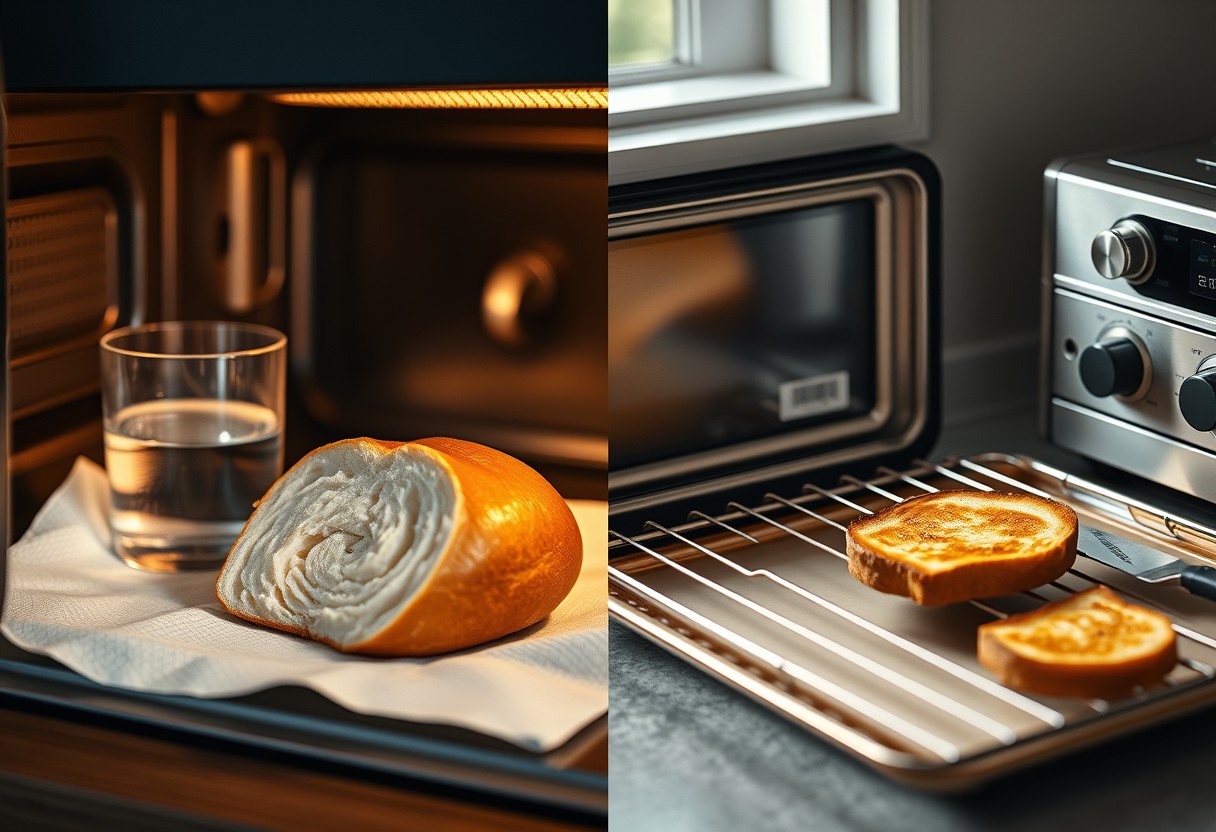
You’ve likely reheated bread in the microwave only to find it rubbery and unpleasant. This happens because microwaves excite water molecules unevenly, causing rapid starch changes that destroy texture. While convenient, the microwave often does more harm than good. You can preserve softness and flavor using smarter, accessible methods that protect the bread’s structure.
Key Takeaways:
- Bread turns chewy in the microwave because rapid heating causes starch molecules to expel water and partially gelatinize, creating a rubbery texture instead of a crisp or soft crumb.
- Dry heat methods like toasting in an oven or skillet preserve texture better by gently removing moisture without altering the starch structure.
- When using a microwave, adding a separate source of steam or limiting exposure time can help maintain palatability, though it won’t fully replicate traditional reheating results.
Molecular Mechanics of the Rubber Loaf
Heat transforms bread’s texture in ways you might not expect, and microwaves trigger a particularly unfortunate shift. When you zap a slice, water molecules inside the starch rapidly absorb energy and vibrate, turning liquid into vapor almost instantly. This sudden steam surge causes starch granules to swell and then collapse, a process called gelatinization reversal. As the loaf cools just seconds after heating, those broken-down starches recrystallize into a dense, rubbery matrix. What was once soft and airy becomes tough and chewy-like a gummy eraser no one would want to eat.
The Radio Wave Sabotage
You’re exposing your bread to an uneven and aggressive form of energy when you use the microwave. Radio waves excite water molecules rapidly, creating steam from within before the surface has time to warm evenly. This sudden internal pressure distorts the crumb structure, collapsing delicate air pockets that give bread its lightness. The result is a gummy, chewy texture-almost like rubber-that no one enjoys. Unlike conventional heating, microwaves don’t brown or crisp; they only heat, which means your toast comes out limp and unappetizing.
Dry Heat Alternatives
You achieve better results by using dry heat methods that preserve the bread’s original texture instead of compromising it. An oven set to 350°F for a few minutes restores crispness in the crust while gently warming the crumb without turning it rubbery. Toasting in a skillet over medium heat adds a pleasant crunch and rich flavor through light browning, avoiding the moisture-trapping effect of microwaves entirely. For quick warming, a toaster offers the most reliable outcome, especially for sliced bread, delivering even heat that enhances rather than ruins the eating experience.
The Steam Solution
Adding moisture when reheating bread in the microwave can prevent it from turning into a tough, chewy mess. You can place a damp paper towel over the slice or tuck a small cup of water into the corner of the microwave to introduce ambient steam during heating. This simple step helps maintain softness by slowing starch retrogradation-the process that turns fluffy bread rubbery. For more guidance, check out this community discussion with practical Tips for making microwave bread rise and cook properly. The right amount of humidity makes a noticeable difference in texture and palatability.
Microwave Damage Control
If you’ve already committed to microwaving your bread, you can still minimize the damage with a few smart adjustments. Placing a damp paper towel over the slice introduces a small buffer of moisture, slowing down the rapid starch recrystallization that leads to toughness. Use short bursts-five to ten seconds at a time-rather than one long heating cycle to prevent overheating. Stopping before it feels warm enough often yields the best result, as residual heat continues to distribute. While this method won’t restore bakery-fresh texture, it keeps chewiness from turning into rubber. Your bread won’t be perfect, but it won’t be ruined either.
Specialized Hardware Options
Modern kitchen appliances offer targeted solutions for reviving bread without compromising texture. Countertop convection ovens circulate hot air evenly, preserving crust while gently warming the crumb-ideal for baguettes or sourdough. Toaster ovens with precision temperature controls prevent overheating, reducing the risk of dryness. Some models even include bread-specific settings that auto-adjust time and heat distribution. For frequent reheating, a dedicated bread warmer maintains ideal humidity levels, preventing the starch retrogradation that leads to toughness. These tools deliver consistent results when used correctly.
Summing up
You now understand why bread turns chewy in the microwave: rapid heating drives off moisture unevenly while promoting starch retrogradation, leaving behind a rubbery texture. You’ve seen how dry heat methods like toasting or oven reheating preserve crisp crusts and soft interiors far better. You’ve also explored steam-based approaches and specialized tools that protect bread’s structure. For quick, quality results, direct heat or brief steaming works best. You don’t need advanced equipment-just the right technique-to keep your bread at its best.
FAQ
Q: Why does bread become chewy when microwaved?
A: Microwaves heat food by exciting water molecules, causing them to vibrate and generate heat. In bread, this rapid heating turns internal moisture into steam, but because the microwave environment is enclosed and lacks airflow, the steam doesn’t escape. Instead, it condenses in the starch structure, causing the starches to temporarily gelatinize and then retrograde unevenly as the bread cools. This process softens the crust while making the crumb rubbery and dense, especially in softer breads like sandwich loaves or rolls.
Q: Can I prevent chewiness by reducing microwave time?
A: Shorter heating times can reduce the severity of chewiness but won’t eliminate it entirely. Even 10 to 15 seconds of microwave exposure can initiate starch gelatinization and steam buildup. For a single slice, very brief warming might preserve some texture, but the uneven heating typical of microwaves-hot spots and cold zones-still disrupts the bread’s structure. The core issue isn’t just duration but the method of heating itself, which inherently promotes moisture redistribution in a way that harms texture.
Q: Does adding a damp paper towel help when microwaving bread?
A: Placing a damp paper towel over the bread introduces external moisture, which can prevent surface drying during microwaving. While this may keep the crust softer, it worsens the chewy interior by adding more water for the starches to absorb. The extra moisture amplifies gelatinization, increasing the rubbery texture. This method works better for reviving stale bread than for warming fresh bread without texture loss.
Q: What’s the best way to warm bread without a microwave?
A: Dry heat methods preserve or improve texture by gently driving off moisture without trapping steam. A toaster, toaster oven, or conventional oven set to 300-350°F (150-175°C) for 3 to 5 minutes crisps the crust while warming the interior evenly. For rolls or baguettes, wrapping in foil prevents over-browning while allowing internal warmth to develop. Cast-iron skillets also work well for flatbreads or sandwich buns, offering direct, controlled heat that enhances chew without gumminess.
Q: Is there any type of bread that warms well in the microwave?
A: Some dense, moist breads like banana bread, muffins, or steamed buns respond better to microwaving because their high sugar and fat content slow starch retrogradation and retain softness without becoming rubbery. Even then, texture changes occur with overuse. Quick warming of a chocolate chip muffin might yield a pleasantly soft, melty result, but the same method applied to sourdough or ciabatta ruins their structural integrity. Bread type and intended outcome determine whether microwave use is acceptable.