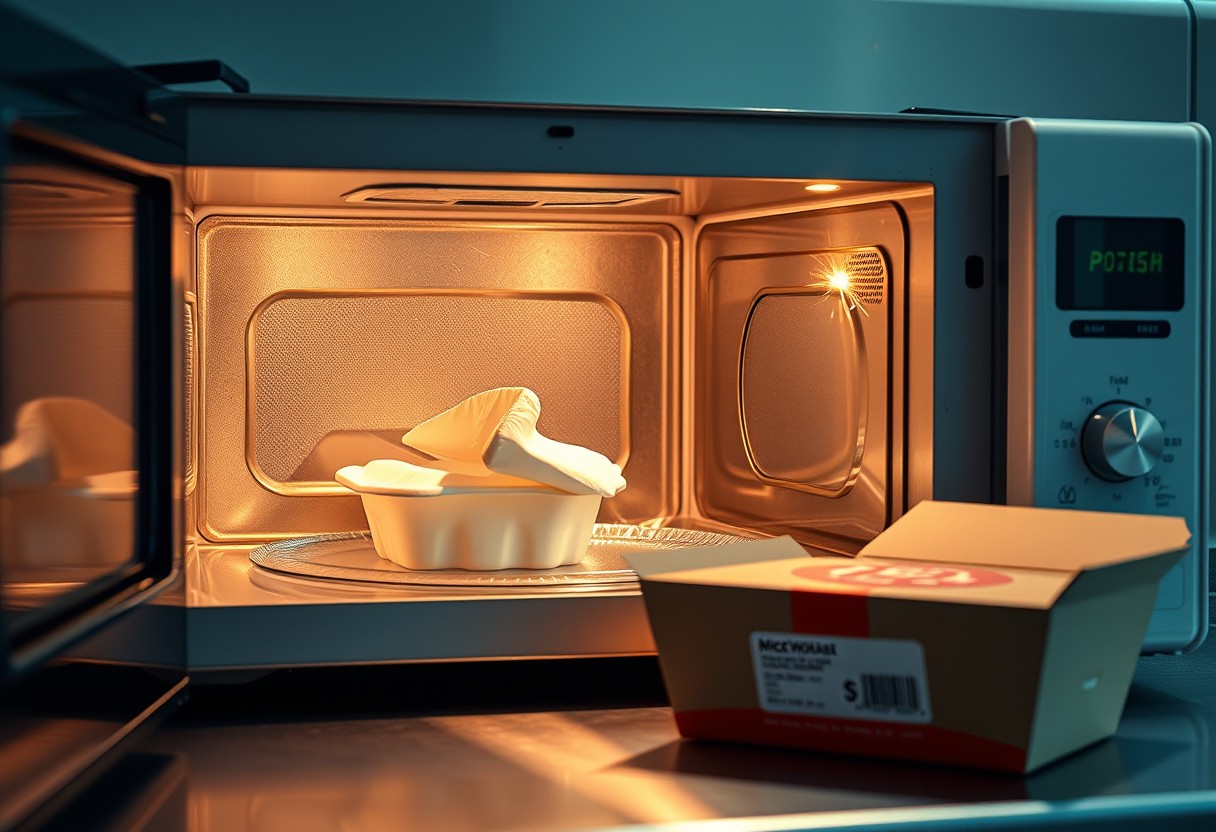
You might think reheating last night’s dinner in its takeout container is harmless, but some plastics release dangerous chemicals when heated. Not all packaging is built to withstand microwave temperatures, and melting or warping can lead to chemical leaching into your food. Your convenience could come at the cost of your health-knowing what’s safe matters more than you think.
Key Takeaways:
- Most takeout containers are made from plastics or coated papers that can warp, melt, or release harmful chemicals when exposed to microwave heat, making them unsafe for direct reheating.
- Some containers labeled as “microwave-safe” still require caution-always remove lids, especially those with metal handles or seals, which can spark or overheat.
- Transferring food to a glass or ceramic dish before microwaving ensures even heating and avoids unintended exposure to substances like phthalates or PFAS often found in disposable packaging.
The Cheap Plastic Betrayal
When you blast leftover food in its delivery container, you’re gambling with materials never designed for the microwave. Most takeout boxes are made from low-grade polymers that begin to fail well below the temperatures reached in standard kitchen appliances. The moment the plastic softens, it loses structural integrity, risking spills, burns, and contamination. Even a brief heating cycle can push these flimsy vessels past their limits, turning convenience into a safety hazard. You might not see the damage, but the deformation starts long before the food reaches a safe internal temperature.
Structural collapse of low-grade polymers
Plastic takeout containers often buckle under heat because their polymer matrix lacks thermal resistance. You’ve likely seen how a corner curls or the base sags after just one minute in the microwave. This warping isn’t just unsightly-it creates uneven heating zones and increases the chance of scalding liquid spilling onto your skin. These containers were engineered for transit, not reheating, and their rapid physical breakdown reveals a fundamental mismatch between packaging function and kitchen use.
Why cost-cutting packaging fails the kitchen test
A restaurant’s choice of ultra-thin plastic may save pennies per container, but that economy backfires when you press start on the microwave. The same lightweight design that reduces shipping weight also accelerates degradation under heat. You’re left with a warped, leaking mess that compromises both meal quality and safety. These containers may hold cold food adequately, but they cannot withstand the demands of reheating, making them unfit for anything beyond initial delivery.
Toxic Seasoning You Did Not Order
Heat transforms your takeout container into an unintended chemical partner, leaching industrial additives directly into your meal. When plastic meets high temperatures, substances like plasticizers and stabilizers are driven into your food, effectively adding a hidden, hazardous seasoning. You didn’t ask for this contamination, yet every microwave cycle increases exposure. These compounds aren’t ingredients; they’re industrial byproducts never meant for consumption, now silently altering the safety of what you believe to be a simple reheated meal.
Phthalates and the migration of poisons
Phthalates, commonly used to soften plastics, become highly mobile when heated. As your leftovers warm up, these chemicals migrate directly into your food, especially in fatty or acidic dishes where absorption increases. You’re not just reheating dinner-you’re potentially consuming endocrine disruptors linked to hormonal imbalances. No label warns you when a container releases measurable levels of toxic phthalates, making each bite an unregulated experiment in chemical exposure.
The interaction between hot oils and soft plastics
Hot oils from sauces or fried foods act as solvents, pulling chemicals from soft plastic containers more aggressively than dry or cool foods. When oil reaches high temperatures, it enhances the release of harmful additives like bisphenols and styrene, which then mix seamlessly into your meal. You can’t see or taste this transfer, but your body registers the burden. Even brief exposure under heat creates conditions where plastic components dissolve into your food, turning convenience into a quiet health compromise.
Reading the Hieroglyphics of Waste
Every time you grab a takeout container from the fridge, you’re faced with a small symbol that holds big consequences. Those triangular arrows with a number inside aren’t just decoration-they’re resin identification codes, and they tell you whether your container belongs in the microwave or the trash. Number 5 (polypropylene) is generally safe for reheating, while others like number 6 (polystyrene) can leach harmful chemicals when heated. If you eat at work, a Tupperware container is part of your day-we suggest you check the code before you zap it.
Decoding the triangle and the number five
Polypropylene, marked with a 5 inside the recycling triangle, is one of the few plastics designed to withstand heat without breaking down. When you see this symbol on a container, it means the material resists warping and chemical leaching under high temperatures. You can reheat food in these with more confidence, though even number 5 isn’t foolproof if the container shows cracks or cloudiness. Always inspect it first-damaged plastic, even if labeled safe, can release compounds into your meal over time.
The danger of the unlabeled mystery bin
That container without any symbol at all? Treat it like an open flame-never assume it’s microwave-safe. Many takeout containers, especially from smaller restaurants or street vendors, come with no labeling whatsoever. These often contain materials like polystyrene or mixed plastics that degrade rapidly when heated. Even a short burst in the microwave can cause toxic substances to migrate into your food. When in doubt, transfer your meal to a known-safe vessel before reheating-your body will thank you.
Restoring Sanity to the Reheat
You regain control over your meal’s quality the moment you transfer takeout food to a safe, stable surface for reheating. Using non-reactive materials like ceramic prevents unwanted chemicals from leaching into your food while ensuring even heat distribution. The integrity of your dish-its flavor, texture, and safety-depends on this simple shift. Plastic containers may seem convenient, but they compromise both health and taste when exposed to high temperatures. A ceramic plate isn’t just kitchenware-it’s a safeguard.
The superiority of the ceramic plate
Ceramic plates handle heat without breaking down, making them one of the safest choices for microwave use. Unlike plastic or foam, ceramic won’t warp, melt, or release toxic compounds when heated, preserving both your health and the meal’s original character. You’ll notice better consistency in temperature and moisture, especially with dense foods like rice or casseroles. This inert material resists staining and odor absorption, so your leftovers taste like themselves-not last night’s curry clinging to yesterday’s garlic bread.
Proper venting to avoid the soggy disaster
Trapped steam turns crispy edges into limp mush if you don’t allow airflow during reheating. You can prevent a soggy disaster by loosely covering food with a microwave-safe lid or paper towel instead of sealing it. This small step lets moisture escape while still protecting your turntable from splatters. Without proper venting, condensation pools and rehydrates surfaces that were meant to stay crisp, undermining both texture and satisfaction with every bite.
To wrap up
You now know that tossing takeout containers into the microwave without checking their material can expose you to harmful chemicals or ruin your meal. Not all plastics are built to withstand heat, and even some paper-based containers have hidden linings that react poorly under high temperatures. Your health and kitchen safety depend on taking a moment to assess what’s safe. Always transfer food to labeled microwave-safe dishes when in doubt. This simple step protects both your body and your appliance.
FAQ
Q: Can all takeout containers be microwaved safely?
A: No, most takeout containers are not designed for microwave use. Many are made from plastics that can warp or melt when exposed to high heat. Polystyrene (often labeled #6) and thin plastic clamshells break down under microwave temperatures, potentially releasing harmful chemicals into food. Only containers explicitly labeled ‘microwave-safe’ should be used, and even then, it’s wise to check for cracks or wear.
Q: What happens if I microwave a non-microwave-safe container?
A: Microwaving an unsuitable container can cause visible damage like warping, melting, or leaching. More concerning is the invisible transfer of chemical compounds such as phthalates or styrene into your meal. These substances have been linked to hormonal disruptions and other health concerns. A container might look intact but still release trace contaminants during heating.
Q: How can I tell if a takeout container is microwave-safe?
A: Look for a label or symbol on the bottom indicating microwave safety-usually wavy lines or a microwave icon. Avoid containers without clear labeling, especially black plastic trays, which often contain recycled materials that may include metal fragments. Number codes like #1 (PET), #5 (polypropylene), or #7 (some bioplastics) vary; only those marked ‘microwave-safe’ are reliable for reheating.
Q: Is it safe to reheat food in aluminum foil containers?
A: No, aluminum takeout pans should never go in a microwave. Metal reflects electromagnetic waves, causing sparks that can damage the appliance or start a fire. These containers are meant for ovens only. If you must reheat food from one, transfer it to a glass or ceramic dish before microwaving.
Q: Why do some paper takeout boxes say they’re microwave-safe but still feel risky?
A: Some paperboard containers are lined with a thin plastic or wax coating to prevent leaks. While marketed as microwave-safe, these linings can degrade over time or at high temperatures. If the box feels slick or glossy inside, the coating might not withstand prolonged heating. When in doubt, transfer food to a known-safe dish rather than risk contamination.