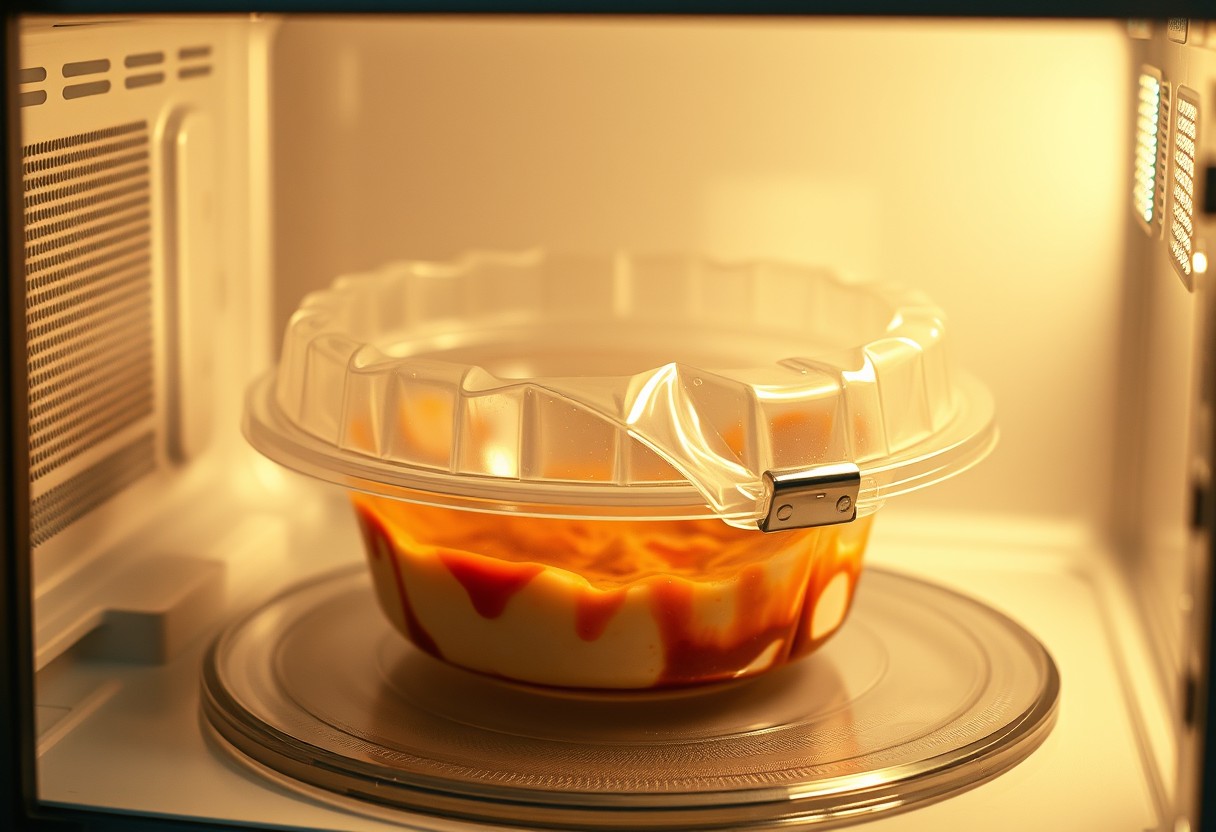
You’ve sealed your leftovers tightly, eager for a quick reheat, but that airtight container could turn your meal into a hazard. Without a vent, steam builds rapidly under pressure, and the container may rupture or explode, releasing scalding food and vapor. This isn’t just messy-it’s dangerous. Even durable plastics can warp or release harmful substances when trapped heat has nowhere to escape.
Key Takeaways:
- Microwaving food in a sealed container traps steam, creating pressure that can cause the container to crack, warp, or burst open during heating.
- Without a vent, moisture builds up inside the container, leading to unevenly heated food and potentially soggy or rubbery textures, especially in items like rice or leftovers with sauces.
- Sudden pressure release-when the container is opened after microwaving-can result in hot food or liquid spraying outward, increasing the risk of burns or scalds.
The Agitation of Watery Spirits
Molecules in a Frenzy
Water molecules inside your food begin moving rapidly the moment microwaves penetrate the container. As energy is absorbed, these molecules vibrate intensely, generating internal heat that turns liquid into vapor. You’re not just warming food-you’re triggering a phase change that increases volume dramatically. Without a vent, this steam has nowhere to escape, and the enclosed space becomes a battleground of rising kinetic energy. The sealed environment amplifies molecular motion, building invisible force with every passing second.
The Pressure Cooker Effect
Steam expansion in a closed container mimics the mechanics of a pressure cooker, but without controlled release. Each gram of water that vaporizes increases internal pressure exponentially, constrained entirely by the lid’s integrity. You’re creating a volatile microclimate where temperature and pressure rise beyond atmospheric levels. The container may appear intact, but the internal stress can exceed safe thresholds in under a minute, especially with high-moisture foods. This silent buildup is invisible-until it’s not.
The Great Tupperware Rebellion
When you microwave food in a sealed container, pressure builds rapidly as steam has no escape. This invisible force can overwhelm even sturdy plastic, leading to a violent rupture that scatters hot contents across your microwave. The structural collapse of the container isn’t just messy-it’s a direct threat to kitchen cleanliness and personal safety. You’re left with splattered food residue baked onto interior surfaces, requiring extensive cleaning. For more on what makes this risky, check out Heating Food in Plastic Containers: Risks and How to Reduce ….
The Sudden Parting of Ways
A crack forms first at the weakest seam, then gives way in an instant. You hear a sharp pop as the container splits open, ejecting boiling liquid and partially cooked food with surprising force. This sudden failure turns a simple reheating task into a hazardous event. The lid may launch across the kitchen, while scalding moisture coats the microwave’s walls and ceiling. What was once contained becomes widely dispersed, embedding in crevices and creating stubborn cleanup challenges after the heat fades.
Decorating the Galley Ceiling
Your microwave’s interior wasn’t designed to host a Jackson Pollock-style display of reheated stew. Yet without a vent, pressurized steam carries droplets upward with enough velocity to stick high above the turntable. Grease and sauce bond to the ceiling panel under intense heat, forming thick, odorous layers that resist wiping. Over time, repeated incidents create a grimy buildup that affects performance and hygiene. Each use spreads more residue, turning routine meals into contributors to long-term grime accumulation.
Seasoning with Industrial Alchemy
You’re not just reheating food when you microwave a sealed container-you’re conducting an invisible chemical experiment. Synthetic materials in plastic containers can release molecules under heat, and without a vent, pressure builds, driving these compounds into your meal. What begins as convenience becomes a plate of unintended additives, where industrial byproducts replace natural taste. Your palate adapts to false richness, mistaking chemical notes for depth. Over time, this silent exchange dulls sensitivity to real flavor, substituting authenticity with the echo of factory-made substitutes.
Molecules of the Bowl
Plastic isn’t inert-it’s a lattice of polymers engineered for durability, not culinary fidelity. When trapped heat rises inside a sealed container, molecular migration accelerates, allowing substances like plasticizers to seep into food. You ingest more than calories; you consume the invisible residue of petroleum-based design, engineered for mass production, not human biology. These migrating compounds don’t announce themselves, yet they alter texture, aroma, and even aftertaste, turning a simple meal into a carrier of synthetic history.
Flavors of the Factory
Taste evolves beyond ingredients when synthetic containers interact with heat. The flavors you experience may originate less from spices or seasoning and more from chemical reactions between food acids and plastic linings. You’re tasting processed material science-engineered stability transformed into unintended seasonings. These artificial undertones accumulate subtly, reshaping expectations of what “delicious” means. Over weeks or months, your sense of freshness recalibrates to accept these lab-born notes as normal, blurring the line between cooking and chemical exposure.
The Wrath of the Scalded Cook
Steam builds silently inside a sealed container, turning your kitchen into a hazard zone. When you open the microwave, that trapped vapor escapes in a sudden, scalding burst-often directly toward your hands and face. This invisible jet of superheated steam can cause serious burns faster than boiling water. Unlike surface heat, vapor penetrates skin rapidly, making it especially dangerous during routine meal prep. Your instinct to peek or lift the lid quickly only increases the risk.
The Fog of Boiling Vengeance
A cloud erupts the moment you crack the seal, and that mist carries more danger than you expect. This fog isn’t harmless-it’s concentrated steam at near 100°C, capable of blistering skin on contact. The pressure differential forces it outward with surprising force, targeting your fingers, wrists, and face. Even containers that look cool on the outside can harbor explosive vapor within. Never assume silence means safety; stillness often masks the most violent release.
A Lesson in Thermal Manners
You must treat heated containers like live wires-respect their potential. Always pause after microwaving and open lids away from your body, letting steam escape in a controlled direction. Using a towel as a shield adds protection against accidental bursts. Puncturing the film or leaving a small gap before heating prevents pressure buildup altogether. These simple actions replace guesswork with control, turning a risky chore into a safe, predictable routine. Safety lies in preparation, not reaction.
The Premature Grave of the Galley Machine
Every time you seal food tight in a non-vented container, your microwave absorbs a small shock. The trapped steam forces internal components to work harder, increasing mechanical wear with each use. Over time, the cumulative strain degrades efficiency and reliability. What begins as a minor oversight ends in total failure, leaving you facing expensive repairs or replacement. The final summary is found in the final words: neglect turns convenience into costly consequence.
The Magnetron’s Slow Decay
Steam buildup from sealed containers raises internal humidity levels beyond design limits. This moisture infiltrates the magnetron’s protective shielding, corroding delicate wiring over time. You may not notice performance drops immediately, but each cycle chips away at output strength. A weakened magnetron struggles to generate consistent heat, leading to uneven cooking and longer run times. Eventually, the unit fails completely, and no amount of troubleshooting can revive it.
Paying the Repairman’s Ransom
When your microwave finally dies, the repair bill often exceeds replacement cost. Technicians charge premium rates for diagnosing moisture-related faults, especially when corrosion hides deep within circuitry. You’re left choosing between a new appliance or funding a repair that offers no long-term guarantee. One preventable mistake becomes an unavoidable expense. The truth is clear: skipping a vented lid today costs significantly more tomorrow.
To wrap up
You now understand the risks of microwaving food in a sealed container. Pressure builds rapidly when steam has no escape, and that pressure needs somewhere to go. You might see a messy explosion inside your microwave, or worse, suffer a burn when you open the container and trapped steam escapes suddenly. The container itself can warp, crack, or release unwanted chemicals into your meal. Always vent your container with a lid slightly ajar or use a microwave-safe cover designed to allow steam out. This simple step protects both your food and your safety.
FAQ
Q: What happens if you microwave food in a sealed container with no vent?
A: Trapped steam builds up pressure inside the container as the food heats. Without a vent, this pressure has no escape route. The internal temperature and steam volume continue to rise until the container either cracks, warps, or explodes. This can happen suddenly, sending hot food and plastic fragments across the microwave interior.
Q: Can microwaving a sealed container damage the microwave itself?
A: Yes. When a container ruptures, food splatters onto the microwave’s walls, ceiling, and turntable. Sticky or greasy residues can burn during future use, creating smoke and odors. In extreme cases, large bursts of superheated material might interfere with the microwave’s magnetron or create arcing if conductive debris is involved. Cleaning becomes significantly harder and the appliance may develop lingering smells.
Q: Is there a risk of fire when microwaving food in a closed container?
A: While direct fire is rare, certain conditions increase the danger. If the container is made from non-microwave-safe plastic, it can melt or ignite under extreme heat. Foods high in fat or oil can reach temperatures that smolder when trapped. A sudden rupture might expose overheated contents to oxygen in a way that sparks brief flames, especially if paper towels or other flammable materials are nearby inside the chamber.
Q: Why do some containers explode only after being removed from the microwave?
A: This delayed explosion occurs because the internal pressure remains contained until the seal is disturbed. When you open the microwave door or lift the lid, the sudden change in external pressure or physical disturbance destabilizes the superheated environment. The steam expands instantly, forcing the contents to burst outward. This is especially common with thick sauces or stews that trap steam beneath a dense surface layer.
Q: Are all microwave-safe containers safe to use when completely sealed?
A: No. A label stating “microwave-safe” refers to the material’s resistance to heat and chemicals, not its ability to handle pressure. Even containers made from safe plastics or glass can fail under steam pressure if fully sealed. Always leave the lid slightly ajar, use containers with built-in vents, or cover food loosely with a microwave-safe plate or paper towel to allow steam to escape.