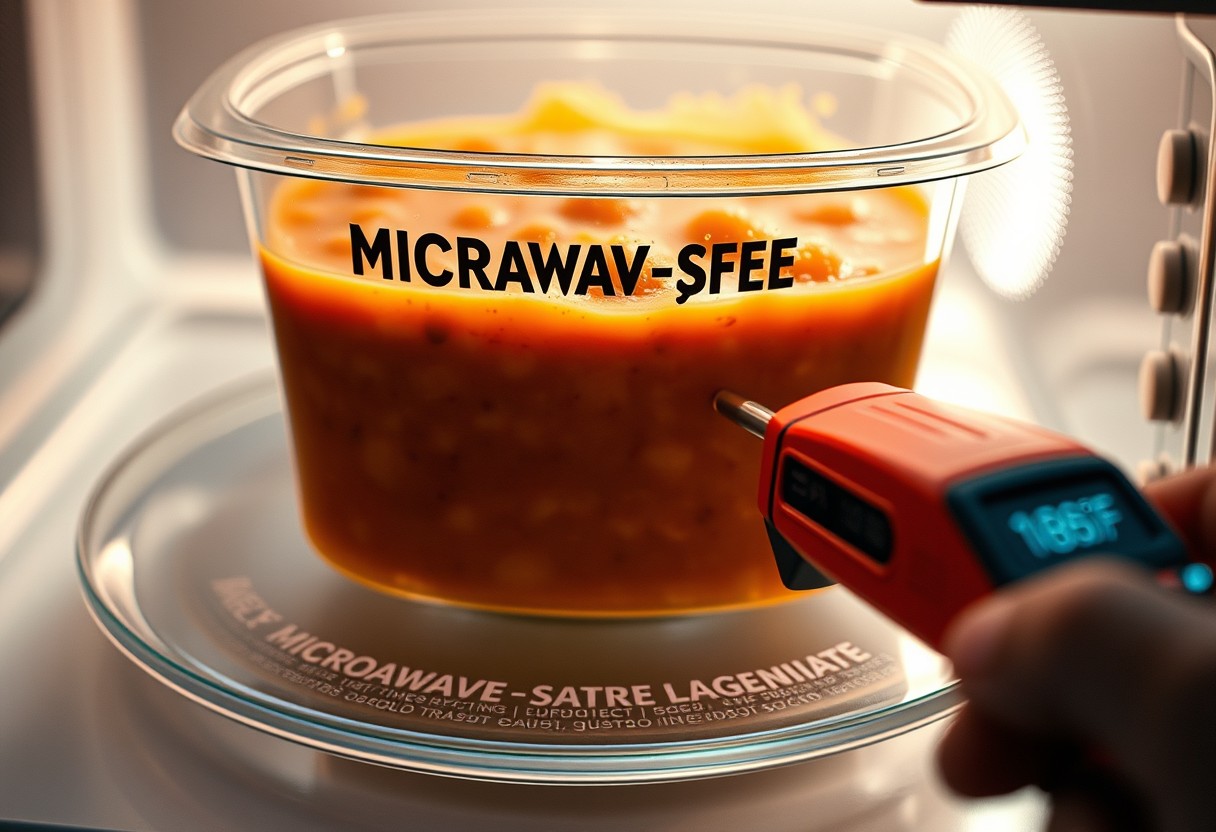
You’ve checked the label-your container is microwave-safe-yet it comes out scorching, sometimes too hot to touch. This heat isn’t a flaw-it’s physics. Even approved materials can absorb microwave energy or conduct heat from food, creating serious burn risks. Understanding why helps you use containers safely and avoid unexpected injuries, even when following instructions to the letter.
Key Takeaways:
- Microwave-safe containers can still become hot because they absorb some microwave energy, especially if they contain polar molecules or trace amounts of water that respond to the electromagnetic field.
- Heat often comes from the food itself-once heated, the food transfers thermal energy to the container through direct contact, making it feel very hot even if the container didn’t absorb much microwave energy directly.
- The material’s thickness, shape, and composition influence how much heat it retains; for example, thick plastic or ceramic with dense regions can trap heat longer, creating hot spots even in microwave-safe packaging.
The Molecular Mosh Pit
Inside your microwave, radiation doesn’t heat food directly through ambient warmth-it targets specific molecules with precision. Water molecules, which are naturally polar, respond intensely to the microwave’s alternating electromagnetic field. These molecules rapidly flip orientation billions of times per second, aligning themselves with the shifting field. This chaotic motion creates intense internal agitation, turning electromagnetic energy into thermal energy. The result is a microscopic frenzy where water molecules spin uncontrollably, generating the heat that cooks your food from the inside out.
Dipolar Rotation
When you press start, microwave radiation floods the chamber with an oscillating electromagnetic field. Your food’s water molecules, each acting like a tiny magnet with a positive and negative end, react immediately. They begin to spin, trying to align with the rapidly reversing field-switching direction up to 4.9 billion times each second. This relentless rotation isn’t smooth or free-it’s a jolted, forced motion that stores and releases kinetic energy with every flip. This physical rotation is the primary engine of microwave heating, transforming electromagnetic waves into molecular movement right inside your meal.
Friction and Kinetic Energy
As water molecules spin and collide in response to microwave energy, their motion doesn’t stay contained. These high-speed rotations create constant bumping and jostling with neighboring molecules, transferring energy through direct contact. Each collision spreads kinetic energy further into the food’s structure, effectively converting motion into heat. Though the microwave doesn’t directly heat fats or sugars as efficiently, this chain reaction of molecular impacts ensures broader thermal distribution. The resulting friction turns rapid spinning into measurable temperature rise throughout the food, even in areas with fewer polar molecules.
The Conduction Connection
Heat builds in your container not because the microwave targets it directly, but because of direct contact with the scalding contents inside. When food or liquid absorbs microwave energy and heats up, that thermal energy transfers to the container walls through physical touch-a process known as conduction. Even if the dish itself doesn’t absorb microwaves well, prolonged exposure to hot food raises its temperature significantly. This direct energy transfer is why some containers feel dangerously hot to the touch, despite being labeled microwave-safe.
Surface Area Contact
The amount of surface where your food touches the container directly impacts how much heat transfers into the dish. A soup filling the entire bowl creates far more contact than a small portion of leftovers, increasing the rate of conduction. Containers with deep grooves or textured interiors may trap hot food against their walls, creating localized hot spots. The greater the contact area, the more efficiently heat moves into the container-making even microwave-safe materials uncomfortably hot after heating.
Temperature Equilibrium
Your container doesn’t need to absorb microwaves to become hot-it only needs to stay in contact with food long enough for temperatures to balance. Heat naturally flows from hotter substances to cooler ones until equilibrium is reached. Even if the dish starts at room temperature, it will absorb thermal energy from the steaming food until both reach a similar level. This means prolonged heating or standing time can make the container as hot as the food itself, creating a burn risk when handled barehanded.
| Conduction Factor | What It Means for You |
|---|---|
| Direct food-to-container contact | Enables continuous heat transfer, especially with liquids or moist foods that conform to the dish’s shape |
| Extended microwave time | Allows more heat to move into the container, increasing outer surface temperature |
| High initial food temperature | Speeds up conduction; boiling liquids transfer heat rapidly to container walls |
| Container thickness and shape | Thinner walls heat up faster; deep, narrow containers trap heat along the sides |
The Dielectric Dilemma
Materials labeled microwave-safe aren’t always transparent to microwave energy-their molecular structure determines how they interact with radiation. Some ceramics and polymers contain polar molecules or ionic components that respond strongly to the oscillating electromagnetic field, causing internal friction and heat buildup. Even if the container doesn’t contain metal, its chemical composition can make it a strong absorber. This hidden absorption is why certain dishes become too hot to touch despite being technically safe, turning a quick meal into a potential burn hazard.
Material Loss Tangent
Different materials convert microwave energy into heat with varying efficiency, a property quantified by the loss tangent. A higher loss tangent means the material absorbs more energy and heats up faster. Your container may be free of cracks or metal trim, but if it’s made from a polymer or ceramic with a high loss tangent, it actively pulls energy from the microwave field. This direct absorption can result in surface temperatures high enough to cause serious burns, even when food inside feels only warm.
Energy Absorption
Your dish doesn’t need to contain water or fat to absorb microwaves-its own molecules can be the target. Polarized bonds in the container’s material shift rapidly under microwave exposure, generating heat through molecular resistance. Some microwave-safe plastics and stoneware are engineered to withstand heat but still participate in energy absorption due to their inherent dielectric properties. The result is a container that becomes a secondary heat source, not just a passive vessel, increasing the risk of overheating during extended cycles.
The Porous Problem
Sometimes, even containers labeled microwave-safe become too hot to touch, and the reason often lies in their material structure. If your dish is made from clay-based ceramics, microscopic water pockets trapped within the porous body absorb microwave energy, causing the water molecules to vibrate and generate heat. This internal heating can make the container dangerously hot, even if the food doesn’t feel overheated. You’re not imagining it-others have noticed this too, as seen in discussions like Eli5: when microwaving food, why does the plate gets hot.
Porous Clay Bodies
Clay used in ceramic dishes naturally retains moisture, especially if it wasn’t fired at high enough temperatures during manufacturing. When you microwave such a dish, that trapped water heats up rapidly, transferring thermal energy throughout the material. Even after drying, some moisture remains deep within microscopic pores, meaning the container continues to absorb microwave energy independently of the food. This effect can cause the dish to become extremely hot, posing a burn risk despite being labeled safe for microwave use.
Glaze Crazing
Over time, tiny cracks known as crazing can develop in the glaze coating of ceramic dishes, especially after repeated heating and cooling cycles. These fissures act as entry points for water, which then becomes trapped beneath the surface. During microwaving, this hidden moisture heats up just like in porous clay, contributing to excessive container temperature. A dish with visible crazing may seem intact, but its ability to harbor water makes it more likely to become unexpectedly hot and unsafe during use.
The Geometry of the Box
Corner Concentration
Sharp corners in your container create zones where microwave energy accumulates, leading to dangerously high temperatures even if the material is labeled microwave-safe. These angular regions trap electromagnetic waves, causing localized overheating that can burn your hands or warp the plastic. Unlike rounded edges, which disperse energy more evenly, corners act like heat magnets-especially in square or rectangular containers. You’ve likely noticed how the edges of lasagna containers become scorching while the center stays warm. This uneven distribution isn’t a flaw in your microwave-it’s a direct result of shape-driven energy clustering.
Standing Wave Patterns
Your microwave generates standing waves that form consistent hot and cold spots inside the cavity, and the container’s dimensions determine how it interacts with these patterns. When the length or width of the box matches a multiple of the microwave’s wavelength, resonance occurs, intensifying heating in specific areas. This means identical containers may heat differently depending on their orientation or placement. You might experience one side of food boiling while another remains cool-a clear sign of wave interference amplified by box geometry. Even microwave-safe materials can’t prevent this physical behavior.

Summing up
You now understand that even microwave-safe containers can become hot due to material composition, energy absorption, and heat transfer. The container itself may not react to microwaves, but its molecules can still absorb residual energy, especially if it contains trace moisture or additives. Conduction from hot food raises surface temperature quickly, while shape and thickness influence how heat builds in specific spots. Porous or uneven materials trap energy, creating localized hot zones. Your awareness of these factors helps you handle containers safely, even when labeled microwave-safe.
FAQ
Q: Why does a container labeled microwave-safe still get hot even when it’s not supposed to absorb microwaves?
A: Microwave-safe containers are designed to withstand heat and not release harmful chemicals, but that doesn’t mean they won’t get hot. The label refers to safety, not temperature. Many containers heat up indirectly by absorbing thermal energy from the food inside. If you’re reheating soup in a plastic container, the soup heats first and then transfers heat to the container through direct contact. Some materials also contain trace impurities or additives that respond slightly to microwave energy, contributing to warming.
Q: Can the shape or thickness of a container affect how hot it gets in the microwave?
A: Yes. Thicker areas of a container absorb and retain more heat than thinner sections. Sharp corners or uneven walls can create hot spots due to concentrated energy or poor heat distribution. A container with a narrow base and wide top may trap steam, increasing internal pressure and temperature along the sides. These design factors influence how heat builds up, even if the material itself is microwave-safe.
Q: Do all microwave-safe plastics behave the same way under microwave energy?
A: No. Different plastics react differently. Polypropylene (PP), often labeled with recycling code 5, is commonly used for microwave-safe containers because it resists warping at high temperatures. However, even this material can become hot to the touch when exposed to prolonged heating. Other plastics may contain fillers or colorants that increase microwave absorption. Always check for the microwave-safe symbol, but understand that performance varies between brands and formulations.
Q: Why do some ceramic or glass containers get hotter than others in the microwave?
A: Ceramics and glass are generally poor absorbers of microwaves, but their glazes or surface treatments can contain minerals like iron or lead that respond to electromagnetic fields. A handcrafted ceramic bowl with metallic paint might heat rapidly, while a plain tempered glass dish stays cooler. Porous ceramics can also absorb moisture from food, and that water heats up during microwaving, making the container feel hot even if the base material isn’t directly interacting with microwaves.
Q: Is it dangerous if a microwave-safe container becomes very hot during use?
A: A hot container isn’t automatically unsafe, but it can be a warning sign. Excessive heat may indicate the material is nearing its thermal limit, increasing the risk of warping, cracking, or leaching chemicals-especially with plastics. If a container deforms, emits an odor, or becomes discolored after microwaving, it should be discarded. Always use oven mitts when removing containers, and avoid microwaving empty or nearly empty containers, as they can overheat without food to absorb the energy.