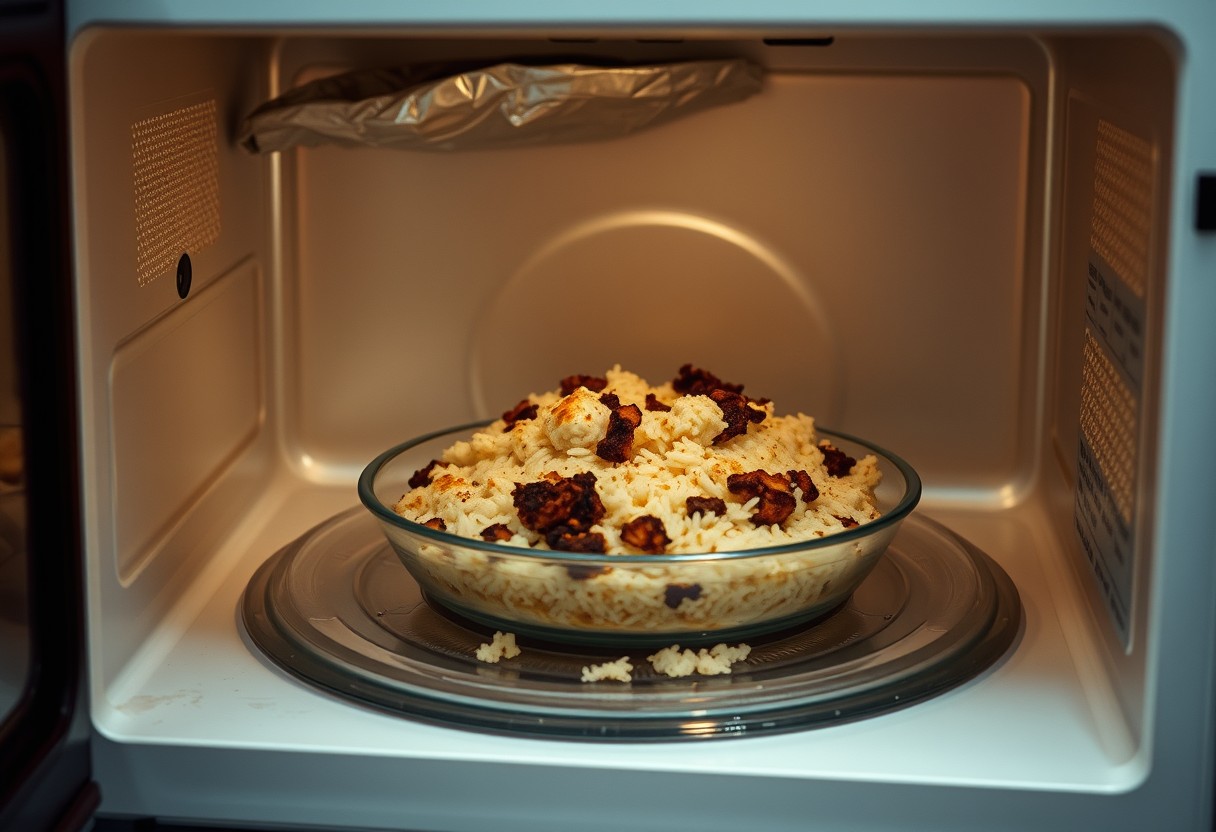
You’ve likely reheated leftovers only to find them scalding hot in one spot and frozen in another. Microwave cooking can save time, but common errors lead to dry textures, uneven heating, and overcooked edges. Understanding these pitfalls helps you avoid mealtime frustration and ensures your food retains moisture, flavor, and safe internal temperatures every time.
Key Takeaways:
- Food heats unevenly in microwaves when items are stacked or packed too tightly, leaving cold spots in the center while edges turn rubbery-spacing and stirring help distribute heat more evenly.
- Using high power for too long dries out proteins and turns vegetables into mush; lowering the power and increasing time often yields better texture and moisture retention.
- Ignoring the shape and thickness of food leads to overcooked edges and undercooked centers-flatter, uniform pieces heat more consistently than thick or irregularly shaped portions.
The Dead Zone of the Rotating Plate
Placing food directly in the center of your microwave creates a dead zone where microwaves struggle to penetrate evenly. The rotating plate moves your dish, but if the food sits in the middle, it remains stationary relative to the microwave’s energy patterns. This results in cold spots and uneven cooking, even after full cycle completion. The center is the least exposed position, shielding food from optimal wave distribution and leaving parts undercooked while others risk drying out.
The Bullseye Mistake
Centering your meal like a target ignores how microwaves actually distribute energy. The waves enter from the side or top and bounce around, creating hot and cold zones. When you place food dead center, it avoids the most intense wave activity, leading to inconsistent heating. This bullseye approach traps portions in a low-energy void, so even with rotation, the core of your dish may remain cold while edges overheat.
Edge of the World Tactics
Arranging food around the outer rim of the plate maximizes exposure to microwave energy. The rotation ensures each section passes through high-intensity zones, promoting uniform cooking. By avoiding the center, you prevent the stagnation of heat and allow waves to strike food from multiple angles. This simple shift in placement corrects uneven heating and reduces the risk of undercooked centers, making every bite more consistent in temperature and texture.
The Great Moisture Heist
Naked Plate Negligence
Leaving food uncovered in the microwave exposes it to direct radiation without protection, inviting rapid moisture loss. You’ve likely reheated leftovers only to find them stiff and leathery-this is why. Without a lid or damp paper towel, water molecules escape freely into the cavity, leaving proteins tough and starches dry. The result? A meal that looks edible but feels like punishment to eat. Covering your dish isn’t optional-it’s essential for retaining the moisture that keeps food palatable.
Steam as a Shield
Trapping steam creates a humid microenvironment that protects food from microwave desiccation. When you cover your plate with a microwave-safe lid or vented plastic wrap, rising moisture circulates back into the surface, preventing hot spots and maintaining tenderness. This simple act mimics gentle steaming, preserving texture in delicate items like fish or rice. Steam isn’t a byproduct-it’s your best defense against dry, overcooked results. Letting it escape guarantees a parched outcome.
The High Power Death Trap
Running your microwave at full power for every task destroys the texture of delicate proteins and leaves food dry and rubbery. You’re not just warming-you’re overcooking before the heat can evenly penetrate. High power settings blast energy too quickly, especially damaging to fish, poultry, and reheated meats. For example, leftover salmon can go from tender to tough in seconds. Learn better methods with our guide to safe reheating: Reheating Leftover Salmon: The Ultimate Guide to Safe and …
Full Throttle Failure
Choosing 100% power without adjusting for food type leads to uneven results and texture damage. Delicate dishes like scrambled eggs or steamed vegetables turn rubbery or mushy when hit with maximum intensity. The microwave’s full power setting doesn’t allow heat to distribute internally, creating hot spots while leaving other areas cold. You’re forcing rapid water loss, which dries out proteins and diminishes flavor. This aggressive method sacrifices quality for speed, undermining your effort to begin with.
Lowering the Heat
Reducing power to 50-70% gives food time to warm evenly without surface scorching. At lower settings, microwaves cycle on and off, allowing heat to conduct into the center without overcooking the edges. This prevents protein fibers from seizing up and retains moisture in meats, seafood, and dairy-based dishes. You’ll notice a dramatic improvement in texture and taste, especially when reheating sensitive items. Patience with power levels transforms microwave cooking from destructive to precise.
The Geometry of Culinary Sin
The Mounded Mess
Stacking food into a tall heap invites disaster-microwaves penetrate from the outside in, and a dense central column blocks their path. You end up with soggy edges and a frozen core, no matter how long you cook it. The microwave can’t reach the center efficiently, so energy overcooks the outer layers while leaving the middle untouched. Flatten your portions into a uniform layer to ensure even exposure. This simple shape shift makes the difference between a meal that’s done through and one that’s deceptive and disappointing.
The Ring of Fire
Arranging food in a circle isn’t just for presentation-it’s physics. Microwaves converge toward the center, so leaving the middle open prevents energy from scattering unevenly. When you fill the center, you create a hotspot trap that burns outer edges while starving the middle. Placing items like potatoes or chicken pieces in a ring lets each piece absorb energy consistently. This layout uses the microwave’s natural field distribution to your advantage, turning chaotic heating into predictable, reliable results. Shape matters as much as time.
The Sin of Impatience
You pull your meal from the microwave the second the timer beeps, eager to eat-only to find the center scalding while the edges remain cold. That rush breaks the carryover cooking process, where heat continues redistributing after the microwave stops. Without standing time, your food never reaches thermal equilibrium, leaving textures uneven and flavors underdeveloped. Letting dishes rest-even just a few minutes-allows heat to finish the job safely and evenly.
Thermal Equilibrium
Heat doesn’t stop working when the microwave turns off. During standing time, energy continues moving from hotter to cooler areas inside your food, smoothing out temperature extremes. Skipping this phase means you’re serving a dish that’s partially undercooked and partially overcooked, defeating the purpose of even heating. Letting food sit ensures a consistent internal temperature, making every bite as intended-hot, safe, and evenly done.
The Two Minute Rule
Most foods need at least two minutes of standing time after microwaving. This brief pause allows the internal temperature to rise safely, especially in dense items like potatoes or chicken breasts, where cold spots can harbor bacteria. Ignoring this short wait means you risk consuming unsafe food or being disappointed by uneven results. Set a separate timer if needed-those two minutes are just as important as the cooking time itself.

Summing up
You now know the common microwave cooking mistakes that lead to uneven, dry, or overcooked meals. Standing too close to the edge of the turntable leaves cold spots, while skipping cover traps or misusing power settings strips food of moisture. The shape and arrangement of your food matter more than you might think, and interrupting the cycle too soon often does more harm than good. Adjusting how you plate, power, and pause transforms results. Small changes in technique deliver consistently better outcomes.
FAQ
Q: Why does my food heat unevenly in the microwave, even when I stir it?
A: Uneven heating often happens because microwaves create hot spots based on the oven’s internal wave patterns. The center of the turntable may not receive as much direct energy as the edges, leading to cold zones. Food shape and density also play a role-thicker portions absorb less energy than thinner areas. To improve results, arrange food in a ring shape, use lower power settings for longer times, and stir or rotate the dish halfway through, not just at the end.
Q: How can I prevent my leftovers from turning dry and rubbery?
A: Microwaves remove moisture quickly, especially when food is heated at full power. Covering dishes with a microwave-safe lid or damp paper towel traps steam and maintains moisture. Adding a few drops of water to grains, vegetables, or meats before reheating helps restore humidity. Foods like chicken breast or rice benefit from 30-second bursts at medium power instead of one long cycle at high.
Q: Is using high power always the fastest way to cook in the microwave?
A: High power isn’t always faster in practice. It often overcooks outer layers while leaving centers cold, requiring additional time to fix. Lower power settings, like 50-70%, allow heat to penetrate gradually without scorching. A baked potato, for example, cooks more evenly at medium power for 8 minutes than at full power for 5, where the outside may burst while the inside stays firm.
Q: Why do some parts of my meal explode or splatter during heating?
A: Rapid steam buildup causes splattering, especially in foods with high water content under a sealed surface, like eggs in shells or potatoes with un-pierced skins. Trapped steam has no escape, leading to messy bursts. Always pierce skins, stir sauces before heating, and use vented lids. Stirring halfway through also releases pressure and redistributes heat.
Q: Can the shape of my container affect how food cooks in the microwave?
A: Yes. Round or oval containers promote even circulation of microwaves, while square or rectangular ones create corner hotspots that overcook food. Rounded edges allow energy to flow smoothly, reducing the chance of burnt edges and cold centers. Glass or ceramic dishes labeled microwave-safe respond better than plastic, which can warp or leach chemicals under high heat.