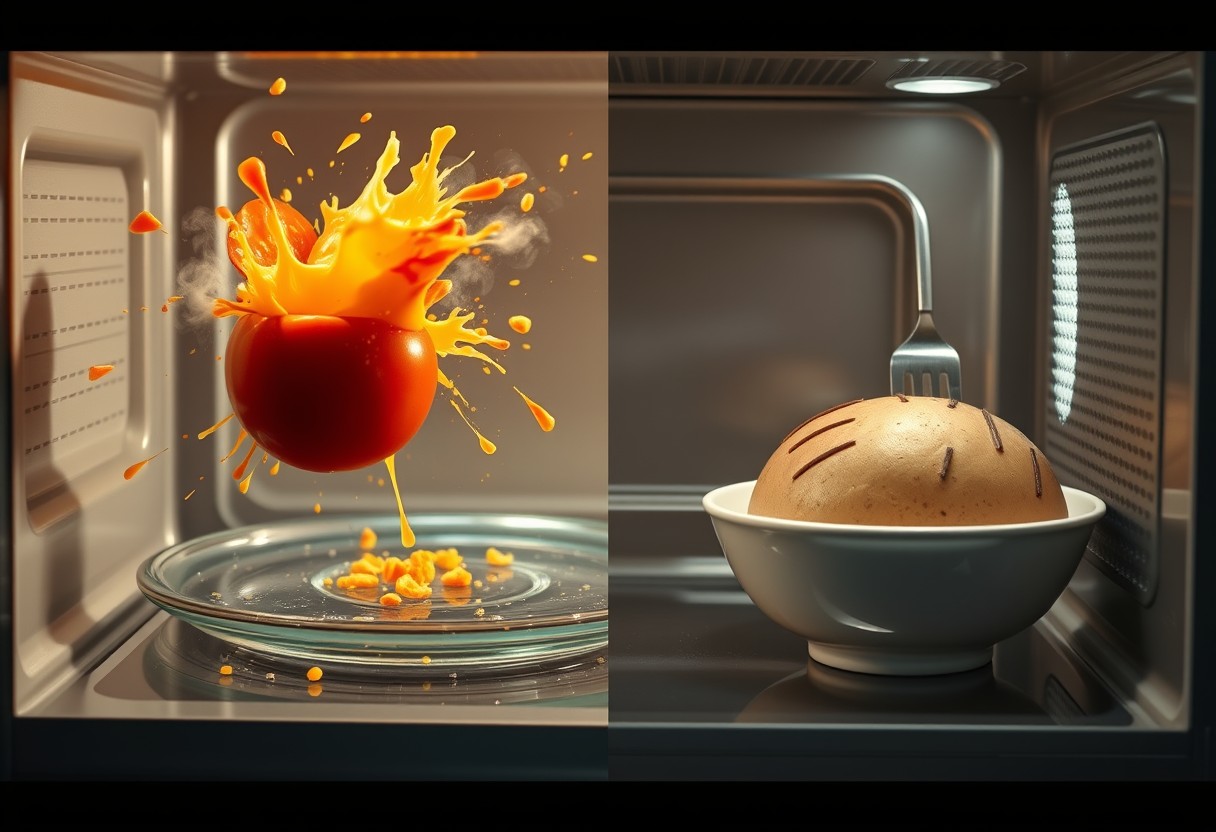
You’ve seen it happen-a bowl of soup sits calmly, then suddenly bursts into a volcanic mess, while a plate of bread heats evenly without incident. The difference lies in how microwaves interact with water, fat, and structure inside your food. Certain items trap steam under dense surfaces, creating dangerous pressure pockets that lead to explosive results. You can avoid messy-and potentially harmful-outcomes by understanding what drives these reactions.
Key Takeaways:
- Foods with high water content, like grapes or tomatoes, trap steam quickly when heated, creating internal pressure that can lead to sudden bursts in the microwave.
- The shape and density of food affect how evenly microwaves penetrate; uneven structures, such as a hot dog or a stuffed pastry, heat irregularly, increasing the risk of explosive hot spots.
- Foods covered in skins or membranes-such as eggs in the shell or potatoes with unbroken skin-resist steam release, turning them into pressurized pockets that rupture violently when disturbed.
The Frantic Agitation of the Molecule
The frantic dance of H20
You feel the heat from your microwave, but it’s not the air warming your food-it’s your food heating itself. Microwaves emit energy that targets water molecules, forcing them to flip back and forth billions of times per second. This rapid rotation creates intense internal friction, and that motion is what generates heat. The more water a food contains, the more energy it absorbs. This molecular vibration is the core reason behind sudden eruptions, as the trapped energy turns liquid into steam faster than it can escape.
The steam trap conundrum
Steam builds silently beneath the surface, especially in foods with dense or sealed outer layers. As water molecules accelerate and transform into vapor, pressure mounts in confined pockets. You might not see any movement on the surface, but underneath, steam is accumulating with potentially explosive force. When the internal pressure finally exceeds the structural resistance of the food, it bursts open-often violently. This rapid release can send scalding fragments flying across your microwave interior.
The Architecture of an Edible Bomb
Beneath the surface of many foods lies a hidden network of biological membranes that can turn your microwave into a pressure chamber. When you heat items like potatoes or sausages, steam builds rapidly inside these sealed cellular structures, creating dangerously high internal pressures. The outer layer acts like a containment wall, resisting immediate release until-without warning-it ruptures. This explosive failure isn’t random; it’s the result of trapped energy overcoming structural limits. As reported in Why Do Non-Vegetarian Foods Pop Inside Microwave …, meats with intact skins or casings are especially prone to this phenomenon.
The grape’s peculiar light show
A grape cut in half but still connected by a thin strip of skin can become a source of plasma inside your microwave. The fruit’s size and high ion content allow it to focus microwave energy into a small bridge, superheating the electrolytes. This creates a dramatic spark, often mistaken for fire, but it’s actually a burst of glowing plasma. The phenomenon relies on the grape’s natural cellular structure acting as a dipole antenna. You’re not just reheating-it’s a miniature light show fueled by electromagnetic resonance.
The egg’s calcified containment
An intact egg, even without its shell, holds a unique risk due to its layered biological barriers. The yolk’s membrane traps steam as internal temperatures rise far beyond boiling, creating a pressurized core. When pierced or bitten, the sudden drop in pressure causes an instantaneous explosion of scalding material. This delayed reaction makes it especially dangerous, as the egg may seem cool on the outside. The calcified shell originally evolved for protection, but in the microwave, it becomes part of a volatile system primed for rupture.
The Viscous Splatter Factor
Thick, goopy foods like melted cheese or gravy often erupt without warning because their high viscosity traps steam beneath a rigid surface. As microwaves heat the interior, pressure builds until the outer layer ruptures violently, launching scalding clumps across the microwave cavity. You’re most at risk when reheating items that form a skin, since that seal acts like a lid on a pressure cooker. Stirring halfway helps, but even then, the dense texture resists even heating, making sudden bursts nearly inevitable.
Porridge and the volcanic vent
Porridge develops a thick crust on top while moisture beneath turns to steam, creating a dangerous sub-surface pressure buildup. The moment you disturb it-by stirring or removing the bowl-this pent-up energy explodes upward like a volcanic eruption. You might not see bubbles or movement on the surface, but beneath lies a superheated pocket ready to burst. Using a larger container and heating in short intervals reduces the risk, but the inherent consistency makes complete safety unlikely.
The violent nature of lipids
Fatty substances such as buttered sauces or oily leftovers heat unevenly and can reach temperatures far beyond boiling water, often without visible signs of activity. The oil layers absorb microwave energy rapidly, yet their low water content prevents steam from escaping smoothly. When water pockets finally vaporize, they blast through the fat with explosive force. You may think a still surface means it’s cool, but a sudden eruption can occur the instant you move the dish, delivering burns without warning.
The Geometry of the Reheating Disaster
Shape plays a decisive role in how heat spreads through your food, and uneven geometry often leads to explosive outcomes. When microwaves penetrate food, they target water molecules, but irregular shapes create hotspots where energy concentrates. Thick edges or dense corners absorb more radiation than thinner areas, causing some parts to vaporize while others remain cold. Your meal’s form isn’t just aesthetic-it directly controls whether you’re reheating or risking a kitchen incident.
The tragedy of the frozen center
You’ve experienced it: the outside of your leftovers scalds your mouth while the core stays stubbornly icy. This happens because microwaves penetrate only so far, and thick, dense centers resist rapid heating. The outer layers absorb most energy, turning molten, while the interior lags. When you bite in, trapped steam escapes violently from pockets warmed just enough to boil-turning a simple bite into a burn risk. Stirring or cutting food evenly helps avoid this dangerous imbalance.
Spheres versus flat surfaces
A flat slice of pizza heats more predictably than a dumpling, and geometry explains why. Flat surfaces expose more area to even microwave exposure, allowing heat to distribute uniformly. In contrast, spherical or rounded foods trap energy toward their center, creating internal pressure as steam builds with no easy escape. That round shape acts like a thermal cage, escalating the likelihood of rupture. Altering shape-slitting, dicing, or flattening-gives steam a path out and keeps explosions at bay.
The Deceptive Calm of the Clean Mug
Smooth surfaces in your mug can prevent bubbles from forming, even when water surpasses its boiling point. You might see no signs of boiling, yet the liquid holds dangerous levels of stored energy. This phenomenon occurs because nucleation sites-tiny imperfections where bubbles typically form-are absent in a clean, smooth container. The stillness looks harmless, but that quiet surface masks a volatile state just waiting for a trigger.
Surface tension and hidden energy
A perfectly smooth layer of water resists turning into vapor, allowing heat to push it beyond 100°C without visible boiling. Your microwave heats the liquid evenly, and without scratches or pits in the mug, there are no starting points for bubbles. This superheated state means the water is trapped under intense internal pressure, storing energy like a coiled spring. Even slight movement can release it violently.
When a spoon causes a geyser
Introducing a spoon into apparently calm, overheated water delivers the disturbance it needs to flash into steam. In an instant, the stored energy erupts, launching scalding water out of the mug. This explosive boil can happen faster than you can react, resulting in serious burns to your hands or face. The most dangerous moments often follow what seems like a completely normal heating cycle.
Summing up
You now understand that microwave explosions hinge on how water molecules behave under electromagnetic radiation. Foods with high moisture content trapped beneath denser layers-like potato skins or egg yolks-build internal steam pressure until rupture occurs. Smooth liquids heated in clean containers lack nucleation sites, making them prone to sudden, violent boiling when disturbed. Shape, composition, and container choice all influence outcomes. You can prevent most mishaps by adjusting power settings, piercing skins, or stirring mid-cycle. Your microwave’s behavior isn’t random-it follows predictable physical laws.
FAQ
Q: Why does food sometimes explode in the microwave?
A: Food explodes when steam builds up inside faster than it can escape. Microwaves heat water molecules unevenly, creating pockets of intense pressure beneath a food’s surface. If the outer layer is dense or sealed-like the skin of a potato or the shell of an egg-it traps steam until the pressure ruptures the surface violently.
Q: Why don’t all foods explode in the microwave?
A: Foods with open structures or porous textures allow steam to vent gradually. A slice of bread or a bowl of soup releases moisture through its surface, preventing pressure buildup. The risk of explosion depends on how easily internal vapor can escape, not just on water content alone.
Q: Can covering food prevent explosions?
A: Covering food with a microwave-safe lid or paper towel can help by trapping less energy while still allowing some steam release. The cover also catches splatters, but it must have a small gap or vent. Sealing food completely-for example, with an airtight container-increases explosion risk by locking in pressure.
Q: Why do eggs explode even when they’re peeled?
A: Even without the shell, boiled eggs can burst because moisture trapped in the yolk heats rapidly. Yolks have a denser composition that resists even heating, forming superheated zones. When pierced or bitten, those zones collapse suddenly, releasing steam with enough force to make the egg pop.
Q: Does stirring food in the microwave reduce the chance of explosions?
A: Stirring redistributes heat and releases built-up steam, lowering the risk of sudden eruptions. A mid-sized SaaS firm might rely on software updates, but in the kitchen, a quick stir halfway through reheating disrupts hot spots in dishes like stew or mashed potatoes, helping heat dissipate more evenly and safely.