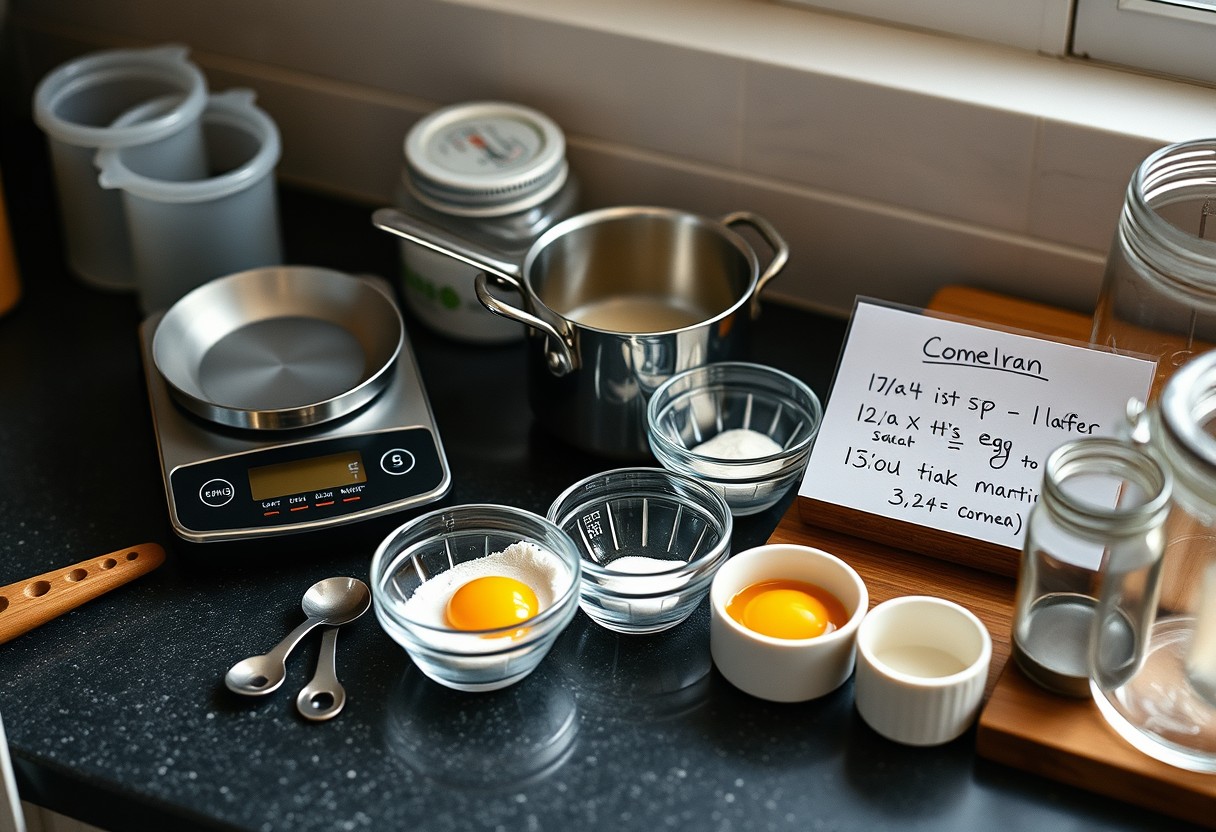
You’re cooking for one or two, but cutting a recipe down isn’t as simple as halving the ingredients. Small batch cooking changes how heat transfers, how flavors develop, and how ingredients emulsify. Most recipes don’t warn you about these shifts, leading to dry proteins, flat sauces, or collapsed bakes. The biggest danger? Assuming proportions scale linearly-they often don’t. You need different tools, timing, and techniques.
Key Takeaways:
- Reducing a recipe doesn’t just mean cutting ingredients by half-surface area and volume change at different rates, which affects how quickly food cooks and how flavors concentrate.
- Smaller quantities lose moisture faster and heat more quickly, so steps like sautéing or reducing need closer attention and often require lower heat or shorter times.
- Salt and seasoning don’t scale linearly; a dish made in half portions can taste overly salty if seasonings are simply halved, demanding a more intuitive, layered approach.
The Physics of the Skillet
The Evaporation Trap
Every time you reduce a sauce in a wide skillet, you’re fighting an invisible force: surface-area-driven evaporation. With more of your liquid exposed to air, moisture escapes three to four times faster than in a narrow pot, turning what should be a gentle simmer into a rapid concentration. You might not notice it at first, but within minutes, your sauce can go from silky to scorched. This is especially dangerous when working with dairy or wine-based liquids, where over-reduction ruins texture and balance beyond repair.
Pan Size Disparity
Your recipe assumes a standard 12-inch skillet, but if you’re using a smaller one, you’ve already altered the outcome. A 10-inch pan holds less than half the surface area, meaning sauces pool deeper and evaporate slower, while ingredients steam instead of sear. The result? Diluted flavors and soggy textures that don’t match the dish you envisioned. Even a slight mismatch in diameter changes how heat interacts with every drop of liquid, making consistent results nearly impossible without adjusting expectations-or switching pans.
Thermal Realities and Timing
Heat behaves differently when you’re cooking small amounts, and underestimating how fast temperature transfers can lead to overcooked or even unsafe results. A single chicken breast in a wide pan may seem harmless, but with less mass to absorb energy, the surface hits peak temperatures in seconds. You’re not just adjusting time-you’re fighting physics. The same burner setting that gently simmers a stew will aggressively sear a half-cup of sauce. Recognizing this shift prevents burnt edges and raw centers.
Rapid Heat Penetration
Small volumes expose more surface area relative to their mass, so heat reaches the center faster than most home cooks expect. When you’re working with a quarter pound of vegetables instead of a full batch, your stir-fry might go from crisp-tender to charred in under a minute. Your instinct to walk away for “just ten seconds” becomes a liability-those seconds are enough to push delicate proteins past safe internal temperatures. Always reduce the flame and stay hands-on.
The Carryover Menace
Residual heat continues cooking food even after it leaves the pan, and this carryover effect is amplified in small batches due to faster thermal saturation. That tiny fillet of fish may look slightly underdone when you pull it off the heat, but within two minutes, the core temperature spikes unchecked. Unlike larger dishes that retain heat more predictably, minimal portions lack thermal inertia, making timing adjustments non-negotiable. Remove items one solid minute earlier than recipe times suggest.
The Seasoning Paradox
Seasoning a small batch isn’t just about reducing quantities-it’s about rethinking how flavor develops. When you scale down, the balance between ingredients shifts in ways that aren’t proportional, and salt and spices respond unpredictably. What tastes balanced in a large pot may become harsh or flat when halved, not because of miscalculation, but due to how concentration interacts with volume. You’re not just cooking smaller; you’re cooking differently, and your palate must guide adjustments more than any formula.
Salt Scaling Errors
Halving a recipe doesn’t mean halving the salt-this is where most home cooks go wrong. In smaller volumes, there’s less liquid and mass to buffer咸味, so even slightly reduced amounts can dominate. You might only need one-third of the original salt in a quarter batch, not half. Taste early and often: adding more is easy, but over-salting a small batch often means starting over. Your tongue, not the measuring spoon, becomes the most important tool.
Spice Bloom Intensity
When blooming spices in oil, reducing the batch doesn’t reduce the heat exposure time, and that concentrates their potency. A pinch of cumin can turn bitter fast in a teaspoon of oil compared to a tablespoon. You’re working with less, but the surface-to-volume ratio increases, accelerating extraction. Use lower heat and shorten bloom time-watch for fragrance, not duration. One missed second can shift nuance to burn.
Mechanical Failures in Emulsions
The Whisking Void
You quickly learn that a whisk needs enough resistance to create the vortex that stabilizes an emulsion, and with just a few tablespoons of liquid, that force dissipates into empty air. The rapid motion you rely on fails when there’s insufficient volume to generate hydrodynamic drag, leaving oil droplets unbroken and suspended only briefly. Your wrist may tire from overexertion, but the real issue is physics: the whisk spins, yet the mixture never reaches the critical shear rate needed. Without that threshold, even perfectly timed additions fall apart.
Fat Suspension Struggles
Your attempts to blend small amounts of olive oil or butter into a reduction often end in greasy pooling because there simply aren’t enough water-phase molecules to surround each fat globule. Emulsifiers like mustard or egg yolk work best at scale, where their molecules can evenly distribute and stabilize. In tiny batches, the imbalance overwhelms the system-adding fat too fast is catastrophic, but even slow pouring may not save it. You’re fighting a ratio so fragile that a single extra drop can trigger immediate collapse.
Small Scale Baking Sorcery
Dividing eggs and baking powder in small-batch baking turns precision into a high-stakes game where even a fraction of a gram can alter texture and rise. You’ve likely faced the frustration of a recipe calling for half an egg or a quarter teaspoon of baking powder-measurements so small that standard tools fail you. The margin for error widens dramatically, and inconsistent distribution can doom delicate batters. For deeper insights, tune into This Old Baker Podcast, where real-world bakers dissect these quirks with tested wisdom.
The Half-Egg Dilemma
Using half an egg seems simple until you realize that the yolk and white contribute different textures and moisture levels. If you use only the white, your batter may dry out; too much yolk and it becomes dense. You must weigh the egg whole, then halve the weight to portion accurately-eyeballing leads to unpredictable crumb structure and collapse. A kitchen scale isn’t optional here; it’s the only way to ensure balance in your final product.
Leavening Overload
Scaling down baking powder by volume often results in leavening overload, causing cakes to rise too fast and then fall. A single 1/4 teaspoon meant for a full batch becomes a massive excess when halved incorrectly. You need to measure by weight or use micro-measuring spoons calibrated for fractions. Even a slight overpour can trigger excessive air pockets and a bitter aftertaste, ruining the delicate chemistry you’re trying to maintain.
The Minimalist Tool Kit
Every successful small batch cook eventually learns that using the wrong pan size can destroy a dish even when every ingredient is perfectly measured. A skillet too large exposes delicate sauces to excessive heat, causing rapid evaporation and scorching; one too small traps steam and prevents proper browning. Precision isn’t just about measurements-it’s about surface area, heat distribution, and how ingredients interact with their vessel. Your results depend on matching the pan to the portion, not the other way around.
Precision Scale Necessity
You’ll find that volume measurements fall apart in small batches, where a single tablespoon too much salt or flour creates an overwhelming imbalance. A digital scale that measures in grams eliminates guesswork and delivers consistency no measuring cup can match. When working with limited quantities, even minor discrepancies are magnified, making weight-based measurements non-negotiable for accuracy. This simple tool ensures your ratios stay intact, batch after batch, especially when scaling down complex recipes.
Small Vessel Dominance
Your saucepan choice directly impacts reduction speed and temperature control, and in small-scale cooking, using a wide, oversized pot leads to uneven heating and unpredictable results. A narrow, tall vessel concentrates heat more efficiently, preserving delicate emulsions and preventing hot spots. For reductions, infusions, or custards under two cups, smaller pots with heavy bottoms provide superior thermal response. The right container doesn’t just hold ingredients-it actively shapes the outcome through controlled interaction with heat and volume.
Final Words
You now understand how small batch cooking shifts the rules in ways most recipes never address. Reducing quantities isn’t just about cutting ingredients-it changes how heat moves, how flavors develop, and how textures form. You’ve seen how a smaller volume alters seasoning balance, disrupts emulsions, and demands new timing. These aren’t mistakes-they’re predictable outcomes of scaling down. With the right adjustments and tools, you maintain control and consistency. Your success comes from adapting, not just following. Apply these insights, and your small batch results will match the reliability of full-sized ones.
FAQ
Q: Why does reducing a sauce fail when I cook for one instead of four?
A: Small volumes reduce too quickly and burn before they concentrate properly. A sauce meant to simmer down over 20 minutes for a full batch might over-thicken in under five minutes when halved. The surface-to-volume ratio increases in smaller batches, accelerating evaporation. To fix this, use a wider pan for better steam release or reduce the heat significantly, stirring more often to prevent scorching. A splash of stock or water added near the end can also restore balance if the sauce tightens too much.
Q: My spice blends taste flat when I cut the recipe in half-what am I missing?
A: A pinch of cumin or red pepper flake behaves differently when scaled down because small measurements lose impact when divided. Ground spices don’t scale linearly; half a teaspoon isn’t always half the flavor. Try adjusting by taste rather than math. Add spices in stages, starting with slightly less than half, then building up. Toasting whole spices and grinding them fresh improves intensity, making small amounts more effective.
Q: Why do my small-batch emulsions like vinaigrettes break so easily?
A: Emulsions rely on volume and mechanical force to stabilize. In tiny amounts, the oil and acid separate because there isn’t enough continuous phase to hold droplets in suspension. A teaspoon of mustard or honey helps, but the real fix is technique. Whisk in oil drop by drop at first, using a small bowl with high sides to contain the mixture. A mini immersion blender or even a lidded jar shaken vigorously can create a more stable blend than hand-whisking.
Q: Baking with half the ingredients never turns out right-why?
A: Baking is chemistry, and halving ingredients disrupts ratios that depend on precise interactions. Eggs, leaveners, and fats don’t divide cleanly, and oven airflow affects small items more. A half-batch of muffins may rise unevenly or dry out fast. Instead of cutting recipes, bake the full amount and freeze extras, or use dedicated small-batch formulas. For cookies, roll dough into a log and slice as needed. For cakes, use ramekins or a muffin tin to bake single servings with consistent heat exposure.
Q: Can I use the same pan for a small recipe as I do for large ones?
A: Not without changes. A large skillet spreads heat over too much surface area for a two-ingredient stir-fry, leading to steaming instead of searing. The food releases moisture but lacks mass to generate carryover heat. Switch to a smaller pan-like an 8-inch skillet for one serving-to concentrate energy and maintain temperature. A well-seasoned carbon steel or cast iron pan works better than nonstick because it stores heat more effectively, even in compact sizes.