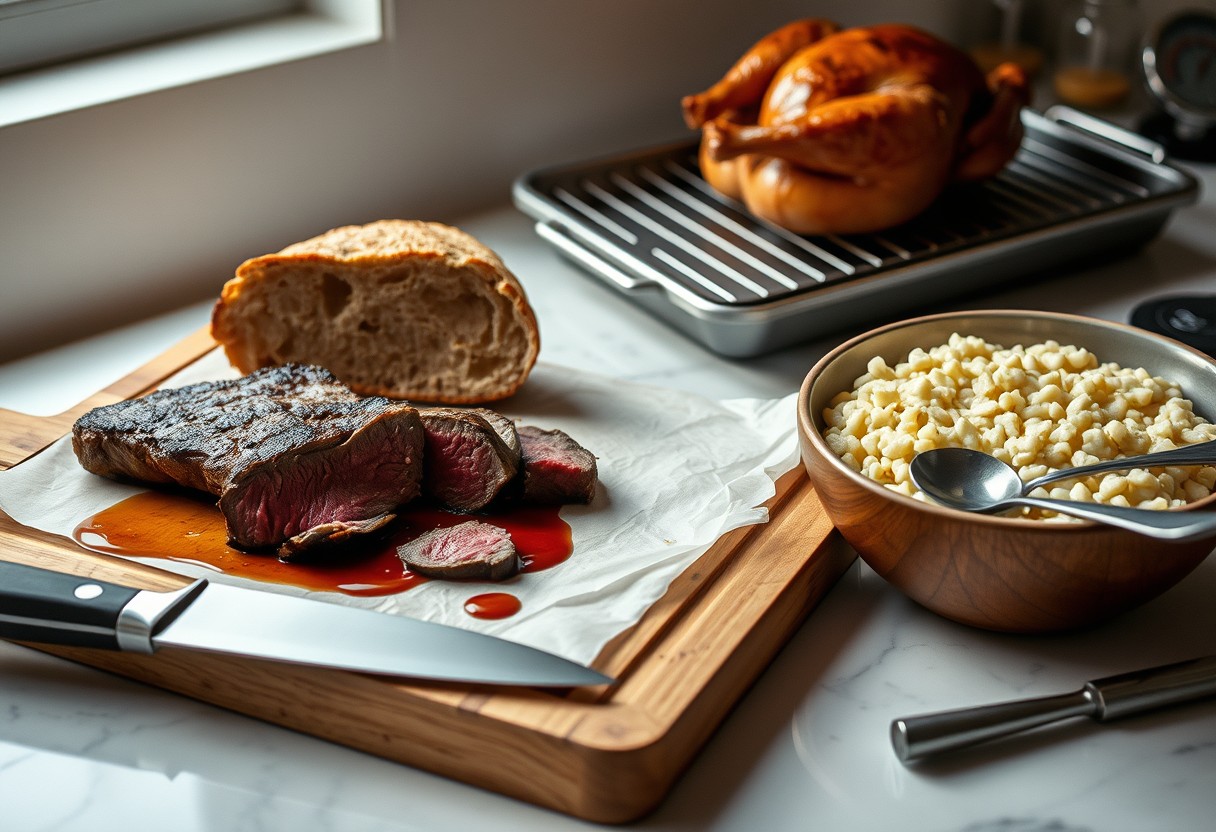
You’ve just pulled a sizzling steak off the grill or lifted golden bread from the oven, but cutting in too soon can ruin the texture. Resting allows heat to redistribute and proteins to stabilize. For some foods, this pause is the difference between juicy perfection and dry disappointment. You’ll see the most dramatic improvements in large cuts of meat, baked goods, and fried items where internal structure continues to set after cooking.
Key Takeaways:
- Resting meat after cooking allows time for juices to redistribute through the fibers, resulting in a more tender bite and less moisture loss when sliced.
- Foods with high gluten or starch content, like bread dough or cooked pasta, continue to absorb liquid and firm up during rest, improving texture and chew.
- Deep-fried items benefit from a short resting period that stabilizes the crust structure, reducing oil seepage and maintaining crispness longer.
The Molecular Migration of Juices
When you slice into meat straight off the heat, you risk losing much of its natural moisture to the plate. Thermal energy during cooking forces liquid-primarily water bound within muscle fibers-toward the center, creating uneven distribution. Without a resting period, these juices escape rapidly upon cutting, leaving the texture drier and less succulent. As the protein structure cools slightly, the fibers begin to relax, allowing for more even moisture retention throughout the cut. This brief cooldown is essential for achieving optimal juiciness and mouthfeel.
Fiber Tension
Freshly cooked meat maintains high internal tension in its protein strands due to contracted muscle fibers under heat stress. These tightened fibers act like squeezed sponges, holding liquids too tightly to redistribute. As the meat rests, the temperature drop allows the structural proteins to loosen, reducing pressure on the surrounding matrix. This relaxation enables a more uniform texture, preventing the chewy, rubbery consistency that results from premature slicing.
Reabsorption Physics
During rest, a critical shift occurs as cooler fibers regain their capacity to retain moisture. The drop in temperature alters the solubility and binding properties of myosin and actin proteins, encouraging water molecules to reattach within the matrix. This reabsorption prevents excessive weeping when the meat is finally cut. You observe this as a juicier bite, where moisture stays integrated rather than pooling on the plate, demonstrating how time alone can transform texture through passive molecular recovery.
High-Protein Heavyweights
Large cuts of protein like thick steaks and whole roasted birds require patience after cooking to deliver their best texture and flavor. When you slice into a steak immediately, you risk losing a flood of juices that should remain inside, leaving the meat dry and disappointing. Resting allows the tightened muscle fibers to relax and reabsorb internal moisture, ensuring each bite stays succulent. Skipping this step turns a carefully cooked centerpiece into a plate covered in runoff instead of a juicy, tender experience.
Red Meat Equilibrium
After removing a thick steak from heat, its core remains actively changing due to residual temperature. If you cut too soon, the high internal pressure forces liquid to escape rapidly across the surface. Letting it rest for 5 to 10 minutes stabilizes the internal structure, balancing temperature and moisture retention. You’ll notice a more uniform pink hue and firmer yet tender bite-proof that stillness enhances performance. This brief pause transforms a good cook into a great result.
Avian Moisture Retention
Roasting a whole bird subjects its meat to prolonged heat, causing proteins to contract and squeeze out moisture. Slicing it straight from the oven guarantees a dry breast and pooling liquid on the plate. Resting for 15 to 20 minutes lets the fibers gently relax and rebind water, especially in lean areas like chicken breast. You gain juicier meat with better texture, and the carryover cooking evens out doneness without overcooking. That wait is the difference between disappointment and diner delight.
The Botanical Patience of Dough
Time transforms dough from a shaggy, unruly mass into a smooth, workable canvas, all because you allow it to rest. During this quiet period, gluten strands relax and stop resisting your rolling pin or hands, making shaping easier and more precise. Without this pause, your dough snaps back, fighting every stretch. This rest isn’t passive-it’s a silent reorganization beneath the surface, setting the stage for even baking and a tender crumb. For a deeper look at another common misconception, see The Myth of the Returning Juice: Resting Meat Explained.
Gluten Settlement
Once flour meets water and agitation begins, gluten starts forming immediately, creating a tight network that can feel stubborn under your fingers. When you let the dough rest, those tense protein chains gradually unwind, reducing elasticity and making the dough far more cooperative during shaping. This relaxation prevents shrinkage in the oven and ensures your loaf expands evenly instead of tearing. Skipping this step forces you to work against the dough’s natural tension, often leading to dense or misshapen results.
Hydration Efficiency
Flour doesn’t absorb liquid instantly-some particles remain parched even after mixing. A rest period gives water time to fully penetrate every grain, resulting in uniform hydration throughout the dough. This even moisture distribution strengthens the gluten structure without over-kneading and reduces the risk of dry pockets in your final bake. You’ll notice a silkier texture and improved rise, especially in high-hydration or whole-grain recipes where absorption lags behind mixing.
The Crunch Factor and Fried Physics
Heat transforms more than flavor when you fry-it reshapes the very structure of your food’s surface. Steam generated inside hot oil can become a stealth enemy of crispness, especially if you crowd the basket or plate too soon. Letting fried items rest allows internal moisture to stabilize, preventing condensation from softening the outer layer. The brief pause isn’t passive; it’s an active defense against sogginess, ensuring that what crackles at first bite doesn’t collapse into disappointing dampness moments later.
Vapor Management
Steam trapped beneath a golden crust can quickly undermine your frying efforts if not properly managed. As hot food cools slightly, internal vapor loses energy and stops migrating aggressively toward the surface. This slowdown protects the delicate air pockets formed during frying, preserving their integrity. Without this brief rest, moisture recondenses into liquid, turning a crisp exterior into a limp barrier. You maintain control over texture simply by allowing physics to do its work-off the heat, but still in motion.
External Solidification
Cooling initiates a subtle hardening of the outer coating, reinforcing the shell created in the fryer. As surface oils settle and residual heat evaporates excess moisture, the crust transitions from fragile to firm. This phase is especially critical for battered foods like onion rings or tempura shrimp, where structural integrity hinges on timing. Rushing them to the table risks breaking that hard-won crispness through premature contact or steam pressure. A short wait strengthens the armor that makes fried food unforgettable.
Conclusion
You now understand how resting food alters its texture through natural processes like juice redistribution and starch relaxation. Proteins like steak or chicken firm up and retain more moisture when allowed to rest, giving you a juicier bite. Starchy items such as bread or fried dough improve in consistency as internal steam escapes and structure sets. Even crispy fried foods benefit, developing a more satisfying crunch after a brief pause. Timing and method matter-different foods respond uniquely. You control the outcome simply by allowing a few quiet minutes after cooking.
FAQ
Q: Why does resting food after cooking affect its texture?
A: When food is cooked, heat causes proteins to contract and moisture to migrate toward the center. Resting allows the temperature to even out across the food, giving time for those tightened proteins to relax slightly and reabsorb some of the expelled juices. This process prevents dryness when the food is cut, especially in large cuts like roasts or thick steaks. Without rest, slicing immediately releases a pool of liquid that should have remained inside.
Q: How long should meat be rested to see a noticeable difference in texture?
A: Most meats benefit from a rest period proportional to their size. A thick steak typically needs 5 to 10 minutes under a loose tent of foil, while larger cuts like a whole chicken or beef roast require 15 to 30 minutes. During this time, residual heat continues gentle cooking internally while pressure within the muscle fibers drops, allowing retained moisture to redistribute. Skipping this step often results in a drier surface and juice loss upon cutting.
Q: Do plant-based foods also benefit from resting after cooking?
A: Yes, certain plant-based foods improve with rest. Baked goods like bread rely on resting to complete internal structure setting-starches firm up and moisture evens out after removal from the oven. Cutting into a loaf too soon yields a gummy crumb. Similarly, cooked grains such as rice or quinoa become fluffier and less clumpy when left covered for 5 to 10 minutes post-cooking, allowing steam to finish hydrating each grain evenly.
Q: Why do fried foods sometimes turn soggy if not handled properly after frying?
A: Fried foods develop a crisp exterior through rapid dehydration at high heat. When removed from oil, internal steam continues to escape. If placed directly on a flat surface or sealed in a container, that moisture gets trapped against the crust, softening it. Letting fried items rest on a wire rack allows air circulation, which preserves crispness by preventing condensation buildup. The brief rest stabilizes the outer layer while excess oil drains away naturally.
Q: Are there foods that don’t need resting and can be served immediately?
A: Some dishes lose quality if delayed. Stir-fried vegetables are best served straight from the pan to maintain bright color and slight crunch. Delicate pastas, especially in creamy or emulsified sauces, can congeal or separate during standing time. Thinly cooked fish fillets may overcook from residual heat if rested too long. In these cases, immediate plating ensures optimal texture and temperature balance without sacrificing moisture retention.