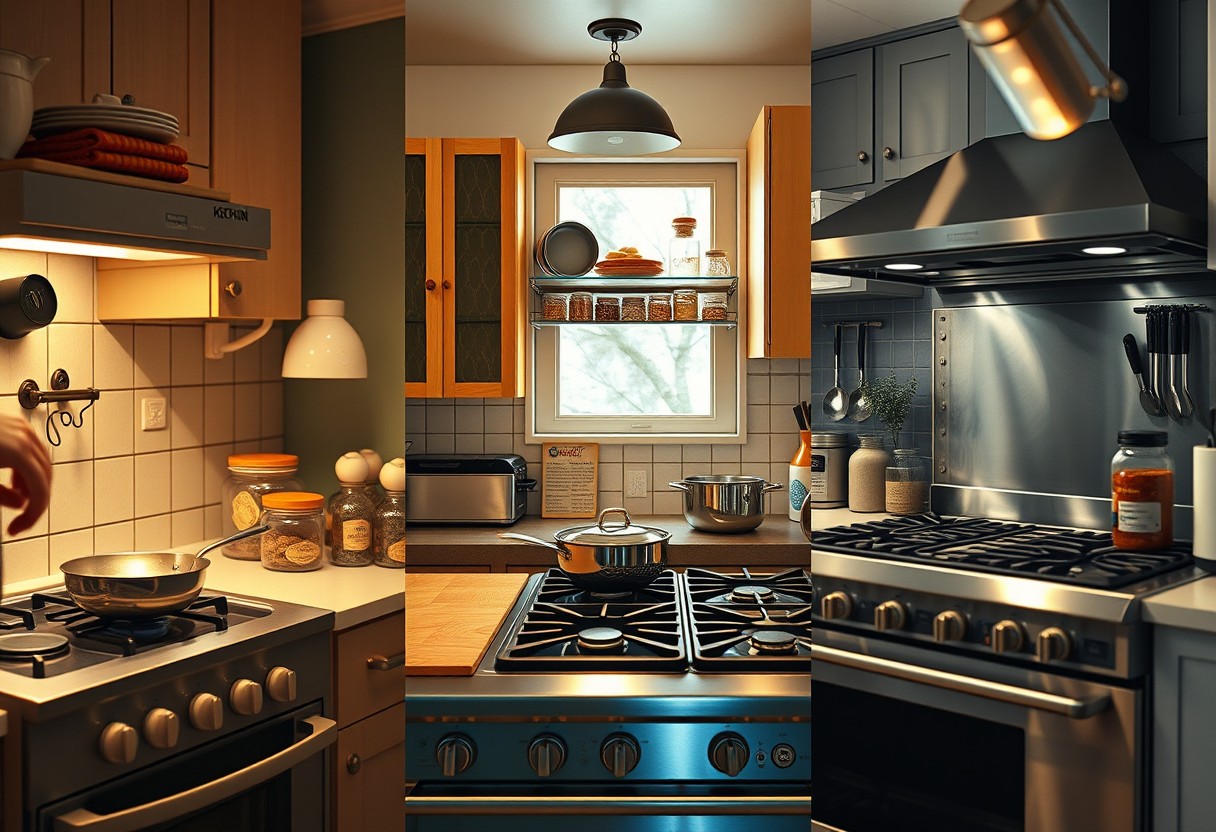
You follow the same recipe, yet your soup boils faster than your sister’s, and your cake bakes in half the time her oven needs. Differences in stovetop strength, oven accuracy, altitude, and even refrigerator temperature can dramatically alter cooking times. What’s safe and efficient in one kitchen could lead to burning, undercooking, or foodborne risk in another. Your tools and environment shape outcomes as much as ingredients do.
Key Takeaways:
- Stove performance varies widely between kitchens, even when using identical settings, due to differences in burner type, age, and calibration, leading to inconsistent cooking times for the same recipe.
- Ambient conditions like altitude, humidity, and room temperature affect how quickly liquids boil or ingredients react, meaning a dish may cook faster in Denver than in Miami despite following the same instructions.
- Individual cooking habits-such as how closely a pot is covered, the timing of ingredient additions, or heat adjustments-introduce subtle but meaningful delays or accelerations that accumulate over the course of a recipe.
The Temperamental Nature of the Flame
Your stove’s heat output is never as consistent as recipes assume. Gas burners deliver immediate, adjustable flames, while electric coils heat slowly and retain energy longer, creating lag between setting changes and actual temperature shifts. A high-BTU gas burner can boil water in minutes, but an electric element with lower effective output may take several minutes longer, even on the highest setting. This difference alters searing times, simmering stability, and sauce consistency, meaning your technique must adapt to your range’s personality, not the recipe’s expectations. What registers as “medium-high” on one stove may be closer to low on another, leading to undercooked or overcooked results despite identical instructions.
British Thermal Units and Burner Power
BTUs measure the heat output of gas burners, and your cooking speed depends heavily on this number. A burner rated at 9,000 BTUs heats slower than one producing 15,000 BTUs, which can drastically reduce boiling or searing time. Electric elements don’t use BTUs, but their wattage serves a similar purpose-though heat transfer is less direct. If your stove runs below 12,000 BTUs per burner, tasks like reducing liquids or stir-frying will take noticeably longer, even if you follow every other step perfectly. Matching the recipe’s intensity requires knowing your burner’s true power.
Thermal Mass of Cookware
Thick, heavy pans like cast iron or tri-ply stainless steel absorb and hold more heat than thin aluminum ones, changing how quickly food cooks. When you set a heavy skillet on a low-output burner, it may take minutes just to reach effective cooking temperature. A lightweight pan responds faster but risks scorching if your flame is too aggressive. Your cookware’s mass interacts directly with your stove’s heat delivery, meaning the same recipe can brown too fast or too slow depending on this pairing. Choosing the right pan isn’t just about material-it’s about balancing thermal inertia with your burner’s strength.

The Grand Illusion of the Thermostat
What your oven dial says and what the interior actually reaches are often two different things. Factory-calibrated thermostats frequently deviate by as much as 25-50°F, silently altering cooking times without warning. You might set 375°F, but if the real temperature is 350°F, your cake bakes slower-and you’re none the wiser. This hidden gap explains why recipes behave unpredictably across kitchens. For insight into how unseen factors like this shape cooking duration, see Why Cooking Takes So Long (And It’s Not What You Think).
Dial Settings versus Actual Temperature
Your oven’s temperature knob offers a false sense of precision. Independent tests show many household models fail to maintain consistent heat, with actual cavity temperatures fluctuating well beyond the intended setting. Even a 20°F difference can extend baking times by 15% or more. To help visualize this discrepancy:
| Set Temperature | Average Actual Temperature (Tested) |
|---|---|
| 350°F | 330-365°F |
| 400°F | 380-425°F |
| 450°F | 420-470°F |
Convection Fans and Airflow
A built-in convection fan changes how heat circulates, yet not all fans perform equally. Some models generate turbulent or uneven airflow, creating microclimates within the oven where one corner runs hotter than another. Even with the same recipe and pan, placement near a weak airflow zone means slower cooking. You may think you’re using convection efficiently, but inconsistent fan strength or blocked vents can undermine even precise temperature settings, leading to unpredictable results no matter how carefully you follow instructions.
The Invisible Hand of Geography
Where you cook changes how heat behaves, even if your recipe doesn’t. At higher elevations, water boils at a lower temperature because atmospheric pressure drops the farther you rise above sea level. This means simmering liquids never reach the same intensity as they would at sea level, slowing down cooking times for everything from pasta to stews. You might follow the timing exactly, yet still find undercooked results simply due to your kitchen’s elevation.
High Altitude Boiling Delays
Every 500 feet above sea level reduces water’s boiling point by nearly a degree Fahrenheit. At 5,000 feet, water boils at about 203°F instead of 212°F, creating a noticeable gap in cooking efficiency. Foods that rely on boiling or steaming-like potatoes or custards-require extra time because the liquid can’t transfer as much thermal energy. You may not see a difference in your pot, but the lower temperature quietly extends the time needed to achieve doneness.
Ambient Moisture and Flour Absorption
Humidity in the air directly affects dry ingredients, especially flour. In damp climates, flour absorbs moisture from the atmosphere, making it denser and slower to hydrate. You might add the same amount of liquid, yet end up with a drier dough because the flour already carries hidden water. Conversely, in arid environments, flour remains parched and can soak up more liquid than expected, risking a slack batter. This invisible moisture exchange alters texture and rise, even when measurements are precise.
The Stumbling Block of Human Dexterity
Your speed at the cutting board can make or break the clock, even when following the same recipe. Two cooks with different knife skills may face wildly different prep times, turning a 30-minute meal into a 50-minute effort. You might not realize how much time you lose with inefficient motions-each hesitation, awkward grip, or imprecise cut adds up silently. Mastery of basic techniques like rocking, tapping, and clawing shaves off critical minutes and reduces fatigue, letting you move smoothly into cooking without delay.
Efficiency of Workspace Layout
Your kitchen’s design directly shapes how quickly you work. If your cutting board is far from the sink or spices are buried in back cabinets, you waste seconds with every step-seconds that accumulate into lost minutes. A well-organized station keeps tools, knives, and bowls within easy reach, allowing you to maintain rhythm. Minimizing unnecessary movement lets you focus on precision and pace, transforming scattered actions into a streamlined flow that respects the recipe’s intended timing.
The Hidden Clock of Chopping
You rarely account for the sheer volume of chopping until you’re halfway through an onion mountain. The density of carrots, stringiness of celery, or ripeness of tomatoes alters slicing resistance, affecting your pace. A single diced shallot can take twice as long if your knife isn’t sharp. Even experienced cooks slow down when fatigued or distracted. This unseen labor-often underestimated in recipes-holds immense power over your total cook time, making preparation anything but uniform.
The Frigid Reality of the Refrigerator
Temperature doesn’t start when the stove turns on-it begins the moment ingredients leave cold storage. Your protein’s starting point, straight from the fridge or warmed to room temperature, directly alters how quickly and evenly it cooks. A steak pulled from a 38°F refrigerator requires more energy to reach doneness, often leading to overcooked edges before the center warms. This delay isn’t just about time-it affects texture and safety, with uneven heating potentially leaving cold zones where bacteria linger.
Chilled versus Room Temperature Proteins
Bringing meat to room temperature before cooking promotes even heat distribution, reducing the risk of undercooked centers. When you start with a cold cut, the exterior must absorb excess heat before the interior begins to warm, increasing total cook time and raising the chance of dryness. Allowing proteins to rest outside the fridge for 20-30 minutes can shorten cooking duration by as much as 15%, while improving consistency. Delicate items like butter or eggs also respond better when not ice-cold, though perishable safety must always be prioritized.
| Protein Condition | Impact on Cooking Time |
|---|---|
| Chilled (from fridge) | Increases time by 10-20%; higher risk of uneven doneness |
| Room temperature | Reduces time; promotes uniform cooking and better searing |
Cold Water versus Boiling Starts
When you drop pasta or potatoes into cold water, the gradual climb to boiling extends the effective cooking clock before the real process even begins. Starting with boiling water cuts this preheating phase, delivering faster, more predictable results. For foods requiring precise timing, like eggs or blanched vegetables, beginning in boiling water ensures immediate, consistent exposure to target heat. This small choice can mean the difference between crisp-tender broccoli and a mushy pile, especially with high-starch or delicate items.
Conclusion
You experience different cooking times with the same recipe because no two kitchens are truly identical. Your stove’s burner output varies, your oven’s thermostat may be inaccurate, and your altitude affects boiling points. The humidity in your region changes how ingredients behave, while the thickness of your cookware alters heat distribution. Even your own timing and technique introduce subtle shifts. All these factors combine to reshape the outcome each time you cook, proving that precision in baking or boiling depends on far more than just following instructions.
FAQ
Q: Why does my oven take longer to bake cookies than my friend’s, even though we use the same recipe and temperature?
A: Ovens vary widely in how they distribute heat, even when set to the same temperature. A home oven may have hot spots or poor air circulation, causing uneven baking. Some ovens run cooler or hotter than their displayed setting-sometimes by as much as 25°F. A cookie sheet placed near the top heating element in a small oven will cook faster than one in the center of a larger convection oven. Preheating time also differs; an older model might take 15 minutes to reach 350°F while a newer one hits it in 8. These subtle differences change how quickly your food cooks.
Q: Can altitude really affect how fast a dish cooks?
A: Yes. At higher elevations, water boils at a lower temperature because atmospheric pressure drops. In Denver, which sits about 5,280 feet above sea level, water boils at roughly 203°F instead of 212°F. This means boiling pasta takes longer, and moisture evaporates more slowly from dishes like casseroles. Recipes developed at sea level often need adjustments in timing or liquid content when used in mountainous regions. A cake that bakes in 30 minutes on the coast might need 40 minutes inland.
Q: Does the type of pot or pan impact cooking time?
A: Absolutely. A thin aluminum skillet heats up quickly but loses temperature when food is added, slowing searing. A heavy cast-iron skillet retains heat better, maintaining consistent contact with the food. Similarly, a glass baking dish absorbs heat slowly but radiates it steadily, which can extend baking times compared to metal. Even the color matters-dark pans absorb more heat than shiny ones, potentially over-browning edges before the center sets.
Q: How does starting ingredient temperature affect cooking duration?
A: Cold butter straight from the fridge creams differently than softened butter, altering dough consistency and spreading during baking. A stew made with refrigerated meat takes longer to come to a simmer than one using room-temperature cuts. Milk pulled from a 34°F refrigerator cools a sauce faster than milk stored at 40°F, delaying thickening. These small gaps in initial temperature add up, especially in precision-dependent recipes like custards or breads.
Q: Why does the same soup recipe seem to reduce faster at my sister’s house?
A: Simmering speed depends on burner output and ambient humidity. An electric coil stove delivers heat differently than gas, and high-output burners boil liquids faster. If her kitchen has lower humidity due to dry climate or air conditioning, evaporation happens more rapidly. The size and shape of the pot matter too-a wide, shallow pot exposes more surface area, accelerating reduction. Even leaving the lid off for just five extra minutes can shorten cooking time noticeably.